Desserts
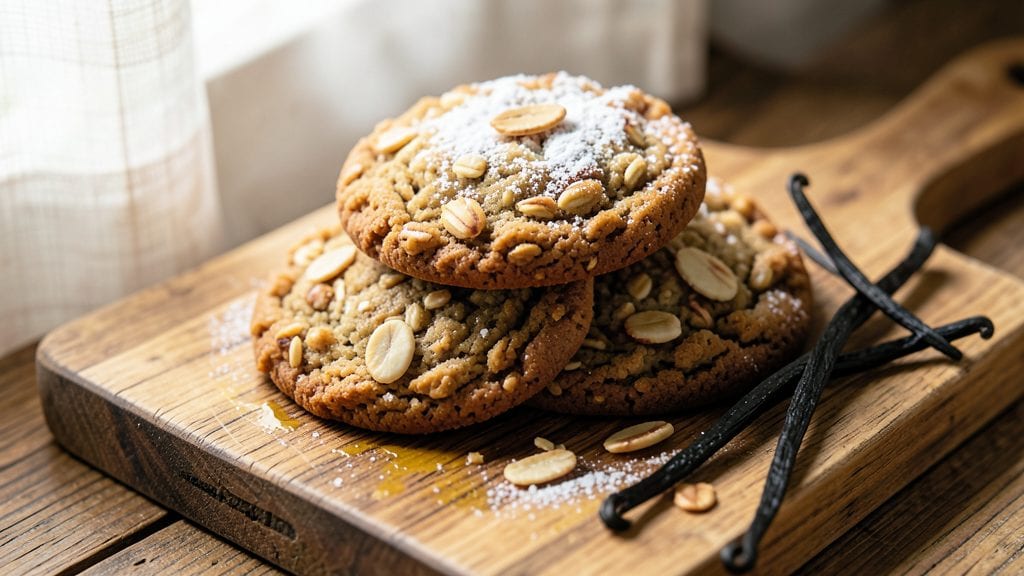
This old-fashioned Quaker oats cookie recipe delivers the perfect balance of chewy centers and crispy oat crowns—just like grandma used to make. The secret lies in pressing oats into the dough before baking, creating those signature textured tops while keeping the interior tender.
I developed this recipe after years of testing variations, and it never fails to impress with its buttery swirls and warm vanilla notes.
The dough comes together with simple ingredients you likely already have on hand: Quaker oats, butter, sugar, eggs, and vanilla. The key technique is pressing oats into the tops of each cookie before baking, which creates that classic crunchy crown while the centers stay soft and chewy.
Baking at 350°F for 10-12 minutes ensures golden edges without burning.
What you'll end up with is a batch of cookies that smells like nostalgia—warm, buttery, and just sweet enough. These cookies hold their shape beautifully, making them perfect for holiday gifts or family gatherings. The pressed-oat crowns add a satisfying texture contrast that keeps everyone reaching for seconds.
Pair them with a glass of cold milk or serve alongside coffee for a comforting treat. Let's get baking these timeless cookies! The recipe is foolproof and delivers restaurant-quality results every time.
Ingredients for old fashioned quaker oats cookie
Twelve simple ingredients transform into nostalgic cookies with signature pressed-oat crowns and buttery swirls.
| Ingredient | Amount | Notes |
|---|---|---|
| Old-Fashioned Rolled Oats 🌾 | 3 cups | Quaker oats, uncooked for texture |
| Unsalted Butter 🧈 | 1 cup | Cold, cubed for easier mixing |
| Granulated Sugar 🍚 | 1 cup | White or light brown preferred |
| Packed Brown Sugar 🍚 | ½ cup | Light or dark works well |
| Large Eggs 🥚 | 2 whole | Room temperature for smooth dough |
| Pure Vanilla Extract 🍯 | 1 tbsp | High-quality, imitated is fine |
| All-Purpose Flour 🌾 | 2 ½ cups | Sifted for lighter texture |
| Baking Soda 🧂 | ½ tsp | Ensures proper rise |
| Fine Sea Salt 🧂 | ½ tsp | Enhances flavor balance |
| Ground Cinnamon 🌿 | 1 tsp | Warmth without overpowering |
| Ground Nutmeg 🌿 | ¼ tsp | Freshly grated preferred |
| Extra Rolled Oats 🌾 | 1 cup | For pressed-oat crowns |
The oats are the star here—Quaker Old-Fashioned Rolled gives that classic texture. Bulk bins at Whole Foods or the regular grocery store oat section work fine, but check the expiration date. Freshly ground nutmeg makes a difference, so grab it from the spice aisle or Penzeys if you're feeling fancy. The butter should be cold when you measure it—cubed and straight from the fridge ensures proper mixing. For the sugar, I like light brown for moisture but white works just as well if that's what you've got.
No vanilla extract? Vanilla bean paste works in a pinch, or even a drop of vanilla sugar. Short on nutmeg? Skip it entirely—the cinnamon still delivers warmth. The dough can feel dry at first, but don't overmix—just combine until it holds together. If you're making these for holiday gifts, use parchment-lined pans for easy transport. The cookies hold their shape beautifully, so you can stack them without worrying about crushing. For extra nostalgia, add a few chopped pecans to the dough if you're feeling adventurous.
Store cookies in an airtight container at room temperature for up to 5 days—they'll stay fresh and chewy. For longer storage, freeze portions for up to 3 months. I like to portion them into ziplock bags with parchment between layers to keep them from sticking. The pressed-oat crowns add that satisfying crunch, so don't skip pressing them firmly into the tops. These cookies reheat beautifully—just 10 seconds in the microwave brings back that warm-from-the-oven feeling.
Why You'll Love This Recipe
- No Mixing Madness: I swear by this recipe because it’s literally a dump-and-bake situation. Just toss the oats, butter, sugars, and eggs into a bowl—no food processor, no weird textures, no stress. The rolled oats stay chunky and chewy, which is exactly what makes them special.
- Caramelized Butter Magic: That brown sugar and butter combo? It’s where the real flavor lives. The cookies develop a deep, buttery crunch around the edges while staying soft inside—like a hug from your grandma, but in cookie form. Honestly, the first bite makes me forget I’m even dieting.
- Bulk-Friendly Bites: These cookies freeze like champs, so I make a double batch and stash them for lazy mornings or last-minute snack attacks. Pull one straight from the freezer, microwave for 10 seconds, and boom—warm, gooey perfection. (Yes, even on a Tuesday night.)
- Pantry Staple Power: Between us, this recipe costs next to nothing—just oats, sugar, butter, and eggs. No fancy chocolate chips or nuts required, which means I can afford to bake a whole sheet pan without guilt. Plus, the oats keep forever, so I’m never scrambling for ingredients.
Step-by-step instructions for old-fashioned Quaker oats cookies
Here's how to create these classic buttery oat cookies with their signature pressed-oat crowns.
Cream Butter and Sugars for Maximum Flavor
In a stand mixer fitted with the paddle attachment, combine the cold cubed unsalted butter, granulated sugar, and packed brown sugar. Beat on medium speed for 3-4 minutes until light and fluffy, with the mixture nearly doubling in volume. You're looking for a pale, creamy texture with no visible butter chunks remaining.
This thorough creaming process incorporates air into the dough, which creates those signature crackly tops and helps the cookies spread just enough. If you're mixing by hand, use a wooden spoon and work for at least 5 minutes until the mixture lightens significantly. The butter should be completely emulsified with the sugars, leaving you with a smooth, pale base.
Mix in Eggs, Vanilla, and Dry Ingredients
Add the 2 whole large eggs, one at a time, mixing well after each addition. Then stir in the 1 tablespoon pure vanilla extract. The mixture will appear slightly curdled at first, but don't worry—this will resolve when we add the dry ingredients.
In a separate bowl, whisk together the 2.5 cups all-purpose flour, 0.5 teaspoon baking soda, 0.5 teaspoon fine sea salt, 1 teaspoon ground cinnamon, and 0.25 teaspoon ground nutmeg. Gradually add this dry mixture to the wet ingredients, mixing on low speed just until combined. You'll notice the dough comes together into a thick, slightly sticky consistency. Avoid overmixing at this stage—just combine until no flour streaks remain visible.
Fold in Oats and Chill the Dough
Remove the mixer bowl and, using a silicone spatula, gently fold in the 3 cups old-fashioned rolled oats and 1 cup extra rolled oats reserved for the crowns. The dough will be thick and crumbly, almost like a shortbread mixture. Divide the dough into 4 equal portions, flatten each into a disk about 1 inch thick, and wrap tightly in plastic wrap.
Refrigerate the dough for at least 1 hour, or up to 24 hours. This chilling step is crucial—it allows the flour to fully hydrate and the butter to firm up, which prevents excessive spreading during baking. The cold dough also makes it easier to handle when creating those distinctive pressed-oat crowns. For best results, let the dough sit at room temperature for 10-15 minutes before rolling to make it more pliable.
Roll and Press the Oat Crowns
Preheat your oven to 350°F and line two baking sheets with parchment paper. Working with one dough portion at a time, roll it between two sheets of parchment paper to create a 1/4-inch thick rectangle. Using a sharp knife or pizza cutter, cut the rectangle into 1-inch squares.
Here's where the classic touch comes in: press a small handful of the extra rolled oats into the center of each square, then gently press down on the oats to create a flat crown shape. The oats should adhere to the dough without falling off. Arrange the cookies on the prepared baking sheets about 2 inches apart—they won't spread much, but they do puff slightly during baking.
Bake to Golden Perfection
Bake the cookies for 12-14 minutes, rotating the baking sheets halfway through, until the edges are golden brown and the centers look just slightly underdone. The pressed-oat crowns should be crisp and golden, with the surrounding cookie showing a beautiful crackly texture.
Remove the cookies from the oven and let them cool on the baking sheets for 5 minutes before transferring to a wire rack to cool completely. The centers will firm up as they cool, resulting in that perfect chewy texture with crisp edges. For best flavor, serve these cookies warm or at room temperature. They keep well in an airtight container for up to 5 days, though they're best enjoyed fresh from the oven.
Pro Tips For Making Old Fashioned Quaker Oats Cookie
- Pulse the Oats: Use your food processor to chop the rolled oats into fine crumbs—about the size of breadcrumbs—before mixing with wet ingredients. I learned this the hard way: whole oats stay chewy and uneven, while pulsed oats create a uniform, tender texture. Skip this, and you’ll end up with a cookie that’s more like a granola bar.
- Brown the Butter: Cook the unsalted butter until it’s nutty and golden, then let it cool slightly before adding to the sugar. The extra depth of flavor makes these cookies taste richer without needing more butter. (Yes, even if you’re impatient like me—just don’t let it burn.)
- Chill the Dough: Refrigerate the dough for at least 30 minutes before baking. This prevents spreading, helps the oats toast better, and guarantees a crispier edge. I used to skip it, and the cookies always turned out flat and gummy.
- Underbake Slightly: Pull the cookies out when the edges are just set but the centers still look soft—about 2-3 minutes before the recipe’s suggested time. They’ll firm up as they cool, and overbaking turns them dry. (Your future self will thank you.)
Storing and reheating this recipe
Room Temperature Storage
These cookies stay fresh and delicious in an airtight container at room temperature for up to 5 days. I use glass containers with tight-sealing lids—like Pyrex or Oxo Good Grips—to maintain moisture and prevent drying.
Store them in a cool, dark place away from sunlight to preserve their texture and flavor. The pressed-oat crowns stay crisp for the first 2 days, but the chewy centers remain perfect throughout. 🌾
Freezer Preservation
For longer storage, freeze portions in ziplock freezer bags or airtight containers for up to 3 months. Portion the cookies into single layers separated by parchment paper to prevent sticking.
When ready to enjoy, thaw at room temperature for 30-60 minutes or reheat directly from frozen in the oven at 325°F for 5-7 minutes to restore that warm-from-the-oven texture. The pressed oats soften slightly but still provide satisfying crunch. ❄️
Reheating Methods
For that fresh-baked experience, reheat cookies in a 350°F oven for 3-5 minutes until warmed through. I prefer this method because it crisps the edges and softens the centers evenly.
Alternatively, use a microwave for 10-15 seconds—cover with a damp paper towel to prevent drying. The pressed-oat crowns regain their crunch, making them irresistible. 🔥
Gift-Worthy Packaging
These cookies make perfect gifts! Package them in parchment-lined boxes or cellophane bags tied with ribbon for a polished look. I like adding a handwritten note or mini vanilla bean for a personal touch.
Store in a cool, dry place until ready to serve—transporting them in a thermos or insulated bag keeps them fresh for up to 24 hours outside the fridge. 🎁
Texture Preservation Tips
To maintain the perfect chewy-to-crisp ratio, avoid stacking cookies directly on top of each other in storage. Instead, place parchment paper between layers in the container. If the pressed-oat crowns lose crispness, pop them back in the oven at 300°F for 2-3 minutes to refresh.
The secret to long-lasting texture is proper air circulation—never overcrowd the container. 💫
Nutrition facts
Frequently asked questions
Why do these cookies need to chill before baking?
The 1-hour chill is key to preventing excessive spreading and creating that signature crackly texture. Cold butter firms up, which helps the cookies hold their shape while baking. Plus, chilled dough is easier to handle when pressing those oat crowns!
Can I substitute steel-cut oats for rolled oats?
No—steel-cut oats are too dense and won't create the same crispy crowns. Stick with Old-Fashioned Rolled Oats for that classic texture. If you're out of rolled oats, quick oats will work in a pinch, but the texture will be slightly softer.
How do I fix cookies that spread too much?
If your cookies flatten out, your dough was likely too warm. Next time, chill the dough longer or use less butter (try 3/4 cup instead of 1 cup). Also, make sure your oven isn't running hot—use an oven thermometer to confirm 350°F.
Can I add chocolate chips to this recipe?
Fold in 1 cup chocolate chips or chopped chocolate bars with the extra oats. For best results, use semi-sweet or dark chocolate. Just be sure to press the oats firmly so they stay in place during baking.
Why do the oat crowns sometimes fall off?
This usually happens if the dough is too warm or the oats aren't pressed firmly enough. Chill the dough longer and press the oats with the back of a spoon to ensure they stick. If they still fall off, try using a tiny bit of egg wash to help them adhere.