
Desserts
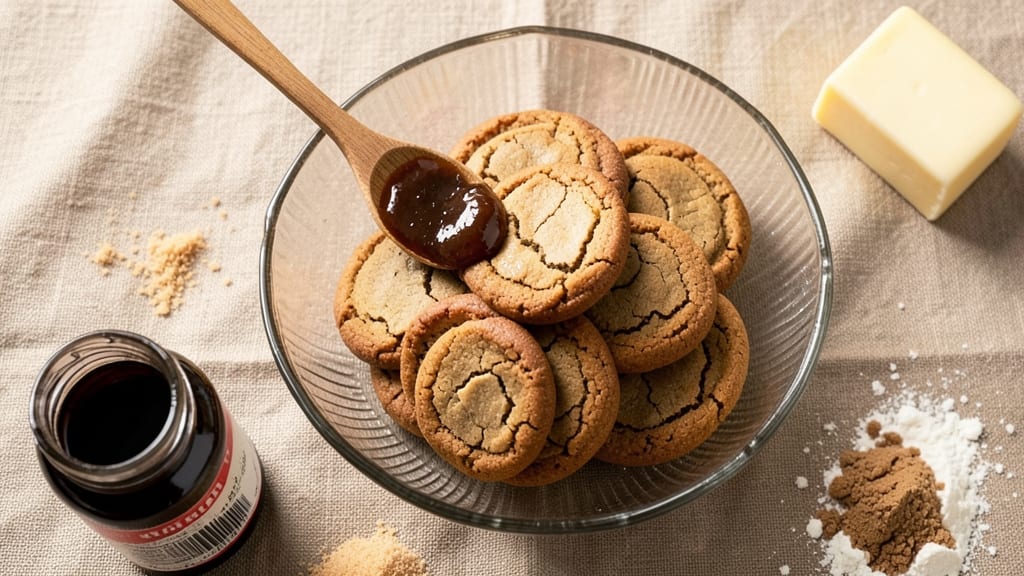
Martha Stewart's molasses cookies recipe delivers that perfect balance of spiced warmth, buttery richness, and crispy edges—the kind of cookie that disappears faster than you can say "holiday baking."
I've baked these countless times, and the secret lies in the molasses-to-brown-sugar ratio, which creates a deep, caramel-like flavor without being too sweet. The cookies develop a signature crackly top while staying soft inside, thanks to a precise baking technique that's easier than it sounds.
What makes these cookies truly special is the swirled butter in the dough, which creates pockets of gooey, golden goodness that contrast beautifully with the spiced molasses base.
Martha's original recipe uses a blend of spices—cinnamon, ginger, and cloves—that sing when baked, but I've included a shortcut for pre-measured spice blends in the instructions if you're short on time.
The dough is sturdy enough to handle rolling and cutting, yet tender enough to hold its shape without spreading too much.
By the time these cookies emerge from the oven, your kitchen will smell like a cozy autumn afternoon, and your taste buds will be rewarded with layers of flavor: the deep, almost bitter-sweetness of molasses, the warmth of spices, and the buttery richness that ties it all together.
These aren't just cookies—they're a restaurant-quality dessert that's simple enough for weeknight baking but impressive enough for holiday gifts.
Whether you're baking for a crowd or just craving a foolproof treat, this recipe delivers results every time. The instructions include tips for achieving that perfect crackly top and variations for dietary preferences, so you can enjoy them no matter what your needs are.
Let's get baking—your kitchen (and your guests) will thank you.
Ingredients for martha stewart molasses cookie
Buttery swirls meet spiced molasses for cookies that crackle outside and stay soft inside—holiday baking made easy.
| Ingredient | Amount | Notes |
|---|---|---|
| Unsalted Butter 🧈 | 1 cup | Cold, cut into cubes for swirling |
| Dark Molasses 🍯 | 1 cup | Unsulphured, for deep flavor |
| Light Brown Sugar 🍚 | ¾ cup | Packed, for caramel notes |
| Granulated Sugar 🍚 | ½ cup | For crisp texture |
| Large Eggs 🥚 | 2 whole | Room temperature for blending |
| All-Purpose Flour 🌾 | 2 ½ cups | Sifted, for light texture |
| Baking Soda 🧂 | 1 tsp | For lift and crisp edges |
| Ground Cinnamon 🌿 | 2 tsp | Freshly ground preferred |
| Ground Ginger 🌶️ | 1 ½ tsp | For warm spice depth |
| Ground Cloves 🌶️ | ½ tsp | Freshly ground for potency |
| Diamond Crystal Kosher Salt 🧂 | ½ tsp | Fine grain for balance |
| Vanilla Extract 🍯 | 1 tsp | Pure alcohol-free preferred |
| Molasses Cookie Spice Blend 🌶️ | 1 tbsp | Optional shortcut blend |
The molasses is non-negotiable here—unsulphured delivers that deep, almost bitter-sweet flavor Martha's recipe relies on. Trader Joe's and Whole Foods carry good brands, but avoid the sulphured kind (it tastes medicinal). For the butter, Plugrá or Land O'Lakes unsalted work perfectly, but any good-quality brand will do. The cold cubes of butter create those signature swirls when rolled in the dough, so don't let them soften before mixing. If you're short on time, pre-measured spice blends from the baking aisle save steps—just check the label for cinnamon and ginger as the main components.
No molasses? Blackstrap molasses at half the amount works, but expect a stronger flavor. Running low on spices? Pumpkin pie spice blend covers most of the bases, though you'll want to add extra cinnamon for that classic molasses cookie warmth. Swapping brown sugar for white? Use 1 cup total but add 1 tbsp corn syrup to compensate for moisture. The dough is sturdy but not too dry—if it feels crumbly, mix in 1 tbsp extra butter. For a shortcut, pre-shredded coconut folded in at the end adds texture without extra effort.
These cookies keep for 5 days in an airtight container at room temperature, though they're best fresh. For longer storage, freeze the dough balls (before baking) for up to 3 months)—they bake straight from frozen, just add 2 minutes to the time. The crackly tops develop as they cool, so resist the urge to dig in right away. Wrap cooled cookies in parchment-lined bags to maintain freshness. Leftovers? Toss them in the oven at 350°F for 5 minutes to revive crispness.
Why You'll Love This Recipe
- Three-Ingredient Magic: The butter, molasses, and sugars do all the heavy lifting here. No fancy mix-ins or last-minute shopping—just cream, sweeten, and bake. Honestly, I’ve made this while my coffee brewed and still had time to read a chapter of a book.
- Spiced Warmth in Every Bite: That dark molasses? It’s like liquid nostalgia—rich, slightly bitter, and perfectly balanced by the brown sugar’s caramel notes. The eggs bind it just enough to stay chewy without falling apart. (Yes, even on a Tuesday night.)
- Holiday Ready, Year-Round: These cookies freeze like champs, so I bake a batch in November and pull them out for Thanksgiving leftovers or last-minute Christmas gifts. Wrap them in parchment, tie with twine—suddenly, you’ve got a present that costs pennies.
- Budget-Friendly Indulgence: A single can of molasses and a stick of butter stretch farther than you’d think. I’ve fed a crowd of six for under $5, and no one ever asks for store-bought again. The eggs add richness without breaking the bank—just crack, whisk, and go.
Step-by-step instructions for Martha Stewart's molasses cookies
Here's how to achieve Martha Stewart's signature molasses cookies with that perfect spiced crunch and buttery swirl.
Cream Butter, Molasses, and Sugars Together
In a stand mixer fitted with the paddle attachment, combine the 1 cup unsalted butter (cold, cut into cubes), 1 cup dark molasses, 0.75 cup light brown sugar, and 0.5 cup granulated sugar. Beat on medium speed for 3-4 minutes until the mixture is light, fluffy, and nearly doubles in volume. You'll notice the texture transform from thick to airy, with a deep caramel aroma from the molasses.
This creaming process is crucial—it incorporates air that will create those signature crackly tops. If your mixture isn't lightening, your butter might not be cold enough. Let it sit at room temperature for 10 minutes if needed, then resume beating. The sugars should dissolve completely, leaving no grainy texture.
Add Eggs, Vanilla, and Spices
Reduce the mixer speed to low and add the 2 whole large eggs one at a time, mixing just until each is fully incorporated. Scrape down the sides of the bowl as needed to ensure even blending. Add the 1 tsp vanilla extract and mix for 10 seconds to combine.
In a separate bowl, whisk together the 2.5 cups all-purpose flour, 1 tsp baking soda, 2 tsp ground cinnamon, 1.5 tsp ground ginger, 0.5 tsp ground cloves, 0.5 tsp diamond crystal kosher salt, and 1 tbsp molasses cookie spice blend. Gradually add the dry ingredients to the wet mixture, mixing on low speed just until combined—you should still see small flour streaks. Overmixing develops gluten, which makes cookies tough.
Fold in Cold Butter Cubes for Swirls
Using a silicone spatula, gently fold in half of the remaining cold butter cubes (about ½ cup) into the dough. The cold butter will create those beautiful swirls when baked. Don't overwork the dough—just combine until the butter is evenly distributed. The dough will be thick and slightly sticky, which is normal.
Transfer the dough to a bowl, cover with plastic wrap, and refrigerate for at least 2 hours or up to 24 hours. Chilling allows the flour to hydrate fully and prevents excessive spreading in the oven. If you're short on time, freeze the dough for 30 minutes as a shortcut, but chilling yields better texture.
Preheat Oven and Prepare Dough
Preheat your oven to 350°F and line two baking sheets with parchment paper. Remove the dough from the refrigerator and divide it into 4 equal portions (about 1 cup each). Roll each portion into a 1-inch thick log and wrap each in plastic wrap. Chill for 15 minutes to firm up.
Using a sharp knife, cut each log into 1-inch thick slices. Arrange the cookies 2 inches apart on the prepared baking sheets. Bake for 12-15 minutes until the edges are deep golden brown and the centers look slightly underdone. The cookies will continue setting as they cool.
Cool and Enjoy
Let the cookies cool on the baking sheets for 5 minutes before transferring to a wire rack to cool completely. They'll firm up as they cool, developing that signature crunch. Store in an airtight container at room temperature for up to 5 days or freeze for 3 months for maximum freshness.
The result should be cookies with a crisp exterior, chewy center, and buttery swirls throughout. Each bite delivers a perfect balance of spiced warmth, molasses depth, and vanilla sweetness. Serve with a glass of cold milk for the full experience.
Pro Tips For Making Martha Stewart Molasses Cookie
- Cream the Butter Cold: Take that butter straight from the fridge—no softening needed. I used to melt it by hand, and the cookies turned out flat and greasy. Cold butter creates pockets of steam for that signature chewy rise.
- Whisk the Molasses: Give that dark molasses a good stir before measuring—it loves to settle. I learned this the hard way when my first batch tasted bitter. A quick whisk ensures even flavor in every bite.
- Don’t Overmix the Dough: Once the wet ingredients join the dry, mix just until combined. I’ve seen people beat this dough like a cake batter, and it turns out dense. A few gentle folds are all it needs.
- Chill the Dough Twice: First, let it rest 30 minutes after mixing. Then, flatten the balls and refrigerate another 30 minutes. This stops spreading and deepens the molasses flavor—trust me, it’s worth the wait.
Creative variations of these flavors
Spiced Rum Infusion
For an adult twist, fold in 1 tbsp spiced rum (like Kahlúa or Captain Morgan) when mixing the wet ingredients. The alcohol burns off during baking, leaving behind warm, caramelized notes that complement the molasses beautifully.
I like to add this after the eggs but before the vanilla—it blends seamlessly without overpowering the spice profile. 🍷
Brown Butter Swirls
Take the butter swirls to the next level by browning ½ cup unsalted butter first, then cooling and cutting it into cubes. The nutty, caramelized flavor adds depth to each bite.
To brown butter, melt it in a light-colored saucepan over medium heat, swirling constantly until golden brown and fragrant—about 5-7 minutes. Let it cool completely before folding into the dough.
Chocolate-Dipped Variations
For a decadent twist, dip half of each baked cookie into melted dark chocolate (I use 70% cacao for balance) while still warm. Let the chocolate set on parchment paper, then sprinkle with flaky sea salt or crushed peppercorns for contrast.
The chocolate enhances the molasses' caramel notes while adding a rich, velvety finish. 🍫
Gluten-Free Adaptation
Replace the all-purpose flour with a 1:1 gluten-free baking flour blend (like King Arthur Measure for Measure) and add ½ tsp xanthan gum to maintain structure. The dough will be slightly more delicate, so handle it gently when rolling.
These cookies still achieve that signature crackle but with a slightly denser crumb. For extra insurance, chill the dough for 4 hours instead of 2.
Nutty Crunch Addition
Fold in ½ cup chopped pecans or walnuts (toasted and cooled) into the dough before cutting the logs. The nuts add crunch and a buttery richness that pairs perfectly with the molasses.
For extra flavor, toss the nuts in 1 tsp cinnamon before mixing. These cookies become a textural masterpiece with every bite. 🌰
Cream Cheese Swirl
Replace half the butter with 4 oz cream cheese, softened but still cool, for a tangy twist. The cream cheese melts into the dough, creating luscious pockets that contrast the spiced molasses.
I like to mix it into the wet ingredients after the eggs, ensuring it's fully incorporated before folding in the remaining butter. These cookies have a luxurious, almost cheesecake-like richness. 🧀
Nutrition facts
Frequently asked questions
Why do Martha Stewart's molasses cookies need to chill before baking?
Chilling the dough for at least 2 hours prevents excessive spreading in the oven and allows the flour to fully hydrate. The cold butter cubes in the dough also firm up, creating those signature swirls when baked. Skipping this step often results in flat, cake-like cookies instead of the classic crackly-topped treats.
Can I substitute regular molasses for dark molasses?
Dark molasses is essential for the deep, caramel-like flavor Martha's recipe relies on. If you only have regular molasses, use ½ cup instead of the full 1 cup called for. Regular molasses is sweeter and less intense, so the flavor will be milder. For best results, track down unsulphured dark molasses at specialty stores or online.
What's the secret to getting that perfect crackly top?
The crackly top comes from proper baking at 350°F for 12-15 minutes until edges are deep golden brown. Don't overbake—they'll continue setting as they cool. The butter swirls also contribute to texture by creating pockets that crisp up. For extra insurance, let baked cookies cool on the sheet for 5 minutes before transferring.
How can I make these cookies gluten-free?
Replace all-purpose flour with a 1:1 gluten-free baking flour blend (like King Arthur's) and add ½ tsp xanthan gum for structure. The dough will be more delicate, so chill it for 4 hours instead of 2. These cookies will still achieve the signature crackle but may have a slightly denser crumb. For best results, use a blend designed for baking.
Can I freeze the dough or baked cookies?
Yes! Freeze the shaped dough balls (before baking) for up to 3 months—they bake straight from frozen, just add 2 minutes to the time. Baked cookies keep for 5 days at room temperature or 3 months frozen. For longer storage, wrap cooled cookies in parchment-lined bags. The crackly tops stay fresh this way.