
Desserts
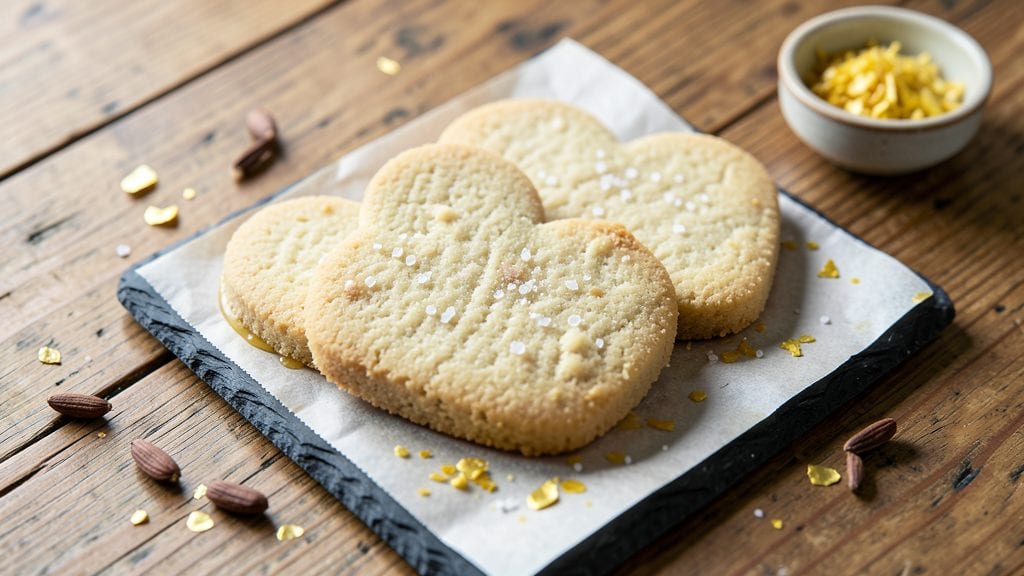
This heart shortbread cookies recipe delivers the perfect balance of buttery richness and delicate crumb that dissolves like sand on your tongue. ✨ The secret lies in precise ingredient ratios and gentle handling—overworking the dough turns it tough, and we’re avoiding that at all costs.
My version uses a simple heart-shaped mold that transforms basic shortbread into a showstopping Valentine’s treat or year-round favorite.
What makes these cookies truly special is their foolproof texture: crisp edges that give way to a tender, melt-in-your-mouth center, all with that signature shortbread crumble.
The recipe requires just five ingredients (plus a pinch of salt) and 15 minutes of prep, but the results feel like you spent hours baking.
The dough stays cool enough to shape without sticking, and the baking time is short—12-15 minutes at 325°F—so you won’t be waiting long for golden perfection.
Each cookie emerges from the oven with a golden, buttery sheen and that unmistakable shortbread aroma—vanilla-infused butter and a whisper of lemon zest for brightness.
The heart shape adds a romantic touch, but the real magic is in how they crumble just enough to create that signature "sand texture" while staying cohesive enough to hold their shape.
These aren’t just cookies; they’re a textural experience that pairs beautifully with tea, coffee, or a glass of cold milk.
Perfect for gifting, holiday baking, or satisfying that mid-afternoon sweet tooth, this recipe scales easily—just double the dough for a crowd. The heart molds are reusable, and the dough keeps well in the fridge for up to three days, so you can bake fresh batches whenever the craving strikes.
Let’s get started on cookies that taste like a hug in every bite.
Ingredients for heart shortbread cookies
Five ingredients plus a pinch of salt transform into heart cookies with that signature sand texture.
| Ingredient | Amount | Notes |
|---|---|---|
| Unsalted Butter 🧈 | 1 cup | Cold, cubed for even baking |
| All-Purpose Flour 🌾 | 2 cups | Sifted for light texture |
| Granulated Sugar 🍚 | ¼ cup | Fine grain preferred |
| Vanilla Extract 🌸 | 1 tsp | Pure vanilla preferred |
| Lemon Zest 🍋 | 1 tsp | Freshly grated for brightness |
| Fine Sea Salt 🧂 | ¼ tsp | Kosher or Diamond Crystal |
| Heart-Shaped Cookie Molds ❤️ | 1 set | Metal preferred for durability |
| Powdered Sugar 🍚 | 2 tbsp | For dusting finished cookies |
The butter is non-negotiable—use European-style unsalted (like Plugrá or Kerrygold) for maximum flavor and tenderness. Most grocery stores carry it, but if you can't find it, Land O'Lakes or ButterBerkshire work fine. Keep it cold when mixing—this dough should stay cool enough to handle without sticking. The flour? King Arthur or Gold Medal are my go-tos for consistent texture. If your kitchen's humid, chill the dough for 30 minutes before shaping.
No vanilla extract? Vanilla bean paste works beautifully, or scrape seeds from a vanilla bean. Short on lemon zest? A dash of lemon extract (about 1/4 tsp) mimics the brightness. The powdered sugar is just for dusting—skip it if you prefer a more rustic finish. For the cookie molds, Wilton or Nordic Ware sets are durable and easy to clean. If you don't have heart-shaped molds, use a knife to cut hearts from rolled dough or press dough into a heart shape with your hands.
The dough keeps for 3 days in the fridge, wrapped tightly in plastic. For longer storage, shape the dough, wrap in parchment, and freeze for up to 3 months. Bake straight from frozen, adding 2-3 minutes to the time. These cookies reheat beautifully—just 10 seconds in the microwave revives that buttery aroma. Store in an airtight container to maintain their signature crumble.
Why You'll Love This Recipe
- Four-Ingredient Magic: I swear, this recipe has five ingredients if you count the lemon zest—but it feels like a shortcut. No food processor, no chilling time, just butter, sugar, flour, and a splash of vanilla. Honestly, the dough comes together faster than I can put on my oven mitts.
- Buttery Bliss: That first bite? Crisp edges, melt-in-your-mouth center—all thanks to the cold butter cutting into the sugar like it’s meant to. The lemon zest gives it a bright little kick that makes it taste fancy, even though it’s basically a hug in cookie form.
- Holiday or Snack Attack: I’ve made these for Valentine’s Day (obviously) and as a last-minute gift for my neighbor. But between us? They’re my go-to when I need something sweet after dinner. Freeze half the batch, and you’ve got a ready-made treat for weeks.
- No-Waste, No-Stress: The dough keeps for days in the fridge, and the cookies stay fresh for over a week if you’re not me. Between us, I’ve also turned leftover dough into a quick tart crust—because why waste good shortbread? And since butter and flour are pantry staples, this recipe won’t break the bank.
Step-by-step instructions for heart shortbread cookies
Here's how to craft delicate, melt-in-your-mouth shortbread with that signature crumbly sand texture.
👨🍳 Step 1: Create the Perfect Shortbread Dough
In a stand mixer fitted with the paddle attachment, combine the 1 cup cold cubed unsalted butter with the 0.25 cup granulated sugar on low speed for 1 minute. You're looking to create a light, airy mixture—this is where the texture magic begins. The butter should be completely incorporated but still maintain some small pieces for that signature shortbread crumb.
Add the 2 cups sifted all-purpose flour, 0.25 tsp fine sea salt, 1 tsp vanilla extract, and 1 tsp lemon zest all at once. Mix on low speed for 30-45 seconds until just combined—you'll see small streaks of flour remaining. Overmixing develops gluten, which would make your cookies tough instead of tender. Here's where it gets fun: use your hands to gently press the dough together until it forms a cohesive mass that holds when pressed.
🍳 Step 2: Chill and Shape the Dough
Divide the dough into 4 equal portions (about 6 ounces each) and flatten each into a ½-inch thick disc. Wrap each disc tightly in plastic wrap and refrigerate for at least 1 hour (I prefer 2 hours for optimal texture). This chilling step is non-negotiable—it prevents the cookies from spreading too much in the oven and ensures that signature shortbread crumb.
While the dough chills, preheat your oven to 325°F. Line two baking sheets with parchment paper and lightly dust with flour to prevent sticking. The dough should be firm but still pliable when you're ready to roll it out. If it feels too soft, give it another 15 minutes in the fridge.
🥘 Step 3: Roll and Cut Perfect Hearts
Working with one chilled dough disc at a time, roll it out on a lightly floured surface to a ¼-inch thickness. Use your heart-shaped cookie molds to cut out shapes, pressing down gently but firmly. I like to re-roll the scraps and cut additional hearts—every bit counts! Place the cutouts 2 inches apart on the prepared baking sheets.
Here's the thing—don't be tempted to stack the hearts on the baking sheet. They need room to spread slightly and develop that perfect crumbly texture. If you're making more than one batch, rotate the baking sheets halfway through baking for even cooking. The edges should be just slightly lighter than the centers when they come out of the oven.
🔥 Step 4: Bake to Golden Perfection
Bake the shortbread hearts for 12-15 minutes until the edges are very lightly golden and the centers remain just slightly pale. They should look delicate, not browned—this is key for that signature shortbread texture. The cookies will continue to set as they cool, so they'll firm up as they sit. I know it seems counterintuitive, but you want them to look slightly underdone when you take them out.
Remove the baking sheets from the oven and let the cookies cool on the sheets for 5 minutes before transferring to a wire rack. This brief rest prevents them from cracking as they cool completely. While they're still warm, dust the tops generously with 2 tablespoons powdered sugar using a fine-mesh sieve. The sugar will melt slightly from the residual heat, creating that beautiful snowy finish.
Pro Tips For Making Heart Shortbread Cookies
- Chill the Dough: I learned this the hard way—skipping the 30-minute fridge rest makes the dough too soft, and those pretty heart shapes crumble when cutting. Even if you’re impatient (yes, I know), give it a solid 20 minutes minimum. The butter needs time to firm up so the cookies hold their shape.
- Use Cold Butter: If your butter’s warm or greasy, your shortbread will spread like a sad pancake. Take it straight from the fridge, cut it into chunks, and pulse it in the food processor with the flour—no need to melt it. Cold butter = crisp edges and that perfect crumbly texture.
- Sift the Flour: I used to just dump the flour in, and the cookies turned out dense. Sift it first—especially if you’re using a fine flour—to aerate it and avoid lumps. Add the sugar and lemon zest right after so they distribute evenly. (Pro tip: Sift twice if your flour’s old.)
- Don’t Overbake: These cookies are supposed to be tender, not brick-hard. Pull them when the edges are just golden (about 12–15 minutes at 325°F), not when the center looks done. They’ll firm up as they cool. Overbaking is the fastest way to ruin a good shortbread.
Essential equipment for perfect results
Must-Have Mixing Tools
Start with a stand mixer fitted with the paddle attachment—this is non-negotiable for achieving that signature shortbread crumb. I use my KitchenAid Artisan Series because it handles cold butter effortlessly, but a hand mixer works in a pinch.
The key is low speed (2-3 on your mixer) to prevent gluten development. For the dough, a plastic dough scraper keeps everything contained, and I always have a bench scraper on hand to divide the dough cleanly into portions. 🌟
Cookie Mold Essentials
Invest in durable metal heart-shaped cookie molds—I recommend Wilton or Nordic Ware sets because they hold their shape and are easy to clean. If you're baking frequently, consider a set with multiple sizes for variety.
For a budget-friendly option, silicone heart molds work well but may not hold intricate details as precisely. Always keep a small bowl of flour nearby to dust between cuts and prevent sticking. Pro tip: Use a rolling pin with a handle that fits comfortably in your hand for even rolling.
Baking Sheet Setup
Line your baking sheets with parchment paper—this prevents sticking and makes cleanup effortless. I use half-sheet pans (13x18 inches) because they provide ample space for spreading. Lightly dust the parchment with all-purpose flour before placing the hearts to ensure they don’t adhere.
For even baking, use two sheets at once and rotate them halfway through the bake. A wire cooling rack is essential for preventing soggy bottoms as the cookies cool.
Temperature Control Tools
An oven thermometer is a game-changer—your oven’s temperature gauge can be off by 25°F or more. I use a Thermoworks Oven Thermometer to ensure my oven hits the exact 325°F needed for perfect shortbread.
For chilling the dough, a deep freezer works faster than the fridge, but I stick to the fridge for consistency. A digital kitchen scale helps divide the dough evenly into 6-ounce portions for uniform baking.
Finishing Touches
Dusting the cookies with powdered sugar requires a fine-mesh sieve—I use a Norpro 4-inch for even distribution. For a rustic look, skip the sugar and add flaky sea salt instead.
A small offset spatula helps transfer warm cookies to the rack without breaking them. Store leftovers in an airtight container with parchment between layers to maintain that signature crumble. 💫
Nutrition facts
Frequently asked questions
Can I make these heart cookies without heart-shaped molds?
If you don't have heart molds, roll the dough to ¼-inch thickness and use a sharp knife to cut heart shapes freehand. For extra precision, trace a heart template on parchment first. Alternatively, press dough between your palms to form small heart shapes directly on the baking sheet. The texture stays the same—only the shape changes!
Why does my shortbread dough turn out tough instead of crumbly?
Overmixing or warm butter are the usual culprits. Keep your butter cold and mix on low speed for just 30-45 seconds after adding flour. Also, avoid handling the dough too much when shaping—press gently but firmly. If the dough feels sticky, chill it 30 minutes longer before rolling. The secret is in the gentle handling!
Can I add chocolate chips or nuts to these cookies?
While traditional shortbread relies on its buttery simplicity, you can absolutely add white chocolate chips or toasted pecans for texture. Fold in ¼ cup of your choice after mixing the dry ingredients, then chill the dough 30 minutes extra to prevent spreading. For best results, use mini chips so they don't overpower the delicate crumble.
How do I store these cookies to keep them fresh?
Store in an airtight container at room temperature for up to 5 days. For longer storage, freeze shaped dough discs (unbaked) for 3 months or baked cookies (wrapped individually) for 2 months. To revive, let baked cookies sit at room temperature for 10 minutes before serving—they'll regain that perfect crumbly texture.
What's the best way to ship these as gifts?
Wrap individual cookies in parchment paper, place in a small box with crinkle-cut paper around them, and secure with a ribbon. For extra protection, add a layer of bubble wrap between cookies. Ship in a sturdy box with packing peanuts—these delicate treats need gentle handling! Label as "Fragile" and consider overnight shipping for best results.