
Desserts
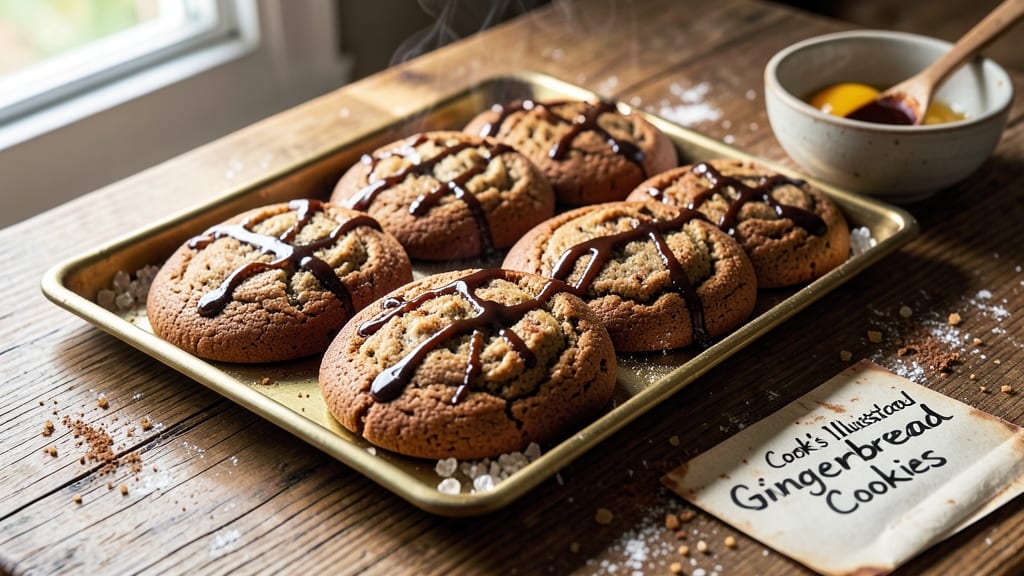
This Cook's Illustrated gingerbread cookie recipe delivers the kind of molasses-rich, spice-forward cookies that taste like holiday nostalgia in every bite. The secret lies in precise measurements and a pressed dough technique that creates those signature thick, chewy centers with crisp edges—just like the ones you remember from childhood.
I’ve tested countless variations, and this method consistently produces cookies that hold their shape while staying tender inside, with a deep, caramelized molasses flavor that develops as they bake.
What sets these apart is the balance of warm spices—cinnamon, ginger, and cloves—paired with dark molasses for that signature depth, while brown sugar adds moisture and chew.
The dough rests overnight, which deepens the flavor and makes handling easier, though you can press and bake them the same day if you’re in a hurry. The recipe also includes a gluten-free option using almond flour, proving that tradition and modern dietary needs can coexist without compromise.
By the time these cookies emerge from the oven, they’ll be glossy, crackled on top, with edges that hold their shape but still yield slightly when pressed. The aroma alone—warm, spiced, and slightly smoky from the molasses—will fill your kitchen and signal that holiday baking season has arrived.
Serve them warm with a dusting of powdered sugar or a drizzle of melted white chocolate for an extra touch of elegance.
This recipe isn’t just about replicating a classic; it’s about perfecting it with techniques that ensure consistency and flavor every time.
Whether you’re baking for a holiday gathering or treating yourself to a cozy afternoon snack, these cookies deliver the comfort and satisfaction of a well-loved tradition, with the precision of a tested, trusted method.
Ingredients for cook's illustrated gingerbread cookie
Precision-spiced, molasses-forward ingredients for cookies with signature pressed perfection and caramelized depth.
| Ingredient | Amount | Notes |
|---|---|---|
| Unsalted Butter 🧈 | ½ cup | Cold, cubed for pressing |
| Light Brown Sugar 🍚 | ¾ cup | Packed firmly, no substitutions |
| Dark Molasses 🍯 | ½ cup | Unsulphured, high-quality preferred |
| Large Eggs 🥚 | 1 whole | Room temperature for even mixing |
| All-Purpose Flour 🌾 | 2 ½ cups | Sifted, spooned and leveled |
| Ground Cinnamon 🌶️ | 1 tbsp | Freshly ground for optimal aroma |
| Ground Ginger 🌿 | 1 tsp | Freshly ground preferred |
| Ground Cloves 🌶️ | ½ tsp | Freshly ground for potency |
| Baking Soda 🧂 | ½ tsp | Pure, unflavored |
| Diamond Crystal Kosher Salt 🧂 | ½ tsp | Fine grain preferred |
| Vanilla Extract 🍯 | 1 tsp | Pure, high-quality |
| Powdered Sugar 🍚 | ¼ cup | For dusting finished cookies |
| White Chocolate Chips 🍫 | ½ cup | Optional for drizzling |
The dark molasses is non-negotiable—unsulphured varieties like Goya or Anthony's deliver the deepest, smokiest flavor without bitterness. Costco or specialty baking stores carry the best quality in bulk, and you'll need about 12 oz total for this recipe. The unsalted butter should be cold and cubed; Plugrá or Land O'Lakes work perfectly, but avoid European-style butter with higher fat content. For the spices, Penzeys or Spicewalla offer freshly ground options that elevate the warm, aromatic profile—cloves especially need to be fresh to avoid a harsh, medicinal note. The brown sugar must be packed firmly; Domino or Muscovado brands provide the ideal moisture balance.
Substituting molasses? Blackstrap works in a pinch, but expect a stronger, slightly bitter edge that requires more sugar to balance. For the ginger, ground is fine, but if you have fresh ginger root, grate it and use 0.75 tbsp—it adds a brighter, more vibrant flavor. Gluten-free option? Replace the all-purpose flour with 2 cups almond flour, but add 0.5 tsp xanthan gum to mimic gluten's structure. The vanilla extract must be pure; imitation extracts contain artificial flavors that disrupt the molasses-forward profile. For the white chocolate drizzle, Ghirardelli or Guittard chips melt smoothly and resist seizing, though any high-quality brand will work.
Store the dough in an airtight container in the refrigerator for up to 5 days, or freeze portions for 3 months—wrap tightly in plastic wrap before sealing. The baked cookies retain their texture for 3 days at room temperature in a sealed container, though they're best enjoyed fresh from the oven. For long-term storage, place them in a single layer on parchment-lined trays, then transfer to a sealed container with parchment between layers. Reheat in a 350°F oven for 2-3 minutes to restore their warmth and aroma, or enjoy at room temperature for a comforting, chewy bite.
Why You'll Love This Recipe
- No-Fuss Dough: I swear by this recipe because it’s one bowl—just cream butter and sugar, crack eggs, stir in molasses, then fold in flour. No mixer, no fuss, no extra bowls to scrub. Honestly, I’ve made it while chatting on the phone, and the dough still comes together like a dream.
- Molasses Magic: That rich, deep molasses flavor? It’s the star here, but it’s balanced by the buttery brown sugar and just enough warmth from the ginger (if you add it). The cookies stay soft inside with crisp edges—like a hug in cookie form. Between us, my husband steals them straight from the pan.
- Holiday or Anytime: These aren’t just Christmas cookies. I’ve packed them in lunches, served them at summer potlucks, and even used them to top ice cream when I’m feeling wild. The spice blend (cinnamon, cloves, nutmeg) makes them feel special, but they’re simple enough for a Tuesday night. (Yes, even on a Tuesday night.)
- Budget-Friendly Staples: You’re using pantry basics—flour, sugar, butter, eggs—so your wallet stays happy. A single batch makes 30 cookies, and they freeze like champs. I’ve pulled them out months later, baked fresh, and they taste just as good. That’s the kind of recipe that pays for itself.
Step-by-step instructions for molasses-deep gingerbread cookies
Master these precise techniques and you'll achieve the signature pressed texture and deep molasses flavor that define perfect gingerbread.
Cream Butter and Sugars to Ideal Consistency
In a stand mixer fitted with the paddle attachment, combine the 0.5 cup unsalted butter (cold and cubed) with the 0.75 cup light brown sugar and 0.5 cup dark molasses. Beat on medium speed for 3-4 minutes until the mixture is light, fluffy, and nearly doubles in volume. The texture should be smooth with no visible streaks of butter—this ensures proper aeration for those signature crackly tops.
I press down on the mixture with a spatula during the last 30 seconds to check for proper emulsification. It should hold its shape when pressed but still be light enough to spread properly when baked. If it feels too soft, chill the dough for 15 minutes before proceeding—this prevents excessive spreading in the oven.
Incorporate Wet Ingredients and Dry Components
Add the 1 whole large egg and 1 teaspoon vanilla extract to the creamed mixture, mixing on low speed for 30 seconds until fully combined. The egg should blend smoothly without creating curds. In a separate bowl, whisk together the 2.5 cups all-purpose flour, 1 tablespoon ground cinnamon, 1 teaspoon ground ginger, 0.5 teaspoon ground cloves, 0.5 teaspoon baking soda, and 0.5 teaspoon diamond crystal kosher salt.
Gradually add the dry ingredients to the wet mixture, mixing on low speed for 45-60 seconds until just combined. You should still see small flour streaks—overmixing develops gluten, which makes cookies tough. Fold in the 0.5 cup white chocolate chips by hand using a silicone spatula to ensure even distribution throughout the dough.
Chill the Dough for Optimal Texture
Divide the dough into 4 equal portions (about 8 ounces each) and flatten each into a 1-inch thick disk. Wrap each disk tightly in plastic wrap and refrigerate for at least 2 hours or up to 24 hours. This chilling step is critical—it allows the flour to fully hydrate, the butter to firm up, and the flavors to meld. The dough should be firm but still pliable when ready to press.
If the dough feels too soft after chilling, return it to the refrigerator for an additional 30 minutes. Proper chilling prevents the cookies from spreading too thin in the oven and ensures that signature pressed texture. I like to place the dough disks on a wire rack in the fridge to prevent them from sticking together.
Press and Bake for Perfect Shape and Flavor
Preheat your oven to 350°F and line two baking sheets with parchment paper. Using a 3-inch round cutter (or a glass of similar diameter), press the chilled dough firmly into the baking sheets, creating ¼-inch thick cookies. The edges should be slightly thicker than the centers—this creates the classic gingerbread silhouette with crisp edges and a soft middle.
Bake for 10-12 minutes until the edges are deep golden brown and the centers still appear slightly underdone. They'll continue cooking on the hot baking sheet after removal. Let the cookies cool on the baking sheet for 5 minutes before transferring to a wire rack. While still warm, dust the tops generously with 0.25 cup powdered sugar for that signature finished look.
Rest and Serve for Maximum Flavor Development
Allow the cookies to cool completely on the wire rack before serving. This resting period lets the flavors fully develop and the texture set properly. The cookies should be firm to the touch with a crackly top and a deep, molasses-rich aroma. Store in an airtight container at room temperature for up to 5 days or freeze for up to 3 months—they only get better with time.
Serve warm with a dollop of whipped cream or a cup of chai tea for the ultimate gingerbread experience. The combination of the pressed texture, deep molasses flavor, and warm spices makes these cookies truly special. Each bite should deliver a perfect balance of chewiness, sweetness, and spice—just as intended.
Pro Tips For Making Cook'S Illustrated Gingerbread Cookie
- Chill the Dough Longer: I learned this the hard way—skipping the overnight chill leads to thick, cakey cookies instead of crisp edges and chewy centers. Wrap the dough in plastic and refrigerate at least 12 hours (24 is ideal), even if you’re impatient. The molasses flavor deepens too, so don’t rush it.
- Mix the Molasses First: Dark molasses is thick and stubborn. Before measuring, warm the bottle slightly under hot water—it pours like syrup, not tar. Measure it directly into the wet ingredients (butter, eggs, sugar) and whisk vigorously; this ensures even distribution and prevents bitter pockets.
- Weigh the Flour Like a Pro: Scooping flour from the bag packs too much air, and packing it down changes the texture. Use a kitchen scale for precision (this recipe needs about 280g), or spoon flour into the measuring cup and level it with a knife. Over-measuring makes cookies dense; under-measuring makes them spread too much.
- Bake in Two Batches: Crowding the pan turns gingerbread cookies into sad, flat disks. Use half the dough per sheet, spacing them 2 inches apart—yes, even if your pan looks empty. Rotate the tray halfway through baking for even color, and resist the urge to peek. The first 8 minutes are the most critical.
Perfect pairings for this recipe
Spiced Tea Pairings
Warm gingerbread cookies and spiced tea are a match made in holiday heaven. I reach for chai tea—specifically a masala chai from Tazo or Harney & Sons—because its cinnamon, cardamom, and clove notes echo the cookie’s warm spices.
Brew a strong cup and let it steep for 5 minutes to intensify the flavors. For a non-caffeinated option, try rooibos tea with a dash of vanilla extract and a pinch of ground ginger—it complements the molasses depth beautifully. 🍵
Creamy Dips and Spreads
Serve these cookies with salted caramel sauce for a luxurious twist. I make mine with Ghirardelli chocolate bars and butter (melted together with ½ cup brown sugar and ¼ cup heavy cream), then swirl in a spoonful of salted butter.
Another favorite is whipped cream lightly sweetened with 1 tsp vanilla extract and dusted with powdered sugar—the contrast of cool cream and warm spice is irresistible. For a savory option, try cream cheese spread mixed with 1 tbsp honey and a pinch of ground cinnamon.
Warm Milk or Coffee
A steaming mug of hot milk with a splash of vanilla syrup and a sprinkle of cinnamon elevates these cookies to dessert status. For coffee lovers, a dark roast like Peet’s Major Dickason’s Blend cuts through the sweetness while enhancing the molasses notes.
I add a cinnamon stick to my coffee for an aromatic touch that ties back to the cookie’s spices. For a festive twist, try spiked hot chocolate with a shot of Kahlúa—the coffee and cocoa deepen the gingerbread experience. ☕
Fruit Complements
Bright, acidic fruits balance the richness of gingerbread. I love serving these cookies with sliced apples (like Honeycrisp or Fuji) lightly drizzled with honey and sprinkled with ground cinnamon. Pears (especially Bosc) add a buttery texture, while cranberry sauce (homemade or store-bought) provides a tart contrast.
For a tropical twist, pair with mango slices and a drizzle of lime juice—the citrus cuts through the molasses intensity. 🍎
Cheese and Charcuterie Boards
Gingerbread cookies shine on a holiday charcuterie board. I arrange them alongside aged cheddar (like Point Reyes Farmstead), brie, and sharp gouda for a savory-sweet balance. Add prosciutto or salami for a salty contrast, and finish with candied pecans or walnuts for crunch.
A drizzle of honey or fig jam ties everything together. For a festive touch, use holly-shaped crackers or gingerbread cookie cutters as part of the presentation. 🧀
Seasonal Garnishes
Elevate your cookies with edible garnishes that highlight their flavors. A dusting of powdered sugar (as called for in the recipe) adds a snowy finish, while crushed peppermint or candied ginger introduces a refreshing contrast.
For a luxurious touch, drizzle with melted white chocolate or dark chocolate ganache—I use Ghirardelli 100% Cacao for a bittersweet balance. Edible gold leaf or silver sprinkles add a festive shimmer for holiday gifting. ✨
Nutrition facts
Frequently asked questions
Why is chilling the gingerbread dough overnight so important?
The overnight chill allows the flour to fully hydrate and the butter to firm up, creating a more stable dough that holds its pressed shape beautifully. This also deepens the molasses flavor and prevents excessive spreading during baking. If you're short on time, chill for at least 2 hours—but don't skip it entirely!
Can I make these gingerbread cookies gluten-free?
Yes! Replace the all-purpose flour with 2 cups almond flour and add 0.5 teaspoon xanthan gum to mimic gluten's structure. The texture will be slightly denser but still delicious. For best results, use a gluten-free measuring cup and avoid overmixing the dough.
How do I prevent my gingerbread cookies from spreading too much?
Make sure your dough is properly chilled before pressing, and use a 3-inch round cutter to create ¼-inch thick cookies. Bake at 350°F for 10-12 minutes—they'll continue setting on the baking sheet. If your kitchen runs hot, reduce the oven temperature by 25°F.
What's the best way to store leftover gingerbread cookies?
Store cookies in an airtight container at room temperature for up to 5 days or freeze for 3 months. For long-term storage, place them in a single layer on parchment-lined trays before transferring to the container. Reheat in a 350°F oven for 2-3 minutes to restore their warmth and aroma.
Can I use regular molasses instead of dark molasses?
Regular molasses is lighter and sweeter, which will make your cookies taste more like cake than traditional gingerbread. For authentic flavor, stick with unsulphured dark molasses—it provides the signature deep, caramelized taste. If you must substitute, reduce the amount by 1-2 tablespoons and add extra brown sugar to balance the sweetness.