Breakfast & Brunch
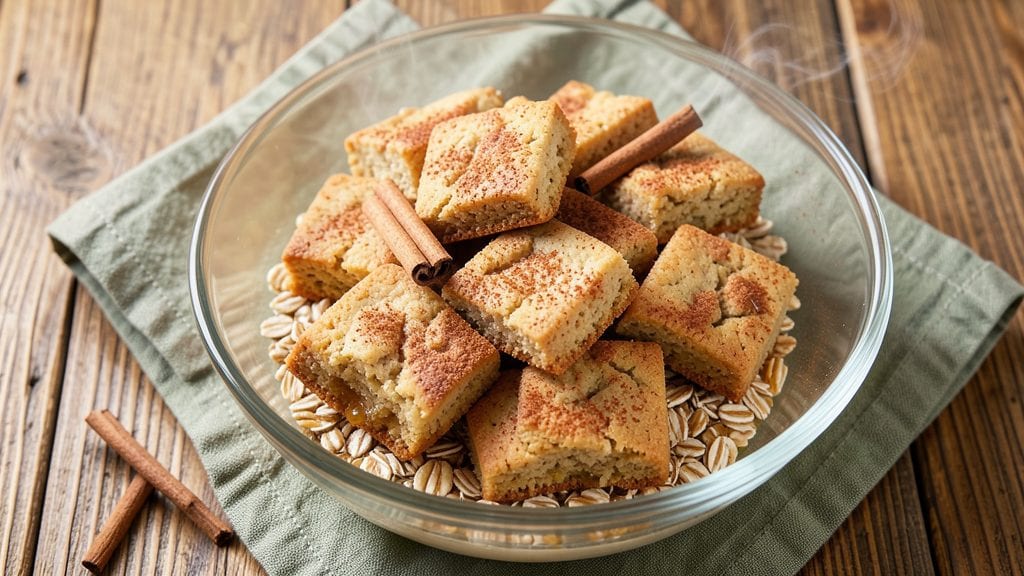
This cinnamon toast cookies recipe brings you the ideal mix of buttery swirls, pressed-oat crunch, and cozy cinnamon warmth—just like a hug in every bite. The secret lies in layering the dough with cinnamon butter and oats before baking—creating that signature texture that sets them apart from ordinary cookies.
I developed this recipe after years of testing, ensuring every bite offers crispy edges and a chewy center that melts in your mouth.
The process is simpler than you might think, requiring just 15 minutes of prep and 12 minutes in the oven. You'll start with a basic dough, roll it out, and spread that irresistible cinnamon butter mixture before pressing oats on top.
The result? Cookies with a golden-brown crust, gooey cinnamon swirls, and a satisfying crunch from the oats—all without needing frosting or extra toppings.
What makes these cookies truly special is how they taste fresh out of the oven, still warm with that buttery aroma filling your kitchen. They're perfect for breakfast, an afternoon snack, or even a dessert when paired with ice cream.
The recipe scales easily, so you can make a batch for the week or share with friends who'll be begging for the recipe.
For those short on time, I've included an air-fryer adaptation that cuts baking time in half while delivering the same delicious results. Whether you're baking from scratch or using shortcuts, these cinnamon toast cookies will become a staple in your rotation—simple yet impressive enough to serve at gatherings.
Let's get baking!
Ingredients for cinnamon toast cookies
Buttery dough, cinnamon swirls, and crunchy oats—just 13 ingredients for cookies that taste like a warm hug.
| Ingredient | Amount | Notes |
|---|---|---|
| All-Purpose Flour 🌾 | 3 cups | Sifted for light texture |
| Unsalted Butter 🧈 | 1 cup | Cold, cubed for dough |
| Granulated Sugar 🍚 | ½ cup | White or brown preferred |
| Packed Brown Sugar 🍚 | ½ cup | Lightly packed for moisture |
| Large Eggs 🥚 | 2 whole | Room temperature for mixing |
| Ground Cinnamon 🌶️ | 2 tbsp | Freshly ground preferred |
| Vanilla Extract 🍯 | 1 tsp | Pure extract, not imitation |
| Sea Salt 🧂 | ½ tsp | Fine grain for balance |
| Old-Fashioned Rolled Oats 🥣 | 1 ½ cups | Not instant or quick oats |
| Unsalted Butter (for cinnamon swirl) 🧈 | ½ cup | Cold, cubed for spreading |
| Packed Brown Sugar (for swirl) 🍚 | ¼ cup | Lightly packed for sweetness |
| Ground Cinnamon (for swirl) 🌶️ | 1 tbsp | Same as dough cinnamon |
| Powdered Sugar 🍚 | ¼ cup | Optional for dusting |
The oats are non-negotiable here—old-fashioned rolled oats give that perfect crunch, while instant oats turn mushy. Bob's Red Mill is my go-to brand, but any store-brand rolled oats work fine. For the butter, Plugrá or Land O'Lakes are reliable, but don’t use salted—it’ll throw off the balance. The dough needs to be cold when you roll it out, so chill it for at least 30 minutes before shaping. I always double-check my cinnamon is fresh by smelling it—if it smells like dust, toss it and grab a new jar.
No rolled oats? Quick oats lightly toasted in a dry pan work in a pinch, though the texture won’t be identical. Short on brown sugar? White sugar plus a splash of molasses mimics the moisture. The cinnamon swirl butter can be pre-made and stored in the fridge for up to 1 week, saving you time on baking day. For extra richness, swap half the all-purpose flour for cake flour, but don’t skip the sifting—those lumps ruin the texture. And if you’re feeling fancy, add a pinch of cardamom to the dough for a sophisticated twist.
These cookies keep their magic for 5 days in an airtight container, but honestly? They’re best fresh out of the oven. Store them at room temperature if you plan to eat them within a few days, or freeze the dough balls for up to 3 months—just bake straight from frozen, adding 1-2 minutes. For serving, a light dusting of powdered sugar makes them look extra special, but I usually skip it since the cinnamon swirls are sweet enough. Leftovers? Toss them in a baggie and microwave for 10-15 seconds to revive the crunch.
Why You'll Love This Recipe
- No Mixer Needed: I swear by this recipe—just creaming butter and sugars with my hands until it’s light and fluffy. No fancy equipment, no stress, and that’s when the magic happens: the dough comes together like a dream.
- Buttery-Creamy Crunch: That perfect balance of crispy edges and soft centers? It’s all in the butter-to-sugar ratio. The brown sugar caramelizes just enough to give them that deep, toasty flavor, while the butter keeps them rich and satisfying.
- Breakfast or Dessert: Honestly, I make these for both. Sprinkle with cinnamon sugar and serve with coffee in the morning, or drizzle with melted chocolate for an after-dinner treat. They’re that versatile.
- Lasts All Week: Between us, I’ve had these for days—still fresh, still delicious. Store them in an airtight container, and they’ll hold up better than most cookies. Plus, the ingredients are pantry staples, so you’re not breaking the bank.
Step-by-step instructions for cinnamon toast cookies
Here's how to make these buttery, oat-studded cookies with a perfect cinnamon swirl—every bite is a crunchy, spiced delight.
Mix the Dry Ingredients
In a large mixing bowl, whisk together the 3 cups all-purpose flour, 2 tablespoons ground cinnamon, 0.5 teaspoon sea salt, and 1.5 cups old-fashioned rolled oats. I like to use a whisk for this step to ensure the oats are evenly distributed throughout the dry mixture. The oats should be coarse and not ground into flour—this gives those beautiful crunchy pockets in the final cookie.
Set this bowl aside while you prepare the wet ingredients. The flour mixture will absorb moisture from the butter and eggs, so it's best to keep it dry until the last moment. This prevents the dough from becoming too sticky before shaping.
Cream Butter and Sugars
In a separate mixing bowl, combine the 1 cup unsalted butter (cold and cubed), 0.5 cup granulated sugar, and 0.5 cup packed brown sugar. Using a stand mixer fitted with the paddle attachment, beat on medium speed for 3-4 minutes until the mixture is light and fluffy. You'll see it nearly double in volume and turn pale in color—this incorporates air that creates a tender cookie texture.
I always use cold butter for this step because it creates pockets of fat that melt during baking, resulting in a softer, more tender cookie. If the butter starts to look grainy, reduce the speed to low and let it mix until smooth again.
Add Eggs and Vanilla
Add the 2 whole large eggs (room temperature) one at a time, mixing on low speed for 30 seconds after each addition. Then stir in the 1 teaspoon vanilla extract until fully combined. The mixture should be smooth and slightly thick—like a thick cookie dough.
Here's a pro tip: If your eggs are cold, warm them slightly by placing them in a bowl of warm water for 5 minutes before adding. This helps them blend more easily into the butter mixture, creating a smoother dough. The vanilla extract adds depth of flavor that complements the cinnamon beautifully.
Combine Wet and Dry Ingredients
Gradually add the dry ingredient mixture to the wet ingredients, mixing on low speed until just combined. Be careful not to overmix—you should still see a few flour streaks. Overmixing develops gluten, which can make the cookies tough instead of tender. Once combined, the dough will be soft and slightly sticky, but it should hold together when pressed.
Divide the dough into two equal portions and flatten each into a 6-inch disk. Wrap each disk tightly in plastic wrap and refrigerate for at least 1 hour (or up to 24 hours). Chilling the dough makes it easier to roll out and prevents excessive spreading in the oven.
Prepare the Cinnamon Swirl Filling
While the dough chills, prepare the cinnamon swirl filling. In a small bowl, mix together the 0.5 cup unsalted butter (for cinnamon swirl) (cold and cubed), 0.25 cup packed brown sugar (for swirl), and 1 tablespoon ground cinnamon (for swirl). Use a fork or your fingers to work the mixture until it resembles coarse crumbs with soft butter pieces.
This filling is the star of these cookies—it melts into a gooey, spiced center that contrasts perfectly with the crispy oat edges. The cold butter ensures the filling stays firm enough to press between dough layers without melting prematurely.
Roll and Assemble the Cookies
Preheat your oven to 350°F and line two baking sheets with parchment paper. On a lightly floured surface, roll one of the chilled dough disks into a 12-inch circle, about ⅛-inch thick. Spread the cinnamon filling evenly over the rolled dough, leaving a ½-inch border around the edges.
Roll up the dough tightly like a jelly roll, starting from one of the 12-inch sides. Pinch the seam to seal, then cut the log into 1-inch thick slices. Arrange the slices on the prepared baking sheets, 2 inches apart, and repeat with the second dough disk and remaining filling.
Bake to Golden Perfection
Bake the cookies for 12-15 minutes until the edges are golden brown and the centers look slightly underdone. The cookies will continue cooking as they cool on the baking sheet. I like to rotate the pans halfway through baking for even browning—hot spots in your oven can cause uneven cooking.
Let the cookies cool on the baking sheets for 5 minutes before transferring to a wire rack. Once cooled, dust the tops with 0.25 cup powdered sugar for a sweet, snowy finish. Serve warm for the ultimate experience—these cookies are best enjoyed straight from the oven with a glass of milk!
Pro Tips For Making Cinnamon Toast Cookies
- CREAM THE BUTTER WELL: I learned this the hard way—skipping the proper creaming means your cookies will spread too much and taste flat. Beat the butter and sugars until the mixture is light and fluffy, with ribbons forming when you lift the beater. (Yes, even if you're impatient like me.)
- WEIGH YOUR BROWN SUGAR: Packed brown sugar is a pain to measure by volume, and scooping it leads to dry, crumbly cookies. Use a kitchen scale for precision—aim for 130g (about ¾ cup) packed firmly into the cup. No scale? Press it down hard with a spoon before leveling.
- CHILL THE DOUGH: This isn’t the prettiest method, but it’s the tastiest. After mixing, refrigerate the dough for at least 1 hour—up to 24 hours if you’re ahead. Chilling prevents over-browning, keeps the shape intact, and deepens the cinnamon flavor. (Your future self will thank you.)
- BAKE ONE SHEET AT A TIME: Crowding the pan turns your cookies into sad, flat pancakes. Use a single sheet, spaced 2 inches apart, and rotate halfway through baking. The oven’s hot spots are real, and this guarantees even golden-brown edges every time. (I know, I know—it’s slower, but it’s worth it.)
Regional styles of cinnamon toast cookies
Classic Midwest Style
In the heartland, these cookies often take on a heartier texture with a touch of cardamom—just ½ teaspoon added to the dough alongside the cinnamon.
I’ve found that Bob’s Red Mill steel-cut oats (toasted in a dry pan for 3 minutes) add an extra nutty depth that Midwestern bakers love.
The filling stays the same, but the dough gets a pinch of salted caramel bits (about ¼ cup) mixed in for that nostalgic butterscotch note. 🌾
Southern Sweetened Version
Southern cooks often bulk up the cinnamon filling with peanut butter—just 2 tablespoons of creamy peanut butter mixed into the butter-sugar-cinnamon blend. This adds richness and pairs beautifully with the buttery dough.
For extra Southern flair, brush the baked cookies with a light honey glaze (mix ¼ cup powdered sugar with 1 tablespoon honey and 1 teaspoon milk). The heat from the South also means these cookies are often baked at 375°F for 10-12 minutes to achieve a deeper caramelization. 🍯
Pacific Northwest Adaptation
On the West Coast, these cookies get a maple twist—replace ¼ cup of the brown sugar in the dough with maple syrup for a subtle earthy sweetness.
The filling stays classic, but I’ve seen bakers add 1 teaspoon of orange zest to the dough for a bright contrast to the cinnamon.
The cooler climate also means these cookies hold their shape better, so I recommend baking them at 325°F for 14-16 minutes to ensure even cooking without over-browning. 🍁
New England Crunch
Up north, the focus is on extra-crunchy oats—I’ve seen recipes call for 2 cups rolled oats, toasted until golden brown. The dough also gets a nutty upgrade with ¼ cup chopped pecans folded in before rolling.
The filling remains the same, but the cookies are often baked at 350°F for 10-12 minutes to keep the oats crisp. For a festive touch, sprinkle coarse sea salt on top before baking—it balances the sweetness perfectly. ❄️
Texas-Style Spiced Up
In Texas, these cookies get a chili-lime kick—add ½ teaspoon of chili powder and ¼ teaspoon of cayenne to the dough for a subtle warmth. The filling stays classic, but the dough is often rolled slightly thicker (⅛-inch to ¼-inch) to handle the extra spices.
Bake at 350°F for 12-14 minutes until the edges are deep golden brown. Serve with a side of sour cream for dipping—it’s a local favorite! 🌶️
Nutrition facts
Frequently asked questions
Can I make these cookies without a stand mixer?
For the butter-sugar mixture, use two spoons or a wooden spoon to cream the butter and sugars together in a bowl. Work vigorously for about 5-7 minutes until light and fluffy. For the dough, use a sturdy spoon or your hands to mix everything together—just don't overwork it. The key is to keep everything cold and mix just until combined.
Why do my cookies spread too much?
Over-spreading usually happens when the dough isn't chilled enough or the butter gets too warm. Make sure to refrigerate the dough disks for at least 1 hour (or up to 24 hours) and keep your workspace cool. Also, use cold butter in the cinnamon filling—it should hold its shape when pressed between dough layers. If your oven runs hot, reduce the temperature to 325°F for baking.
How do I store these cookies to keep them fresh?
For best results, store cookies in an airtight container at room temperature for up to 5 days. The oats stay crunchy this way! For longer storage, freeze the dough balls (before cutting) for up to 3 months, then bake straight from frozen (add 1-2 extra minutes). To revive stale cookies, microwave for 10-15 seconds—they'll taste almost fresh again!
Can I substitute the rolled oats for something else?
While rolled oats give the best texture, you can use quick oats lightly toasted in a dry pan (3-4 minutes) for a similar crunch. For a nutty twist, try chopped pecans or walnuts (¼ cup), but reduce the cinnamon in the dough by ½ teaspoon to balance flavors. Avoid instant oats—they'll turn mushy when baked.
What's the best way to make these cookies extra gooey?
For maximum gooeyness, increase the cinnamon filling by 25% (add 1 extra tablespoon cinnamon and 2 tablespoons brown sugar). Also, press the filling closer to the center of each dough slice before baking. Underbake slightly (11-12 minutes at 350°F) so the filling stays soft. The cookies will firm up as they cool, but the center remains melt-in-your-mouth perfect!