
Desserts
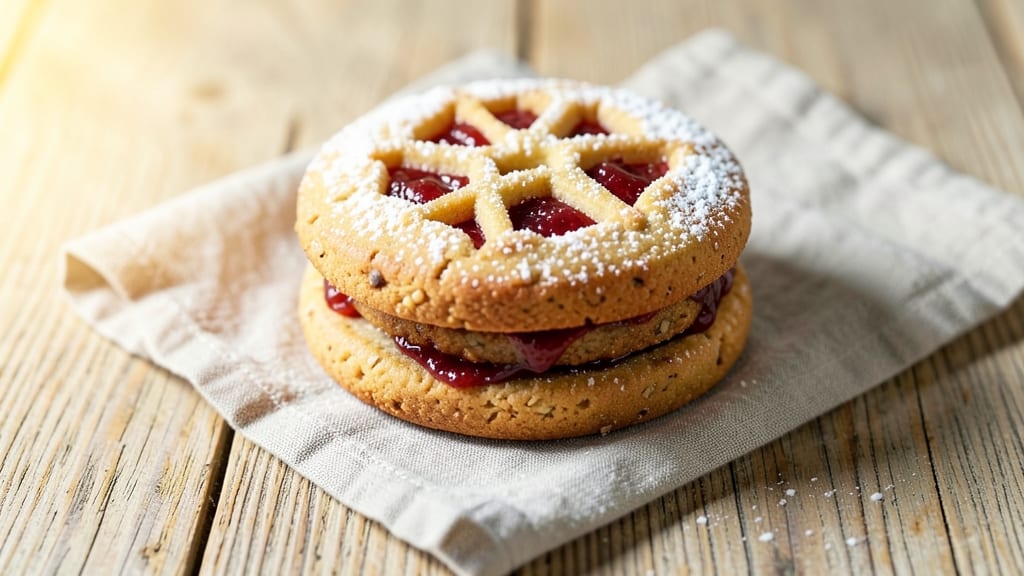
This traditional Linzer cookie recipe brings a taste of Vienna straight to your kitchen with its signature vanilla-almond flavor and delicate lattice crusts. ✨ The key to authentic Linzer cookies lies in the precise balance of ground almonds and vanilla, combined with a tender dough that yields to clean, geometric cuts—perfect for sandwiching jam or chocolate between layers.
What sets these cookies apart is the traditional lattice pattern, which creates a beautiful, intricate design while keeping the texture light and crisp. The dough requires careful handling—rolling it just thin enough to prevent cracking while maintaining structure—but the reward is cookies that look as impressive as they taste.
I’ve perfected this method over years of baking, ensuring every bite delivers that perfect mix of buttery richness and nutty depth.
By the time you pull these from the oven, you’ll have golden cookies with crisp edges and a tender center, ready to be filled with apricot jam, raspberry preserve, or even dark chocolate ganache.
The lattice crust stays delicate yet sturdy, holding its shape while adding a touch of elegance to any dessert spread. This is the kind of treat that pairs beautifully with coffee or tea, offering a taste of Austrian tradition in every bite.
The beauty of these cookies lies in their versatility—swap the jam for citrus curd or spiced fruit compote for a seasonal twist. Once you master the lattice technique, you’ll find endless ways to customize them while keeping the classic flavor intact. Let’s get baking!
Ingredients for traditional linzer cookie
Twelve ingredients, one elegant cookie. The secret's in the almonds and lattice.
| Ingredient | Amount | Notes |
|---|---|---|
| Unsalted Butter 🧈 | 1 cup | Cold, cubed for cutting |
| Granulated Sugar 🍚 | 1 cup | Superfine preferred for smoothness |
| Ground Almonds 🥜 | 1 ½ cups | Finely ground, not almond flour |
| Pure Vanilla Extract 🍯 | 1 tbsp | High-quality Madagascar preferred |
| Large Eggs 🥚 | 2 whole | Room temperature for mixing |
| All-Purpose Flour 🌾 | 2 ½ cups | Sifted, spooned lightly |
| Baking Powder 🍞 | ½ tsp | Aluminum-free for best results |
| Ground Cardamom 🌿 | ¼ tsp | Freshly ground for aroma |
| Fine Sea Salt 🧂 | ¼ tsp | Diamond Crystal preferred |
| Apricot Jam 🍑 | ½ cup | Seeds removed, thick spread |
| Powdered Sugar 🍚 | ½ cup | For dusting lattice tops |
| Dark Chocolate Ganache 🍫 | ½ cup | Optional filling alternative |
The ground almonds make these cookies shine—Penzeys or King Arthur have the finest grind. If you can't find pre-ground, pulse whole almonds in a food processor until ultra-fine (no chunks!). Vanilla matters too: Madagascar bourbon adds depth. For the butter, Plugrá or Land O'Lakes work perfectly—just make sure it's cold when you cut it into the dough. The cardamom is non-negotiable for that authentic Austrian touch, but if you're sensitive to its bite, cut it to half a teaspoon.
No ground almonds? Almond flour works in a pinch, but pulse it extra-fine first. Jam running low? Raspberry preserve or citrus curd keeps the same elegant vibe. The dough needs to be firm but not crumbly—if it feels too dry, add 1 teaspoon of milk. For the lattice, cut strips about 1/4-inch wide and weave them carefully. The key is to keep the cuts clean and the dough thin enough to prevent cracking. Prefer chocolate instead of jam? Dark chocolate ganache pairs beautifully with the vanilla-almond flavor.
This dough keeps for 3 days in the fridge wrapped tightly, but it's best baked fresh. The cookies stay crisp for 2 days in an airtight container, though the lattice will soften slightly. For longer storage, freeze the unbaked dough discs—wrap them individually in parchment and freeze for up to 3 months. Bake straight from frozen, adding 2-3 minutes to the time. The lattice pattern is best enjoyed fresh, so save these for special occasions.
Why You'll Love This Recipe
- No-Fuss Dough: I swear by this recipe because it’s three ingredients (butter, sugar, almonds) plus eggs—no food processor, no sifting, just mix and roll. The ground almonds give it that perfect crumbly-yet-tender texture without fuss.
- Vanilla-Almond Magic: That first bite of buttery linzer with vanilla-kissed jam between layers? It’s like a hug in cookie form. The almonds add depth, and the vanilla ties it all together—simple, but ridiculously satisfying.
- Party in a Box: These cookies freeze like champs, so I bake a batch for birthdays, gift baskets, or just because. Stack them with raspberry jam, and suddenly you’ve got a showstopper that looks fancy but took 20 minutes.
- Pantry Gold: I keep butter, sugar, and almonds stocked anyway—this recipe costs pennies per cookie. Plus, leftovers? They last a week in an airtight tin, and no one ever resists a second one. (Yes, even on a Tuesday.)
Step-by-step instructions for traditional Linzer cookies
Here's how to create these classic Austrian sandwich cookies with perfect lattice crusts and jam-filled centers.
👨🍳 Step 1: Cream Butter and Sugar for Light Texture
In a stand mixer fitted with the paddle attachment, beat the 1 cup unsalted butter (cold, cubed) and 1 cup granulated sugar on medium speed for 3-4 minutes until light and fluffy. You'll notice the mixture nearly doubles in volume and becomes pale—this is crucial for tender cookies.
Scrape down the sides of the bowl with a rubber spatula to ensure even mixing. The butter should be fully incorporated but still hold its shape when pressed. This creaming process creates air pockets that give Linzers their signature delicate crumb. If your sugar isn't superfine, pulse it briefly in a food processor first for smoother cookies.
👨🍳 Step 2: Add Eggs, Vanilla, and Dry Ingredients
Add the 2 whole large eggs (room temperature) one at a time, mixing on low speed for 30 seconds after each addition. Then stir in the 1 tbsp pure vanilla extract until fully combined. The mixture should look slightly thickened but still pourable.
In a separate bowl, whisk together the 2.5 cups all-purpose flour, 0.5 tsp baking powder, 0.25 tsp ground cardamom, and 0.25 tsp fine sea salt. Sift the flour mixture directly over the wet ingredients and mix on low speed for just 20 seconds until combined—don't overmix or the cookies will be tough. Gently fold in the 1.5 cups ground almonds using a silicone spatula until evenly distributed.
🥘 Step 3: Shape Dough into Rounds and Bake
Preheat your oven to 350°F and line two baking sheets with parchment paper. Divide the dough into 24 equal portions (about 1.5 tablespoons each) and roll each into a 2.5-inch round on a lightly floured surface. Place the rounds 2 inches apart on the prepared baking sheets.
Bake for 12-14 minutes until the edges are light golden brown and the centers still look slightly soft. They'll firm up as they cool. Let the cookies cool completely on the baking sheets for 10 minutes before transferring to a wire rack. This prevents cracking when you cut the lattice patterns later.
🔪 Step 4: Create Lattice Patterns and Assemble
Once completely cool, use a sharp knife to cut a 1-inch diameter circle in the center of half the cookies (these will be the tops). Spread 1 teaspoon of apricot jam (or 1 teaspoon dark chocolate ganache for a variation) onto each remaining cookie base.
To make the lattice, cut the remaining cookies into strips about ¼-inch wide, alternating between vertical and horizontal cuts. Arrange the strips in a crisscross pattern over the jam-filled bases, pressing gently to seal. Dust the tops with 0.5 cup powdered sugar for that classic Linzer finish.
Pro Tips For Making Traditional Linzer Cookie
- CHILL THE DOUGH: DESCRIPTION: Linzer dough is finicky—if you skip the 30-minute fridge rest, your cookies will spread like they’re auditioning for a pancake contest. After mixing, wrap the dough tightly in plastic and let it relax; this keeps the almonds from turning to dust and guarantees clean edges.
- WEIGHT THE ALMONDS: DESCRIPTION: Ground almonds vary wildly in moisture. Sift them first, then press a handful into a measuring cup to level it off—packing them too tightly adds extra fat, which makes cookies greasy. My grandmother called this "the difference between a crumbly cookie and a sad one."
- STOP WHEN THE EDGES GLOW: DESCRIPTION: Overbaking is the silent killer of linzers. Pull them from the oven when the edges are just turning golden—about 12-14 minutes at 350°F (yes, even if the center looks underdone). They’ll firm up as they cool, but once they’re brown, they’re done. Trust the edges, not the middle.
- SALT THE BUTTER: DESCRIPTION: Unsalted butter in linzers needs a pinch of salt—about ½ teaspoon per cup—to balance the sweetness and round out the almond flavor. Skip it, and the cookies taste flat, like they’re missing a conversation partner. (I learned this after making a batch that tasted like dessert without the drama.)
Pro cooking tips for this recipe
Dough Temperature Matters
The dough for Linzer cookies must be handled at room temperature—about 68-72°F—to prevent cracking when you cut the lattice. I always let my dough rest for 30 minutes before rolling, covered with plastic wrap.
This relaxation time helps the gluten relax, making it easier to handle. If your kitchen is cold, place the dough bowl near the oven (with the light on) for 15-20 minutes to warm gently. 🌡️
Precision in Rolling
Use a rolling pin with a 10-inch circumference (like the OXO Good Grips model) to roll the dough to an even ⅛-inch thickness. I mark my rolling surface with a 2.5-inch round cutter to ensure consistency.
Press gently but firmly—too much pressure will make the dough stick, and too little will create uneven thickness. A lightly floured surface prevents sticking without making the dough tough.
Lattice Cutting Technique
The secret to perfect lattice patterns is using a sharp chef's knife (I prefer Wüsthof) and cutting through the dough at a 45-degree angle. Make your first cuts ⅛-inch apart, then rotate the cookie 90 degrees and make another set of cuts.
Press down firmly but don't drag the knife—this prevents tearing. For extra stability, chill the cookies for 10 minutes in the freezer before cutting. ✨
Baking Time Control
Bake the cookies for 12-14 minutes at 350°F until the edges are just golden—overbaking makes them dry and cracks the lattice. I rotate the pans halfway through for even browning. The centers should look slightly underdone; they'll firm up as they cool.
Let them rest on the baking sheet for 10 minutes before transferring to a rack. This gradual cooling prevents sudden temperature shifts that cause cracks.
Jam Consistency Tips
For the best results, use apricot jam that's thick but spreadable—like Bon Appétit or Smucker's. If your jam is too runny, simmer it uncovered for 5 minutes to thicken. Spread 1 teaspoon onto each cookie base, leaving a ¼-inch border to prevent the filling from oozing out.
For chocolate lovers, use 60% dark chocolate ganache cooled to 70°F for easy spreading. 🍫
Powdered Sugar Dusting
Dust the finished cookies with powdered sugar using a fine-mesh sieve for an even, elegant finish. I tap the sieve gently over the cookies while holding them at a 45-degree angle to avoid clumping.
For extra shine, brush the tops with 1 teaspoon vanilla-infused vodka (simmer ½ cup vodka with 1 tsp vanilla extract for 5 minutes, then cool) before dusting. This adds a subtle vanilla aroma and helps the sugar adhere better.
Nutrition facts
Frequently asked questions about Austrian Linzer cookies
Why do traditional Linzer cookies have a lattice pattern?
The lattice isn't just decorative—it creates a beautiful visual while maintaining structural integrity. The crisscross design distributes weight evenly, preventing the cookie from cracking when you cut it. This technique has been used for centuries in Austrian baking to showcase the delicate dough while keeping it sturdy enough to hold fillings like jam or chocolate.
Can I make Linzer cookies without ground almonds?
Yes, but the texture will differ. You can substitute with 1.5 cups almond flour (pulsed extra-fine) or 1 cup finely chopped toasted almonds mixed with ½ cup flour. For a nut-free version, replace with 1 cup crushed graham crackers or 1 cup oat flour, though the flavor won't be identical. Ground almonds are key for that signature tender yet slightly crunchy texture.
How do I fix cookies that cracked while cutting the lattice?
Don't worry—cracks are common! Use a small amount of apricot jam or royal icing to "glue" the cracked edges together after assembling. For a quick fix, press the broken pieces back into place and dust with extra powdered sugar to disguise the imperfections. The filling will help hold everything together while keeping the cookie intact.
What's the best way to store these cookies?
Store in an airtight container with parchment paper between layers to prevent sticking. They stay fresh for 3-4 days at room temperature, though the lattice may soften slightly. For longer storage, freeze the assembled cookies (unfilled) for up to 2 months. Thaw at room temperature before enjoying—they'll taste just as good!
Can I make Linzer cookies gluten-free?
Replace the all-purpose flour with a 1:1 gluten-free baking flour blend (like Bob's Red Mill) plus ½ tsp xanthan gum. For the lattice to hold, chill the dough for 30 minutes before cutting. The texture will be slightly denser, but the flavor remains authentic. Test with ½ the recipe first to adjust rolling thickness—gluten-free dough can be more delicate.