
Desserts
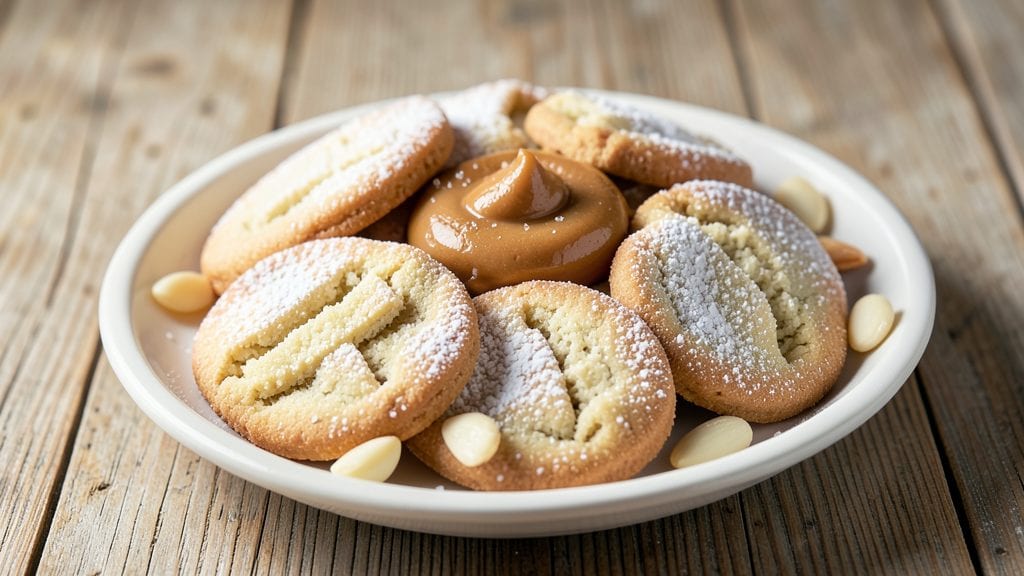
This Spanish cookie recipe delivers the delicate crunch and rich almond flavor of traditional polvorones—a crumbled, melt-in-your-mouth delight that’s been a holiday staple for generations. The secret lies in finely ground almonds and a precise balance of butter and powdered sugar, creating a texture that’s both crisp and tender.
I’ve perfected this version to stay true to the original while making it approachable for home bakers.
The process begins with blending almonds into a fine powder, which forms the cookie’s signature crumbly yet cohesive structure. A touch of vanilla and a pinch of salt enhances the almond’s natural sweetness, while the dough is shaped into small, flat discs for even baking.
At 325°F, these cookies bake just 12-15 minutes until golden at the edges—never overdone, as they continue to crisp as they cool.
What sets these apart is the way they shatter with every bite, revealing a delicate interior that’s almost like shortbread but with the nutty depth of Spain’s turrón. They’re perfect for gifting, holiday tables, or simply enjoying with a cup of café con leche.
The recipe yields about 3 dozen, so you’ll have plenty to share—or keep for yourself.
For a modern twist, try adding a hint of citrus zest to the dough or rolling the baked cookies in powdered sugar for extra sparkle. The key is patience: let the dough rest before baking, and don’t rush the cooling process.
This is the kind of recipe that tastes like tradition, but with a foolproof method that works every time.
Ingredients for spanish cookie
Nine simple ingredients transform into 3 dozen crumbly, almond-kissed Spanish cookies with crisp edges.
| Ingredient | Amount | Notes |
|---|---|---|
| Almonds, blanched 🥜 | 2 cups | Finely ground into powder |
| Unsalted Butter 🧈 | 1 cup | Cold, cubed for blending |
| Powdered Sugar 🍚 | 1 ½ cups | Sifted for smooth texture |
| Vanilla Extract 🌿 | 1 tbsp | Pure almond extract optional |
| Fine Sea Salt 🧂 | ½ tsp | Adjust to taste |
| All-Purpose Flour 🌾 | ½ cup | Sifted with powdered sugar |
| Lemon Zest 🍋 | 1 tsp | Optional for modern twist |
| Granulated Sugar 🍬 | ¼ cup | For dough binding |
| Powdered Sugar 🍚 | ½ cup | For rolling finished cookies |
The almonds are non-negotiable—blanched and finely ground is key for that signature crumbly texture. Trader Joe's sells pre-ground almond flour, but for authenticity, pulse them in a food processor until you can't see any flecks. Costco often has bulk blanched almonds at a better price, but check the expiration date. Freshly ground almonds make all the difference, so don't skimp. For the butter, use European-style unsalted if you can find it—it has a higher fat content that enhances the cookie's richness. If you're in a pinch, regular unsalted butter works fine, but let it sit at room temperature for a few hours before blending.
No vanilla extract? Almond extract at half the amount gives that nutty depth, but it's potent—start with less. Swapping powdered sugar for granulated? Use the same amount but add 1 tbsp cornstarch to prevent grittiness. The lemon zest is optional but worth it for a bright twist—organic lemons from the grocery store's produce section work best. For a gluten-free version, replace the flour with 1/4 cup rice flour, but the texture will be slightly different. If you're making these ahead, the dough can be refrigerated for up to 3 days—just let it sit at room temperature for 30 minutes before rolling.
These cookies stay fresh for 1 week in an airtight container at room temperature, but they're best enjoyed within 3 days for maximum crunch. For gifting, wrap them in parchment-lined boxes and tie with ribbon—they'll keep for 2 weeks. If you want to make them ahead, bake them, let cool completely, then store in layers separated by parchment paper. The powdered sugar rolling step is optional but adds that professional touch—use a fine-mesh sieve for an even coat. Freezing isn't recommended as it can make the cookies soggy.
Why You'll Love This Recipe
- No-Fuss Magic: I swear by this recipe because it’s three ingredients, one bowl—just toasted almonds, butter, and sugar. No rolling, no baking sheets, no stress. Honestly, I’ve made these with my hands tied behind my back.
- Butter-Sugar Crunch: That first bite? Crispy almonds with a cloud of powdered sugar—it’s like a hug for your taste buds. The vanilla and salt make it taste fancy, but it’s still my lazy afternoon snack.
- Party in a Jar: These disappear at gatherings. Toss them in holiday gift bags, pack them for picnics, or just keep a jar on the counter. My nephew steals them before dessert even hits the table.
- Budget Bulk: A pound of almonds and butter stretches forever. I make a batch, store them in the fridge for weeks, and still have leftovers. (Yes, even on a Tuesday night.)
Step-by-step instructions for Spanish cookies: almond-filled delight
Here's how to craft these traditional Spanish cookies with their signature crunch and nutty center.
Prepare the Almond Filling
Begin by grinding the 2 cups of blanched almonds into a fine powder using a food processor. Pulse until you achieve a consistency similar to almond flour - no visible almond pieces should remain. This texture is crucial for the filling's smoothness and prevents gritty bites in your finished cookies.
Transfer the almond powder to a medium bowl and whisk in the 1.5 cups of sifted powdered sugar, 1 tablespoon of vanilla extract, and 0.5 teaspoon of fine sea salt. Mix thoroughly until completely combined. The mixture should resemble wet sand with no dry spots. This is your cookie filling that will create that signature almond center when baked.
Create the Cookie Dough
In a separate large bowl, combine the 1 cup of cold, cubed unsalted butter with the 0.25 cup of granulated sugar. Using a hand mixer or stand mixer fitted with the paddle attachment, cream the mixture on medium speed for 2-3 minutes until light and fluffy. You'll know it's ready when the mixture nearly doubles in volume and becomes pale in color.
Gradually add the 0.5 cup of all-purpose flour and 0.5 cup of powdered sugar to the butter mixture, mixing on low speed until just combined. Be careful not to overmix - stop when the dough comes together but still appears slightly shaggy. This prevents tough cookies. Fold in the 1 teaspoon of lemon zest if using, reserving a small amount for garnish if desired.
Form and Fill the Cookies
Preheat your oven to 350°F and line two baking sheets with parchment paper. Divide the dough in half and roll each portion into a log about 1-inch in diameter. Chill the dough logs in the refrigerator for 30 minutes to firm up - this makes handling easier and prevents spreading.
Using a sharp knife, cut the chilled dough logs into 1-inch pieces. Flatten each piece slightly with your palm to create a disc about 1/4-inch thick. Take a small amount of the almond filling (about 1 teaspoon) and place it in the center of each disc. Gently press the edges together to seal, creating a half-moon shape.
Bake to Golden Perfection
Place the assembled cookies on the prepared baking sheets about 1 inch apart. Bake for 12-15 minutes until the edges are golden brown and the centers are set but still slightly soft. The cookies should be firm to the touch but not hardened throughout.
Remove from the oven and immediately roll each cookie in the remaining 0.5 cup of powdered sugar while still warm. This creates that signature dusty finish. Allow the cookies to cool on the baking sheets for 5 minutes before transferring to a wire rack to cool completely. The centers should remain tender while the edges develop a delightful crunch.
Final Touches and Storage
Once completely cooled, you can optionally brush the tops with a light coating of vanilla extract mixed with a little water for added flavor. These cookies are best served at room temperature and will keep in an airtight container for up to 5 days, though they're likely to disappear much sooner.
For maximum freshness, store them in layers separated by parchment paper. The delicate balance of textures - crisp edges, tender centers, and crunchy almond filling - makes these cookies perfect for special occasions or as a sophisticated treat to enjoy anytime.
Pro Tips For Making Spanish Cookie
- Pulse Almonds Briefly: Throw those blanched almonds in the food processor for just 3-4 seconds—long enough to break them into uneven chunks, not paste. I learned this the hard way when my first batch turned into almond butter. The texture should look like coarse sand, not flour.
- Chill Butter First: Take your unsalted butter straight from the fridge and cut it into ½-inch cubes before mixing. Cold butter creates pockets in the dough that melt into crisp edges during baking—no one wants a dense, chewy cookie here. (Yes, even if you're impatient like me.)
- Measure Salt Like a Pro: Skip the tiny pinch—use a full ¼ teaspoon of fine sea salt per batch. The almond flavor needs that contrast to shine, and under-salting makes the cookies taste bland. Trust me, your taste buds will notice the difference.
- Bake in One Batch: Resist the urge to double the recipe and bake two sheets at once. Crowding the pan steams the cookies, making them soft instead of crisp. One sheet at 350°F for 12-14 minutes guarantees that perfect snap. (Your future self will thank you.)
Serving suggestions for this dish
Café Con Leche
These delicate cookies are made for sipping alongside a classic Spanish café con leche—equal parts strong espresso and steamed milk. The nutty richness of the almond filling pairs beautifully with the coffee's bitterness, while the cookie's crunch provides a satisfying contrast.
I like to serve them warm, straight from the oven, with a small cup of café con leche for dipping. The powdered sugar coating adds a delicate sweetness that balances the coffee's intensity perfectly. 🍵
Wine Pairings
For an elegant touch, pair these cookies with a glass of Spanish Moscatel or Pedro Ximénez sherry. The sweet, nutty notes of Moscatel complement the almond flavor, while Pedro Ximénez's rich, caramelized sweetness enhances the cookie's texture.
If you prefer white wine, a crisp Albariño from Rías Baixas offers a refreshing contrast with its citrusy brightness. Serve the wine slightly chilled to let its flavors shine alongside the warm cookies. 🍷
Gift Presentation
For gifting, arrange the cookies in parchment-lined boxes with layers separated by wax paper to maintain freshness. Tie the box with a red ribbon and add a handwritten note for a personal touch. I like to include a small mini espresso cup with the box for serving suggestions.
These cookies travel well and make a thoughtful gift for holidays or special occasions. The presentation should reflect their delicate nature—avoid overcrowding the box to prevent breakage. ✨
Seasonal Variations
In summer, add 1 teaspoon of finely grated orange zest to the dough for a bright, citrusy twist. For winter, infuse the butter with 1 teaspoon of cinnamon while creaming for a spiced variation.
Both versions keep the signature crunch but adapt to seasonal flavors. The orange zest adds a refreshing note, while cinnamon brings warmth—perfect for holiday gatherings. 🍊
Dessert Plating
For a restaurant-worthy presentation, arrange the cookies on a slate board or wooden tray with alternating orientations to create visual interest. Dust with an extra sprinkle of powdered sugar and add a few edible gold leaf flakes for a luxurious finish.
Serve with a small silver spoon for scooping any crumbs. The contrast of textures and colors makes the cookies look as good as they taste. 💛
Family-Style Serving
These cookies are perfect for family gatherings or holiday feasts. Place them in a large ceramic dish or glass bowl at the center of the table, where guests can help themselves. The crumbly texture makes them easy to share, and the almond filling ensures every bite is satisfying.
Pair with a Spanish hot chocolate or churros for a full dessert spread that feels both traditional and inviting. 👨👩👧👦
Nutrition facts
Frequently asked questions
Can I make these Spanish cookies without almonds?
While almonds are traditional, you can substitute with 1.5 cups of finely ground hazelnuts or pecans for a similar texture. For a nut-free version, replace the almond powder with 1 cup of oat flour and reduce the butter to 0.75 cup—though the flavor will differ significantly. The crumbly texture relies heavily on the fat content of almonds, so expect a softer result.
Why do my cookies turn out too soft instead of crisp?
Overmixing the dough or baking at too low a temperature (below 325°F) causes soft cookies. Ensure your oven is properly calibrated, and bake for the full 12-15 minutes. Let the cookies cool completely on the baking sheet before transferring—they firm up as they cool. For extra crunch, chill the dough for 1 hour before baking.
How do I store these cookies to keep them crisp?
Store in an airtight container with parchment paper between layers to prevent sogginess. For maximum crunch, place a silica gel packet in the container to absorb moisture. These cookies stay fresh for 5-7 days at room temperature, but freeze for up to 1 month (though texture may soften slightly upon thawing).
What's the difference between these and Spanish mantecados?
Mantecados are similar but typically made with shortening instead of butter and a higher ratio of powdered sugar, giving them a more delicate, melt-in-your-mouth texture. These cookies have a distinct almond filling and crisp edges, while mantecados are often softer and shaped into small balls or rectangles. Both are traditional Spanish holiday treats!
Can I make these gluten-free?
Yes, but with adjustments. Replace the 0.5 cup all-purpose flour with 0.4 cup gluten-free 1:1 baking flour plus 0.1 cup cornstarch. The texture will be slightly less crisp, but still delicious. For best results, use a gluten-free flour blend designed for baking. Test small batches first, as gluten-free flours vary in behavior.