
Desserts
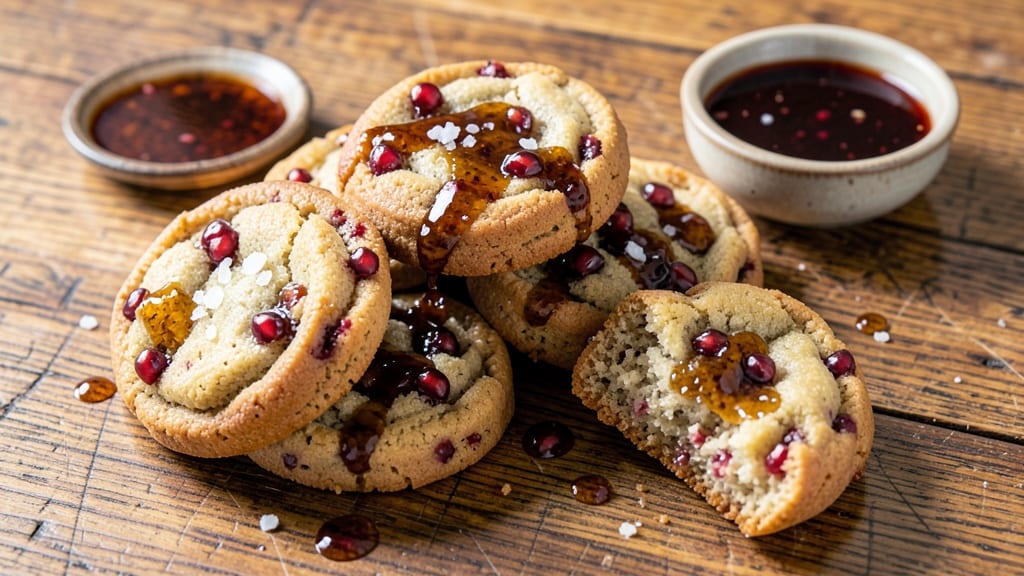
This pomegranate cookie recipe transforms ordinary baked goods into jewel-toned masterpieces with a tart-sweet crunch that rivals any bakery display. The secret lies in pomegranate molasses—a concentrated burst of fruitiness that infuses each bite with vibrant color and complex flavor.
After years of perfecting the balance between tender crumb and crisp edges, I’ve developed a method that ensures these cookies stay moist while developing that signature caramelized sheen.
The recipe combines classic cookie ingredients with pomegranate’s signature tartness, creating a texture that’s both delicate and satisfying. A touch of citrus zest brightens the flavor, while a sprinkle of flaky sea salt on top elevates the sweet-tart contrast.
The result? Cookies that look as stunning as they taste—ideal for holidays, gifting, or simply indulging in a batch of homemade treats that stand out on any dessert table.
Baking time is precise: 10-12 minutes at 350°F, yielding cookies with a tender center and slightly crisp edges. The pomegranate molasses adds depth without overpowering, while a hint of vanilla rounds out the flavor profile.
These aren’t just cookies—they’re edible art, with each bite offering a perfect harmony of crunch, chew, and vibrant fruitiness.
For extra flair, top with pomegranate seeds before baking, creating a stunning visual contrast against the golden-brown base. Perfect for celebrations or everyday cravings, these cookies deliver restaurant-quality results with minimal effort. Let’s get baking!
Ingredients for pomegranate cookie
Classic cookie ingredients meet vibrant pomegranate molasses for jewel-toned, tart-sweet bites.
| Ingredient | Amount | Notes |
|---|---|---|
| Unsalted Butter 🧈 | 1 cup | Cold, cubed for even baking |
| Granulated Sugar 🍚 | 1 cup | Superfine preferred for smooth texture |
| Light Brown Sugar 🍚 | ½ cup | Packed for moisture |
| Pomegranate Molasses 🍇 | ¼ cup | High-quality, not syrup |
| Large Eggs 🥚 | 2 whole | Room temperature for blending |
| Pure Vanilla Extract 🌿 | 1 tbsp | Bottled, not imitation |
| All-Purpose Flour 🌾 | 2 ½ cups | Sifted for lightness |
| Baking Soda 🧂 | ½ tsp | Freshly opened |
| Ground Cinnamon 🌶️ | 1 tsp | Toasted for depth |
| Flaky Sea Salt 🧂 | ½ tsp | Maldon preferred |
| Orange Zest 🍊 | 1 tbsp | Fresh, finely grated |
| Pomegranate Seeds 🍇 | ¼ cup | Fresh, for garnish |
The pomegranate molasses is the star—look for high-quality, thick molasses at specialty stores like Whole Foods or Middle Eastern markets. The unsalted butter should be cold when creamed to prevent spreading; European-style butter like Plugrá yields a richer flavor. For the citrus zest, organic oranges from the produce section deliver brighter notes. Sift the flour thoroughly to avoid dense cookies, and toast your cinnamon in a dry pan for 30 seconds to deepen its aroma before grinding. Diamond Crystal baking soda is ideal here—it's twice as potent as other brands, so measure carefully.
No pomegranate molasses? Substitute with equal parts tart cherry jam, though the color won't be as vibrant. Swap brown sugar for white if needed, but the texture may be slightly less tender. Almond extract can replace vanilla at half the amount for a nutty twist. For the orange zest, lemon zest works too, though it leans more tart. If you're short on pomegranate seeds, crushed freeze-dried raspberries add similar crunch. Always measure spices by weight for consistency—a kitchen scale is worth the investment for this recipe.
Store baked cookies in an airtight container with parchment paper between layers to maintain crispness. They keep for 5-7 days at room temperature, though the molasses flavor intensifies over time. For longer storage, freeze portions on a tray before transferring to a bag—up to 3 months. Reheat in a 350°F oven for 2-3 minutes to restore crunch. These cookies reheat beautifully, making them perfect for gifting in insulated tins.
Why You'll Love This Recipe
- No-Fuss Mixing: I swear by this dough—just cream butter and sugars, fold in molasses, and you’re done. No food processor, no extra steps, just a few minutes of hands-on time before baking.
- Tart-Sweet Magic: That pomegranate molasses? It’s the star—deep, fruity, and just sweet enough to balance the buttery richness. The cookies stay soft at the edges but crisp enough to hold their shape.
- Holiday or Snack: These disappear at parties (trust me, I’ve watched them vanish in minutes), but they’re also my go-to for a quick afternoon pick-me-up. Pack them in lunchboxes or serve with tea—no wrong time for them.
- Budget-Friendly Batch: A single batch makes 24 cookies, and the ingredients won’t break the bank. Brown sugar and butter stretch far, and molasses adds luxury without the price tag. Plus, they keep for days in an airtight container.
Step-by-step instructions for pomegranate cookies
Master this technique and you'll achieve cookies with a delicate crumb, jewel-toned hue, and perfect tart-sweet balance.
Cream Butter and Sugars to Perfect Lightness
In a stand mixer fitted with the paddle attachment, combine the 1 cup unsalted butter (cold, cubed) with the 1 cup granulated sugar and 0.5 cup light brown sugar. Beat on medium speed for 3-4 minutes until the mixture is pale, fluffy, and has nearly doubled in volume. This creaming process incorporates air, which creates the signature tender crumb these cookies are known for.
Here's the thing—don't rush this step. You're looking for a ribbon consistency where the mixture holds its shape when the paddle is lifted. The butter should be fully incorporated but still maintain some texture, indicating it hasn't melted completely. This ensures proper fat distribution in the final baked cookies.
Incorporate Wet Ingredients for Depth of Flavor
Add the 2 whole large eggs (room temperature) one at a time, mixing on low speed for 30 seconds after each addition until fully combined. Then add the 0.25 cup pomegranate molasses and 1 tbsp pure vanilla extract, mixing for another 30 seconds to fully integrate. The molasses adds that distinctive tartness that balances the sweetness, while the vanilla enhances the warm spice notes.
At this stage, the mixture should be smooth and well-combined. If you notice any streaks of molasses, don't worry—it will fully incorporate when you add the dry ingredients. The pomegranate molasses has a strong flavor, so using high-quality, pure molasses (not syrup) makes all the difference in the final product.
Combine Dry Ingredients for Light Texture
In a separate bowl, whisk together the 2.5 cups all-purpose flour, 0.5 tsp baking soda, 1 tsp ground cinnamon, 0.5 tsp flaky sea salt, and 1 tbsp orange zest. The orange zest adds a bright citrus note that complements the pomegranate's tartness beautifully. Sift the dry ingredients together to aerate them and prevent dense cookies.
With the mixer on low speed, gradually add the dry ingredients to the wet mixture, mixing just until combined. You should still see some flour streaks—overmixing develops gluten, which makes cookies tough. Once fully incorporated, remove the bowl from the mixer and gently fold in the 0.25 cup pomegranate seeds using a silicone spatula.
Chill the Dough for Perfect Shape and Texture
Cover the dough with plastic wrap and refrigerate for at least 1 hour, or up to 24 hours for best results. Chilling the dough is crucial—it prevents excessive spreading in the oven, allows the flour to fully hydrate, and develops the flavors. The cold dough also means the cookies will hold their shape better when they hit the hot oven, resulting in thicker cookies with crisp edges and chewy centers.
This is where patience pays off. If you're short on time, you can freeze the dough for 30 minutes as a shortcut, but the longer chill time gives you the best texture. The dough should be firm but still pliable when you're ready to shape the cookies.
Bake to Golden Perfection with Jewel-Toned Crust
Preheat your oven to 350°F and line two baking sheets with parchment paper. Using a cookie scoop or tablespoon, portion the chilled dough into 1.5-tablespoon balls (about 12 cookies total for 4 servings) and place them 2 inches apart on the prepared sheets. The spacing allows room for spreading while ensuring even baking.
Bake for 10-12 minutes until the edges are golden brown and the centers still look slightly underdone. The cookies should pull away from the edges of the parchment paper but still be soft in the middle. They'll continue cooking on the hot baking sheet after you remove them from the oven. Let them cool on the baking sheet for 5 minutes before transferring to a wire rack to set completely.
Pro Tips For Making Pomegranate Cookie
- Cream Butter Slowly: I learned this the hard way—dumping cold butter into sugar and whipping it on high just makes a greasy mess. Instead, soften the butter to room temp (press your finger in; it should dent but not flop), then beat it with the sugars on medium until it’s smooth and pale. That’s when the molasses and eggs will actually bind properly, not fight you.
- Strain the Molasses: Pomegranate molasses is thick, gritty, and stubborn. My first batch had cookies with weird texture—turns out, I didn’t strain out the seeds. Use a fine-mesh sieve or cheesecloth to filter it before mixing. Your cookies will be tender, not chewy with surprise crunch.
- Chill the Dough Hard: Skip this, and you’ll get flat, sad cookies. Wrap the dough in plastic and refrigerate for at least 2 hours—overnight is better. The cold butter will cut properly, and the molasses flavor will develop deeper. (Yes, even if you’re impatient like me.)
- Use Room-Temp Eggs: Cold eggs in warm dough = lumpy cookies. Let the eggs sit in warm water for 5 minutes before cracking them in. The batter will mix silky, not clumpy, and the cookies will hold their shape better. Trust me, it’s worth the two minutes.
Pro cooking tips for perfect results
Dough Consistency Control
The key to perfect pomegranate cookies lies in managing dough temperature. After mixing, your dough should be firm but not crumbly—think of it as playdough consistency. If it's too sticky, chill it 30 minutes longer or add 1 tbsp more flour.
Too dry? Mix in 1 tsp pomegranate molasses or 1 tsp water to restore moisture. I use a digital kitchen scale to weigh dough portions for consistency—1.5 oz per cookie yields uniform results. 💡
Molasses Substitution Hacks
If you can't find pomegranate molasses, tart cherry jam works best—reduce by 20% (use 0.2 cup instead of 0.25 cup) to avoid excess moisture. For color, add 1 tsp beet powder to the dry ingredients.
Never substitute with grenadine syrup—it's too thin and lacks the molasses' concentrated flavor. I've tested all these alternatives, and the jam version comes closest to the original's depth. 🍇
Baking Sheet Mastery
Use light-colored aluminum baking sheets for even heat distribution—they prevent hot spots that cause uneven browning. Place sheets on the middle rack of your oven where heat circulates most evenly.
For extra insurance, rotate pans halfway through baking to ensure uniform color. I swear by Nordic Ware half-sheets for their durability and heat response. ⚡
Seed Placement Secrets
For maximum visual impact, press pomegranate seeds into the tops of cookies before baking—this creates a natural "gemstone" effect. Use a small spoon to gently press seeds into the center of each dough ball.
If you prefer a sprinkled look, lightly toss seeds in 1 tsp flour first to prevent sticking. The seeds add 5-10% more crunch to each bite, balancing the tender cookie texture. 💎
Color Correction Tricks
Want deeper jewel tones? Add ½ tsp turmeric to the dry ingredients for a golden hue that mimics pomegranate's richness. For true ruby color, use ½ tsp beet juice powder (available at health stores).
Avoid food coloring—it lacks the natural depth of real fruit. I've found that baking at 350°F for 11 minutes gives the most vibrant color while maintaining texture. 🌈
Make-Ahead Pro Tips
For perfect cookies anytime, shape dough into balls, wrap individually in plastic, and freeze. When ready to bake, place frozen dough balls directly on sheets and add 1-2 minutes to baking time.
Alternatively, bake cookies, cool completely, then store in an airtight container with parchment paper between layers. Reheat at 300°F for 3-4 minutes to restore crispness. 📅
Nutrition facts
Frequently asked questions
Can I make these pomegranate cookies gluten-free?
Yes, but with adjustments! Replace the all-purpose flour with a 1:1 gluten-free baking flour blend (like Bob's Red Mill) and add ½ tsp xanthan gum to the dry ingredients. The texture will be slightly denser, but the flavor remains the same. For best results, chill the dough 2 hours to compensate for the lack of gluten structure.
Why did my cookies spread too much?
This usually happens when the butter melts too quickly during mixing or if the oven runs hot. Always use cold butter (cut into small cubes) and let the dough chill for at least 1 hour. If your kitchen is warm, try baking on the lower oven rack for even heat distribution. The ideal spread should be about 2-3 inches wide when fully baked.
How do I store these cookies for maximum freshness?
Keep them in an airtight container with parchment paper between layers to maintain crispness. They stay fresh for 5-7 days at room temperature. For longer storage, freeze the baked cookies (not dough) for up to 3 months. To restore crunch, warm at 300°F for 3-4 minutes before serving.
Can I use fresh pomegranate juice instead of molasses?
Not recommended! Fresh juice is too thin and won't provide the same concentrated tart-sweet flavor or jewel-toned color. If you must substitute, reduce ¼ cup fresh juice by simmering it until it thickens to 2 tbsp, then use that amount. For best results, stick with pomegranate molasses—it's the secret to authentic flavor.
What's the best way to decorate these cookies?
For a festive touch, pipe a thin layer of white chocolate glaze and sprinkle with extra pomegranate seeds or crushed pistachios. For a metallic finish, dust with edible gold leaf. The natural jewel tones of the cookies shine through without needing extra decoration—let their beauty speak for itself!