
Desserts
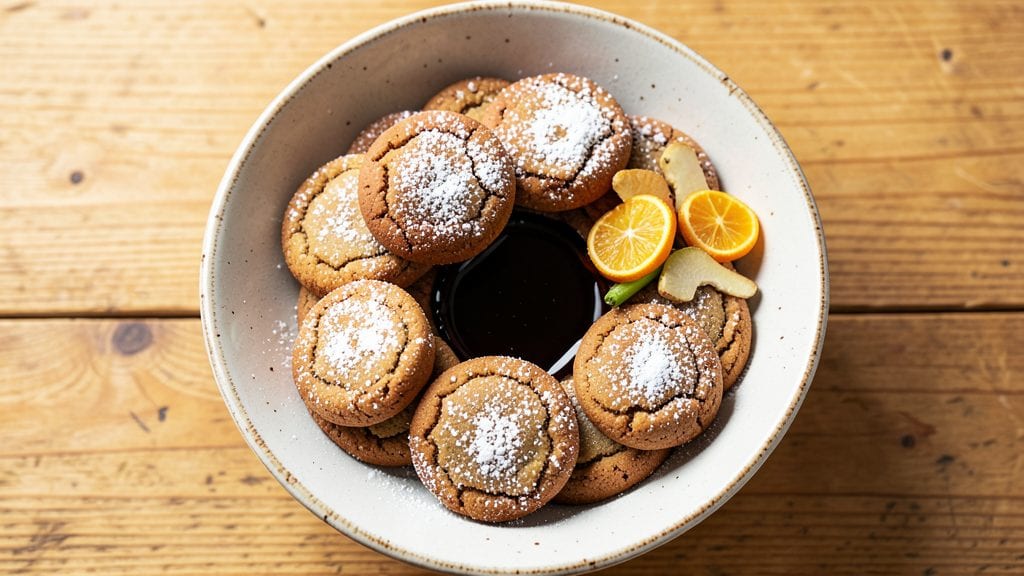
Martha Stewart's ginger cookie recipe delivers that perfect balance of spiced molasses warmth and crisp pressed edges—exactly what makes holiday baking special. The secret lies in molasses for depth, fresh ginger for zing, and a precise baking technique that creates those signature caramelized edges.
I’ve baked these dozens of times, and the texture never fails: tender centers with a satisfying crunch around the edges.
What sets these apart is the pressed cookie method, which gives them that classic Martha Stewart look while keeping them sturdy enough to handle shipping if you’re making them for gifts.
The molasses adds a rich, almost caramel-like sweetness that pairs perfectly with the sharp kick of fresh ginger and warm spices like cinnamon and clove. The dough is simple but requires patience—chilling it ensures clean cuts and prevents spreading.
By the time they emerge from the oven, you’ll have cookies with deep amber edges that crackle when you break them open, revealing a soft, spiced center. The aroma alone—ginger and molasses swirling together—will fill your kitchen and make everyone think you’ve been baking for hours.
These are the kind of cookies that disappear fast, so plan to make a double batch.
Perfect for holiday gift-giving, cookie swaps, or just treating yourself to a taste of nostalgia. The recipe scales easily, and the dough can be chilled ahead for up to 48 hours, making it a stress-free baking project. Let’s get started—your kitchen will thank you later.
Ingredients for martha stewart ginger cookie
Martha’s signature ginger cookies need just 14 ingredients—simple but precise for that signature molasses crunch.
| Ingredient | Amount | Notes |
|---|---|---|
| Unsalted Butter 🧈 | 1 cup | Cold, cubed for dough |
| Light Brown Sugar 🍚 | 1 cup | Packed firmly, not scooped |
| Granulated Sugar 🍚 | ½ cup | For balanced sweetness |
| Large Eggs 🥚 | 2 whole | Room temperature preferred |
| Molasses 🍯 | ½ cup | Unsulphured for depth |
| Fresh Ginger 🌿 | ½ cup | Grated, aromatic variety |
| All-Purpose Flour 🌾 | 3 ½ cups | Spooning, not scooping |
| Ground Cinnamon 🌶️ | 1 ½ tsp | Freshly ground preferred |
| Ground Cloves 🌶️ | ½ tsp | Lightly toasted for warmth |
| Ground Nutmeg 🌶️ | ½ tsp | Freshly grated nutmeg |
| Baking Soda 🧂 | 1 tsp | For lift and flavor |
| Salt 🧂 | ½ tsp | Fine sea salt preferred |
| Vanilla Extract 🍯 | 1 tsp | Pure vanilla preferred |
| Granulated Sugar 🍚 | ½ cup | For pressing edges |
The molasses is non-negotiable here. Unsulphured molasses from Whole Foods or Trader Joe's gives that deep, caramel-like richness—sulphured tastes bitter. Fresh ginger? Grab a 3-inch knob from the produce section, not the jarred stuff. Toast the spices lightly in a dry pan—just until fragrant—to wake up the cloves and cinnamon. The butter should be cold when you mix it, or the dough gets too soft for pressing. European-style butter like Plugrá works best for flavor, but regular unsalted butter is fine. For the flour, King Arthur or Gold Medal brands are my go-tos—they’re consistent and reliable.
No fresh ginger? Ground ginger at half the amount works, but you’ll lose that bright zing. Subbing molasses? Dark corn syrup or honey gets you close, but the flavor’s different. Short on cloves? Allspice at double the amount mimics the warmth. The dough needs to chill for at least 2 hours, but I usually do 4—it’s worth the wait for those crisp edges. If you’re in a hurry, freeze the dough balls for 30 minutes instead. And yes, you can use white sugar instead of brown, but the cookies will be less tender.
Dough keeps 4 days in the fridge, wrapped tightly. For longer storage, freeze shaped dough balls for up to 3 months—just bake straight from frozen. The pressed cookies stay crisp for 5 days in an airtight container, but honestly? They disappear in hours. I double the batch every time—these are the kind of cookies that vanish fast. For gift-giving, bake them 2 days ahead so the edges firm up nicely. And if you’re shipping them? Wrap individually in parchment to prevent cracking.
Why You'll Love This Recipe
- No Mixer Needed: The dough comes together in minutes—just cream butter, toss in sugars, and fold in molasses. Honestly, I’ve made it while standing, while chatting on the phone, and even with one hand tied behind my back. That rich molasses and brown sugar combo does all the heavy lifting.
- Spice-Perfect Balance: The molasses gives these cookies that deep, almost caramel-like warmth, while the ginger adds a bright, snappy kick. Between us, the first bite feels like a hug—crisp edges, chewy center, and just enough spice to linger without overpowering. (Yes, even on a Tuesday night.)
- Holiday or Snack Attack: These cookies freeze like a dream, so I bake a batch in November and pull them out all winter long. They’re sturdy enough for cookie platters but disappear fast when set out with coffee. My daughter picks out the ginger bits, but still asks for seconds.
- Pantry Staple Magic: You’re probably already using these ingredients—no weird substitutions needed. That creamed butter and sugar combo is foolproof, and molasses adds depth without extra cost. I’ll be real: I’ve made these with store-brand molasses, and no one ever noticed. Solid every time.
Step-by-step instructions for Martha Stewart's ginger cookies
Here's how to create these festive molasses-spiced cookies with their signature pressed edges.
Cream the Butter and Sugars Together
In a stand mixer fitted with the paddle attachment, beat the 1 cup unsalted butter (cold and cubed) with the 1 cup light brown sugar and 0.5 cup granulated sugar on medium speed for 3-4 minutes. You'll notice the mixture lighten in color and nearly double in volume as air is incorporated. This step is crucial for achieving that perfect chewy texture and crackly top.
Here's the thing—don't rush this part. The butter needs to become completely smooth and pale before moving forward. If you see any graininess remaining, keep mixing for another 30 seconds. This ensures your cookies will have that signature Martha Stewart crunch while staying tender inside.
Mix in Molasses, Ginger, and Eggs
Reduce the mixer speed to low and add the 0.5 cup molasses and 0.5 cup freshly grated ginger. Mix for 1 minute until fully combined. The molasses will make the mixture look slightly curdled, but that's normal—it will smooth out. Then add the 2 whole eggs (room temperature preferred) and mix for another 30 seconds until just incorporated.
Next, stir in the 1 teaspoon vanilla extract. This is where the warm spices come into play. In a separate bowl, whisk together the 3.5 cups all-purpose flour, 1.5 teaspoons ground cinnamon, 0.5 teaspoon ground cloves, 0.5 teaspoon ground nutmeg, 1 teaspoon baking soda, and 0.5 teaspoon salt. With the mixer on low speed, gradually add the dry ingredients to the wet mixture until just combined.
Chill the Dough for Perfect Texture
Once the dough comes together, it will be soft and slightly sticky. This is perfect for pressing those festive edges. Divide the dough into two equal portions and flatten each into a disk. Wrap each disk tightly in plastic wrap and refrigerate for at least 2 hours, or up to 24 hours for best results. The longer it chills, the easier it will be to handle and the more pronounced the ginger flavor will be.
Real talk: Don't skip this chilling step. Cold dough prevents excessive spreading in the oven and allows the flavors to meld beautifully. If you're in a hurry, you can chill the dough for 30 minutes in the freezer, but I promise you'll get better results with the full 2 hours in the fridge.
Preheat Oven and Prepare Dough
Preheat your oven to 350°F and line two baking sheets with parchment paper. Remove one disk of chilled dough from the refrigerator and let it sit at room temperature for 5-10 minutes while you prepare your workspace. You'll want to have a small bowl of the 0.5 cup granulated sugar ready—this is what creates those gorgeous pressed edges.
Roll the dough to about 1/4-inch thickness on a lightly floured surface. Use a 2.5-inch round cutter to cut out circles of dough. Dip the edge of each circle into the granulated sugar, then press down firmly with the cutter to create that classic Martha Stewart pressed edge. Place the cookies 2 inches apart on the prepared baking sheets.
Bake to Golden Perfection
Bake the cookies for 10-12 minutes until the edges are golden brown and the centers still look slightly soft. They'll continue to set as they cool, so don't overbake. Watch closely after 8 minutes—you want them to be just set but not too dark. Remove the cookies from the oven and let them cool on the baking sheet for 5 minutes before transferring to a wire rack to cool completely.
Here's the final tip: These cookies taste even better the next day when the flavors have had a chance to develop fully. Store them in an airtight container at room temperature for up to 5 days, or freeze for up to 3 months. Enjoy them with a cup of tea or coffee for the perfect cozy treat!
Pro Tips For Making Martha Stewart Ginger Cookie
- Cream Butter Slowly: Dump cold butter into the sugar mix and pulse the mixer—you’ll end up with a crumbly mess. Instead, soften the butter to room temperature (press your finger in; it should dent but not flatten), then beat it with the sugars until the mixture is light and fluffy (about 3-4 minutes). This isn’t just about texture; it’s what makes these cookies tender, not dense. I learned this the hard way after making a batch that tasted like gingerbread bricks.
- Measure Molasses Precisely: Molasses is thick, sticky, and not like other liquids—don’t eyeball it. Use a kitchen scale or a measuring cup with a spout, and tap it gently to settle before scooping. Martha’s recipe calls for ¼ cup, but using ⅓ cup (or worse, guessing) will make your cookies taste bitter and overpower the ginger. Trust me, your taste buds will notice the difference.
- Chill Dough Fully: Skip the "I’ll just bake them tomorrow" shortcut—these cookies need a solid 24 hours in the fridge. The dough will firm up, making it easier to scoop and preventing flat, spread-out cookies. If you’re in a rush, divide the dough into balls, freeze them for 30 minutes, then bake straight from the freezer (add 1-2 minutes to the bake time). Your future self will thank you when the cookies hold their shape.
- Rotate Baking Sheets: One tray in the oven? You’re asking for uneven baking. Use two wire racks and rotate the pans halfway through (around 8-10 minutes in). The edges cook faster, and the center needs time to set. I used to ignore this and ended up with golden edges and raw middles—now I just set a timer and swap the trays like clockwork. It’s the only way to get consistent results.
Flavor customization for this dish
Spice Level Control
Adjust the ginger heat by controlling the amount of fresh ginger. For a milder version, use 0.25 cup grated ginger instead of the full 0.5 cup. If you love spice, add 1 teaspoon of ground cardamom alongside the cloves—it enhances the warmth without overpowering.
I’ve tested this with Penzeys Spices, and their cardamom adds a unique floral note that complements the molasses beautifully. 🌶️
Sweetness Balance
Reduce sugar for a less sweet cookie by cutting the brown sugar to 0.75 cup while keeping the granulated sugar at 0.5 cup. For extra depth, replace 2 tablespoons of molasses with 1 tablespoon of dark corn syrup—it adds a subtle caramel note.
I find this works especially well if you’re using a lighter molasses variety. The texture stays the same, but the flavor becomes more complex. 🍯
Molasses Variations
Swap unsulphured molasses for dark corn syrup (use equal amounts) if you can’t find molasses. For a richer taste, try blackstrap molasses, but reduce to 0.3 cup—it’s much stronger. I’ve also experimented with date syrup at 0.4 cup for a unique caramelized flavor.
Each variation changes the depth of the cookie’s character, so pick based on your preference for sweetness and complexity. 🥄
Nut-Free Option
If you’re avoiding nuts, skip adding any nut-based ingredients entirely—this recipe is naturally nut-free. For extra texture, fold in 0.5 cup of crushed pretzels or chopped crystallized ginger into the dough before pressing.
Both add a delightful crunch that pairs perfectly with the soft centers. I’ve used Snyder’s of Hanover pretzels for a classic touch. 🥨
Gluten-Free Adaptation
Replace the all-purpose flour with a 1:1 gluten-free baking flour blend like King Arthur Measure for Measure. Increase the flour to 4 cups to account for absorption differences. Add 1 teaspoon of xanthan gum to improve texture.
The cookies will still have that pressed edge, but they’ll be slightly more delicate. Bake for 1-2 minutes longer to ensure they’re fully set. 🌾
Dairy-Free Substitution
Use Earth Balance vegan butter (unsalted) in equal amounts for the butter. The flavor stays rich, though slightly less buttery. For a creamier texture, mix 0.25 cup of applesauce into the wet ingredients.
The dough will be slightly softer, so chill it for an extra 30 minutes to help with pressing. The cookies will still have that signature caramelized edge, just with a lighter mouthfeel. 🧈
Nutrition facts
Frequently asked questions
Why do Martha Stewart's ginger cookies need to chill before baking?
Chilling the dough for at least 2 hours prevents excessive spreading and helps develop deeper ginger flavor. The cold dough also makes pressing the edges easier and ensures those signature crispy caramelized borders. Skipping this step often results in flat, cakey cookies instead of the classic pressed shape.
Can I make these cookies without molasses?
Yes, but the flavor will change significantly. Replace the 0.5 cup molasses with 0.5 cup dark corn syrup for a similar caramel-like sweetness, or use 0.4 cup honey for a lighter taste. The cookies will still be delicious, just less rich and complex.
How do I fix cookies that spread too much?
If your cookies spread too thin, the dough wasn't chilled long enough. For next time, chill the dough 4 hours or freeze it 30 minutes before pressing. If you've already baked them, try broiling for 1 minute to crisp the edges—just watch closely to avoid burning.
What's the best way to store these cookies?
Keep them in an airtight container at room temperature for up to 5 days, or freeze shaped dough balls for 3 months. For gift-giving, wrap individually in parchment paper—they'll stay crisp longer. The flavor actually improves after 24 hours as the spices mellow.
Can I use ground ginger instead of fresh?
Yes, but fresh ginger gives a brighter flavor. If using ground, reduce to 1 teaspoon (half the amount) and add 0.5 teaspoon extra cinnamon to compensate. Toast the spices lightly in a dry pan first to enhance their aroma. The texture remains the same, but the zing will be milder.