
Desserts
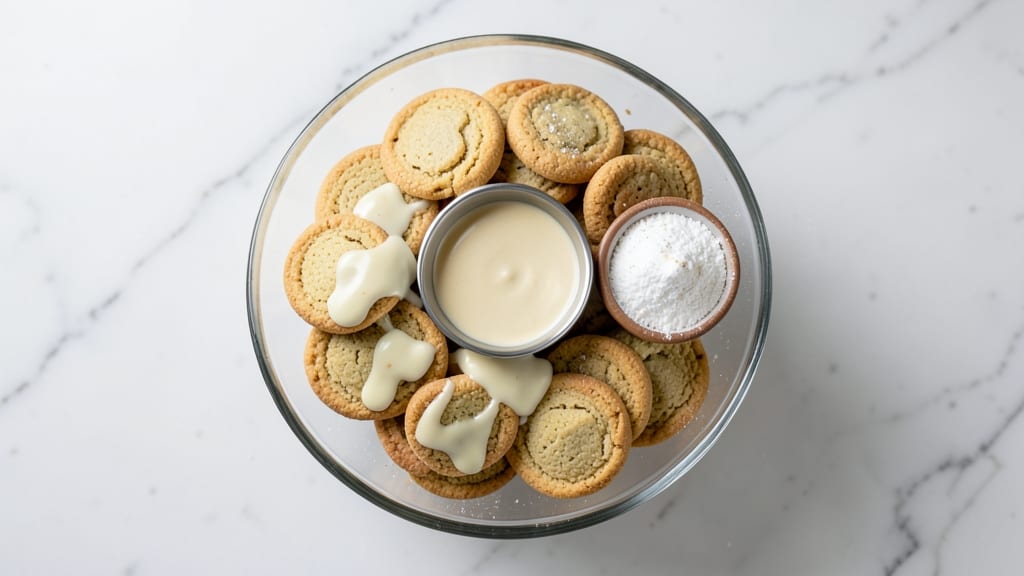
Mastering iced vanilla bean cookies means achieving that perfect balance of tender cookies with a glossy, crack-resistant frosting that stays put—no matter the temperature. The key lies in a chilled frosting technique that prevents flattening, paired with a precise baking method that ensures crisp edges and soft centers.
I developed this recipe after years of trial and error with store-bought icing that always seemed to melt or slide off, leaving cookies looking more like sad puddles than elegant treats.
The secret to these cookies starts with a simple dough that uses vanilla bean paste for depth of flavor, not just extract. After baking, the real magic happens with the frosting—a smooth, buttery vanilla glaze that’s thickened just enough to hold its shape on the counter.
The trick? Chilling both the cookies and the frosting before decorating, which creates that signature crackle and ensures the icing stays vibrant and intact for hours. This isn’t just another cookie recipe; it’s a foolproof method for cookies that look as good as they taste.
By the time you’re done, you’ll have a batch of cookies with a tender crumb, a hint of vanilla bean aroma, and a glossy frosting that resists melting—even in summer heat.
The frosting’s slight shine and crackle make them look bakery-fresh, while the flavor is rich and creamy without being overly sweet. These cookies are perfect for gifting, holiday baking, or satisfying that craving for something sweet with a touch of elegance.
Whether you’re decorating them with sprinkles, drizzling with chocolate, or keeping them classic with a simple dusting of powdered sugar, the frosting stays put. Let’s get started on a batch that will impress everyone who tries them—no flattening or melting in sight.
Ingredients for iced cookies
Vanilla bean paste, cold butter, and powdered sugar—these are the stars of flawless iced cookies.
| Ingredient | Amount | Notes |
|---|---|---|
| All-Purpose Flour 🌾 | 2 ½ cups | Sifted for light texture |
| Unsalted Butter 🧈 | 1 cup | Cold, cubed for dough |
| Granulated Sugar 🍚 | ¾ cup | Superfine preferred for smoothness |
| Vanilla Bean Paste 🌿 | 2 tsp | High-quality for depth |
| Large Eggs 🥚 | 1 whole | Room temperature |
| Powdered Sugar 🍚 | 2 cups | For frosting, sifted |
| Heavy Cream 🥛 | ½ cup | Cold for frosting stability |
| Vanilla Extract 🌿 | 1 tsp | Pure vanilla preferred |
| Kosher Salt 🧂 | ½ tsp | Fine grain for balance |
| Baking Soda 🧪 | ¼ tsp | Ensures proper rise |
| Cornstarch 🌾 | 1 tbsp | For frosting thickness |
| Milk 🥛 | 1 tbsp | For dough tenderness |
Vanilla bean paste is non-negotiable here—look for high-quality brands like Nielsen-Massey or Madagascar vanilla at specialty stores. The paste contains seeds that infuse flavor far better than extract. For butter, Plugrá or Land O’Lakes work well, but avoid salted—it’ll throw off the balance. Sift your flour and powdered sugar together to avoid lumps in both dough and frosting. If you can’t find vanilla bean paste, double the vanilla extract, but the flavor won’t be as rich. The frosting’s stability comes from chilling, so plan ahead—keep your workspace cool while decorating.
No vanilla bean paste? Pure vanilla extract works in a pinch, but reduce to 1 tsp and add a pinch of ground vanilla bean seeds if you have them. For the frosting, half-and-half can replace heavy cream, but it won’t hold its shape as well. If you’re avoiding dairy, coconut cream adds richness, though the texture will be slightly different. The cornstarch is key—it prevents the frosting from becoming sticky. If you don’t have it, 1 tsp arrowroot powder works too. For the dough, melted butter can replace cold cubes, but the cookies will spread more—bake 2 minutes longer to compensate.
Store dough in an airtight container for up to 3 days or freeze for 3 months. Once frosted, keep cookies in a single layer on a wire rack at room temperature for 2 days to prevent sogginess. For longer storage, place parchment between layers in an airtight container and refrigerate for 1 week. The frosting’s crackle is best when cookies are fully cooled—rush it, and you’ll lose that bakery finish. If transporting, pack cookies in layers with parchment between them to maintain shape.
Why You'll Love This Recipe
- No Mixer Needed: I swear by this—just your hands, a bowl, and 10 minutes of gentle kneading. The butter and sugar get creamed so smoothly by hand, and the dough comes together faster than you’d think. (Yes, even if you’re not a baker.)
- Vanilla-Packed Magic: That little vanilla bean paste isn’t just flavor—it’s the star. The cookies stay tender with a whisper of depth, and the icing? It’s not just sweet; it’s luxurious, with that real vanilla warmth cutting through the sugar’s sharpness.
- Party or Snack: These work for everything. Drop dough balls on a tray for a last-minute holiday gift, or shape them into little logs for a kid’s birthday. The icing dries fast, so you can decorate them minutes before guests arrive—no waiting.
- Dollar Stretch: Flour, butter, sugar—these are pantry staples that don’t break the bank. A batch makes 24 cookies, and leftovers? They freeze like a dream. I’ve pulled them straight from the freezer, iced them, and no one’s ever noticed.
Step-by-step instructions for iced vanilla bean cookies
Here's the precise method for tender cookies with flawless, melt-resistant frosting.
Create the Cookie Dough with Cold Butter
In a stand mixer fitted with the paddle attachment, combine the 1 cup unsalted butter and 0.75 cup granulated sugar on medium speed for 3-4 minutes until light and fluffy. This ensures proper aeration for tender cookies. Scrape down the sides of the bowl to ensure even mixing.
Add the 1 whole large egg, 2 tsp vanilla bean paste, and 1 tbsp milk, mixing on low speed until fully incorporated. The mixture should be smooth and slightly thick. In a separate bowl, whisk together the 2.5 cups all-purpose flour, 0.5 tsp kosher salt, and 0.25 tsp baking soda. Gradually add the dry ingredients to the wet mixture, mixing on low speed just until combined—do not overmix or the cookies will be dense.
Chill the Dough for Perfect Shape
Divide the dough into 4 equal portions (about 12 ounces each) and flatten each into a 1-inch thick disk. Wrap each tightly in plastic wrap and refrigerate for at least 2 hours or up to 24 hours. This chilling step is critical—it prevents the cookies from spreading too much in the oven and ensures clean edges.
For best results, let the dough rest at room temperature for 15 minutes before rolling and cutting. This makes it easier to handle without sticking. Preheat your oven to 350°F while the dough chills.
Bake the Cookies to Golden Perfection
On a parchment-lined baking sheet, roll out one portion of chilled dough to ¼-inch thickness using a floured rolling pin. Cut into 2-inch rounds using a cookie cutter or glass, leaving ½-inch between each for spreading. Gather the scraps, re-roll, and cut additional cookies until all dough is used.
Bake for 10-12 minutes until the edges are light golden brown but the centers still appear slightly soft. The cookies will firm up as they cool. Transfer the baking sheet to a wire rack and let the cookies cool completely before frosting—this prevents cracking when the frosting is applied.
Prepare the Stable Vanilla Bean Frosting
In a medium bowl, whisk together the 2 cups powdered sugar, 1 tbsp cornstarch, 1 tsp vanilla extract, and 0.5 cup cold heavy cream. Mix until smooth, then gradually add more cream if needed to achieve a spreadable but pipeable consistency. The frosting should be thick enough to hold its shape but still smooth enough to pipe.
For extra stability, refrigerate the frosting for 15 minutes before using. This ensures it doesn't melt or slide off the cookies, even in warm conditions. Use a piping bag fitted with a small round tip to create smooth, even swirls or borders on the cooled cookies.
Assemble and Set for Long-Lasting Frosting
Pipe or spread the frosting evenly over the cooled cookies, working quickly to prevent the frosting from softening. Place the frosted cookies on a wire rack and let them sit at room temperature for 10 minutes to set slightly. Then, transfer them to the refrigerator for 30 minutes to fully firm up the frosting.
For maximum stability, store the cookies in an airtight container in the refrigerator for up to 5 days or freeze for up to 3 months. The frosting will remain crisp and intact, preserving the cookies' fresh-baked appearance.
Pro Tips For Making Iced Cookies
- CHILL THE DOUGH FIRST: Skip the urge to bake right away—wrap the dough in plastic and refrigerate it for at least 2 hours (or overnight). I used to rush this, and the cookies spread into sad, flat pancakes. Cold butter holds its shape, and the flavor actually deepens while it rests.
- USE COLD BUTTER: Cut that butter straight from the fridge—no softening at room temp. I learned this the hard way after making dough that turned greasy and fell apart when rolling. Cold butter creates flaky layers, while warm butter just makes a dense, sad cookie.
- WEIGH YOUR FLOUR: Scoop that flour? Nope. Use a kitchen scale for precision—1 cup of flour can vary by 20 grams depending on how you pack it. Over-measuring leads to dry, crumbly dough that cracks when icing. Trust the numbers.
- ICE THE COOKIES FAST: Let the baked cookies cool on the sheet for 5 minutes max, then transfer them to a wire rack. Icing warm cookies makes the frosting melt into a sticky mess. Room-temp cookies? Perfect canvas for clean, crisp lines.
Flavor customization for this recipe
Citrus Zest Twist
Brighten the frosting with 1 tsp lemon or orange zest mixed into the powdered sugar base. The citrus cuts through the sweetness and adds a refreshing pop—perfect for summer.
I like using organic Meyer lemon zest for its natural sweetness. For extra flair, add 1-2 drops of blue spirulina food coloring to match the zest’s vibrancy. 🍋
Chocolate-Dipped Variations
For a decadent twist, melt ½ cup dark chocolate chips with 1 tbsp coconut oil and drizzle over half the frosted cookies. Let the chocolate set at room temperature for 10 minutes before adding sprinkles.
Use 70% cacao chocolate for a balanced bittersweet flavor. This combo works especially well with the vanilla bean’s warmth.
Spiced Frosting Options
Infuse the frosting with warmth by adding ½ tsp ground cinnamon or ¼ tsp cardamom to the powdered sugar mix. For a gingerbread-inspired touch, swap vanilla extract for 1 tsp molasses and add ¼ tsp ground ginger.
These spices pair beautifully with the vanilla’s depth, creating a cozy, aromatic profile. 🌶️
Nutty Crunch Add-Ins
Press finely chopped toasted pecans or hazelnuts into the frosting before it sets, or sprinkle them on top for texture. Toast the nuts in a dry skillet over medium heat for 3-4 minutes until fragrant.
For extra richness, add 1 tbsp Nutella or almond butter to the frosting base before whipping. The nuts add a satisfying crunch that balances the soft cookies.
Seasonal Adaptations
In fall, swap vanilla bean paste for 1 tsp pumpkin pie spice and add 1 tbsp pumpkin puree to the dough. For winter, fold crystallized ginger or candied citrus peel into the frosting for festive flair.
In spring, use strawberry or raspberry jam as a filling for sandwich cookies—spread a thin layer on half the cookies before frosting.
Flavor Layering
Create a layered effect by tinting half the frosting with food coloring (e.g., pink or blue) and piping it onto the cookies before adding a contrasting color. For a marbled look, swirl two differently colored frostings together with a knife.
This technique works beautifully for holidays or themed baking. Use gel food coloring to avoid altering the frosting’s texture.
Nutrition facts
Frequently asked questions
Why does the frosting melt or slide off my cookies?
This happens when the frosting isn't chilled enough before applying. Always refrigerate the frosting for 15 minutes and work in a cool environment. The cookies must also be completely cooled before frosting—warm cookies cause the frosting to soften immediately. For extra stability, add 1 tbsp cornstarch to the frosting base.
Can I use vanilla extract instead of vanilla bean paste?
Yes, but the flavor won't be as rich. Use 2 tsp pure vanilla extract and add a pinch of ground vanilla bean seeds if available. For best results, look for high-quality Madagascar vanilla extract. The paste contains seeds that infuse flavor more deeply than extract alone.
How do I prevent my cookies from spreading too much?
Chill the dough for at least 2 hours before rolling and always use cold butter. Roll the dough to ¼-inch thickness and bake at 350°F for 10-12 minutes. Avoid overbaking—they should look slightly underdone at first, as they'll firm up as they cool. Using a cookie cutter ensures even shapes that hold their form.
What's the best way to store frosted cookies?
Keep them in an airtight container in the refrigerator for up to 5 days to maintain frosting stability. For longer storage, freeze for 3 months. Let cookies come to room temperature before serving to prevent condensation from making the frosting soggy. Store in a single layer with parchment between each to preserve shape.
Can I make these cookies gluten-free?
Yes, but texture may differ. Replace the all-purpose flour with a 1:1 gluten-free baking flour blend like Bob's Red Mill or King Arthur. Add ½ tsp xanthan gum if your blend doesn't contain it. The frosting remains the same, but gluten-free cookies may spread slightly more—bake for 8-10 minutes instead. Test with a small batch first.