Breakfast & Brunch
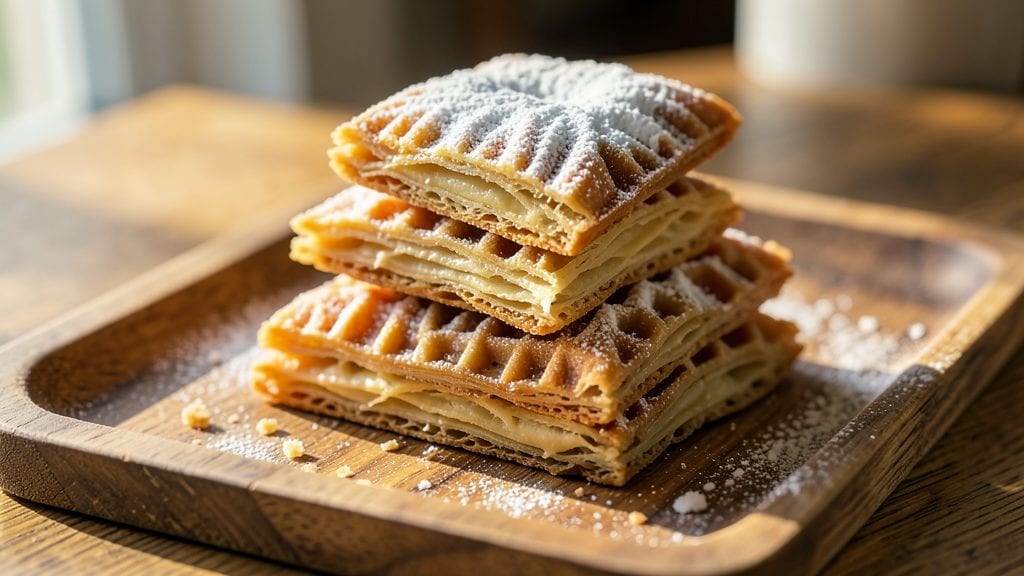
Mastering French palmier cookies means achieving that signature crispy, wafer-like texture with a delicate vanilla buttercream layer—it’s the kind of treat that feels both elegant and nostalgic.
These delicate cookies, with their signature fan shape, are traditionally made with a simple dough that puffs beautifully in the oven, creating those iconic crisp layers. The secret lies in precise rolling and baking techniques that transform a basic dough into something restaurant-worthy.
What sets these cookies apart is their perfect balance of crispness and tenderness, achieved through a well-proportioned dough and careful baking. The vanilla buttercream filling adds a luxurious touch without overpowering the delicate flavor of the cookies themselves.
This recipe delivers crispy edges that shatter slightly when bitten, paired with a smooth, sweet filling that melts perfectly.
Once baked to golden perfection, the cookies are dusted with powdered sugar for an extra touch of elegance. The result is a treat that’s both visually stunning and irresistibly delicious—ideal for breakfast, afternoon tea, or as a sweet ending to a meal.
Whether you're baking for a special occasion or simply indulging in a classic, this recipe ensures every bite is a delight.
These cookies also adapt beautifully to modern tastes—swap the traditional vanilla buttercream for chocolate ganache or lemon curd for a twist on the classic. The key is in the technique, and once you master it, you’ll have a foolproof method for creating these iconic French treats time and time again.
Ingredients for french palmier cookies
Nine essential ingredients transform into delicate, crisp French palmier cookies with perfect vanilla buttercream layers.
| Ingredient | Amount | Notes |
|---|---|---|
| Unsalted Butter 🧈 | 1 cup | Cold, cubed for dough |
| Granulated Sugar 🍚 | ½ cup | Superfine preferred for even texture |
| All-Purpose Flour 🌾 | 2 ½ cups | Sifted, no substitutes |
| Vanilla Extract 🌿 | 1 tsp | Pure Madagascar preferred |
| Salt 🧂 | ¼ tsp | Fine sea salt preferred |
| Powdered Sugar 🍚 | 2 cups | For dusting and buttercream |
| Heavy Cream 🥛 | ½ cup | Cold, for buttercream |
| Vanilla Bean Paste 🌿 | 1 tbsp | Or 1 tsp pure extract |
| Cornstarch 🌾 | 1 tbsp | For buttercream stability |
The butter must be cold—pull it from the fridge 20 minutes before use to soften slightly but maintain shape. European-style butter (like Plugrá or President) has higher fat content, ideal for crisp layers. For the flour, King Arthur or Gold Medal brands yield the best texture. Sift both flour and powdered sugar together to eliminate lumps—this prevents dense cookies. The vanilla bean paste adds depth without overpowering, though pure extract works in a pinch. Avoid imitation vanilla—it lacks the nuanced aroma crucial for these delicate cookies.
No superfine sugar? Pulse granulated sugar in a food processor for 30 seconds to achieve the same fine texture. Substituting powdered sugar with cornstarch? Use 1:1 ratio but expect slightly less shine. For the buttercream, heavy cream must be cold—warm cream creates a soupy filling. The cornstarch is non-negotiable; it prevents the buttercream from weeping. Room-temperature butter for the filling ensures smooth incorporation. If you prefer a tangier profile, add 1/2 tsp lemon zest to the buttercream. For a modern twist, replace vanilla with 1 tbsp chocolate ganache or 1 tsp lemon curd—just reduce powdered sugar slightly to balance sweetness.
Store unbaked dough in an airtight container with parchment between layers for up to 3 days in the fridge. Baked cookies keep their crispness for 5 days in a sealed tin at room temperature. For longer storage, freeze fully assembled cookies (without powdered sugar) for 3 months—reheat at 300°F for 5 minutes to restore crispness. The buttercream can be made 2 days ahead and stored airtight in the fridge; whip briefly before using to restore texture. Dust with powdered sugar just before serving to maintain that signature elegant finish.
Why You'll Love This Recipe
- Five-Ingredient Magic: I swear by this recipe—just butter, sugar, flour, vanilla, and a pinch of salt. That’s it. No fancy add-ins, no last-minute grocery runs. The dough comes together faster than you can say "palmier," and honestly? The simplicity makes it feel like a little victory every time.
- Buttery Crunch Perfection: Between us, the moment those cookies hit the oven and the edges turn golden? That crispy, flaky magic is chef’s kiss. The butter melts into layers so thin you can almost see through them, while the center stays soft—like a hug in cookie form. (Yes, even on a Tuesday night.)
- Party-Ready in Minutes: These are my go-to for gatherings because they’re effortless but impressive. Package them in a tin for a hostess gift, stack them on a platter for dessert, or—here’s what sold me—serve them warm with coffee when unexpected company shows up. They disappear fast, but no one will guess how little work you put in.
- Pantry Staple Power: I keep these on rotation because they’re budget-friendly and foolproof. A block of butter and a bag of flour last for months of baking, and the dough stays fresh for days in the fridge. Need a last-minute treat? Just roll, cut, bake—no stress. (My daughter picks out the best ones, but still asks for seconds.)
Step-by-step instructions for French palmier cookies
Master the art of delicate, crispy palmier cookies with this precise method.
Prepare the Dough for Perfect Layers
In a stand mixer fitted with the paddle attachment, combine the 1 cup unsalted butter and 0.5 cup granulated sugar. Beat on medium speed for 3-4 minutes until the mixture is light, pale, and fluffy—this incorporates air for that signature crisp texture. The butter should look like whipped cream rather than solid chunks.
Reduce speed to low and add the 1 tsp vanilla extract and 0.25 tsp salt. Mix for 30 seconds until fully combined. In a separate bowl, whisk together the 2.5 cups all-purpose flour—I always sift it first to eliminate lumps and ensure even texture. Gradually add the flour to the butter mixture, mixing just until combined. Avoid overmixing; the dough should come together but remain slightly shaggy. This prevents tough cookies.
Roll and Cut for Delicate Wafers
Divide the dough into four equal portions and wrap each tightly in plastic wrap. Chill in the refrigerator for at least 1 hour—this firms up the butter for easier rolling. Preheat your oven to 350°F and line two baking sheets with parchment paper.
On a lightly floured surface, roll one portion of dough into a ⅛-inch thick rectangle about 12x8 inches. Use a sharp knife to cut the rectangle diagonally into 12 even triangles. Repeat with the remaining dough portions. Arrange the triangles on the prepared baking sheets, leaving 1 inch between each for even baking. The edges should be crisp, not puffy.
Bake to Golden Crispness
Bake the palmier cookies for 12-15 minutes until the edges are golden brown and the centers are just set but still slightly soft. Rotate the baking sheets halfway through for even browning. They'll continue firming up as they cool, so remove them when they look lightly toasted rather than fully crisp.
Let the cookies cool on the baking sheets for 5 minutes before transferring to a wire rack. This brief rest prevents them from shattering when handled. The result should be thin, crisp wafers with delicate layers—no thick centers or burnt edges. If any cookies brown too quickly, reduce the oven temperature by 25°F for the next batch.
Prepare the Vanilla Buttercream
In a medium bowl, combine the 2 cups powdered sugar, 1 tbsp cornstarch, and 1 tbsp vanilla bean paste. Whisk until smooth. In a separate bowl, whip the 0.5 cup heavy cream and 1 cup unsalted butter (softened but not melted) until light and fluffy. Gradually fold the powdered sugar mixture into the buttercream until fully incorporated and silky smooth.
The buttercream should be thick but pipeable—not too stiff, not too runny. If it's too thick, add 1 tsp heavy cream to loosen; if too thin, add 1 tsp powdered sugar to stabilize. Taste and adjust sweetness with a pinch more powdered sugar if needed. This buttercream is the secret to the cookies' signature elegance.
Assemble and Dust for Finishing Touches
Using a piping bag fitted with a small round tip, pipe a thin line of buttercream along one edge of each palmier cookie. Press another cookie onto the buttercream to create a sandwich. Repeat until all cookies are paired. Dust the assembled cookies generously with powdered sugar using a fine-mesh sieve for that classic French finish.
Let the cookies sit for 10 minutes before serving to allow the buttercream to set slightly. The final result should be crisp, layered wafers with a tender buttercream center and a dusting of powdered sugar that melts slightly on the tongue. Serve immediately for the best texture—these cookies are best enjoyed fresh.
Pro Tips For Making French Palmier Cookies
- Chill the Dough: DESCRIPTION: Let the dough rest in the fridge for at least 30 minutes before rolling. I used to skip this, and my cookies always spread unevenly—now they hold their shape perfectly and crisp up just right.
- Use Cold Butter: DESCRIPTION: Cut the unsalted butter into cubes and keep it cold—even if the dough feels warm. Cold butter creates those signature flaky layers, and warm butter just melts into a sad, dense mess.
- Roll Thin, Roll Even: DESCRIPTION: Aim for ¼-inch thickness and keep the pressure consistent. I learned this after my first batch turned out lumpy—I was too heavy-handed, and the cookies puffed unevenly.
- Bake in Batches: DESCRIPTION: Don’t overcrowd the pan—leave at least 1 inch between cookies. I crammed them in once, and they steamed instead of browning. Patience here means crispy edges every time.
Serving suggestions for this french palmier cookies
Classic Tea Pairings
French palmier cookies pair beautifully with Earl Grey tea—the bergamot notes complement the delicate vanilla and powdered sugar perfectly. I always serve them with a hot cup of Darjeeling for its floral complexity, which balances the cookies' sweetness without overpowering.
For a modern twist, try chamomile tea with a hint of honey, especially if you're serving them as an afternoon treat. 🍵
Coffee Accompaniments
A light roast coffee with notes of caramel and nuts enhances the cookies' buttery richness. I recommend a French-style espresso (like those from a La Marzocco machine) for its smooth, aromatic profile.
For a non-coffee option, chicory root coffee adds a subtle earthiness that pairs surprisingly well with the vanilla buttercream. Serve with a splash of heavy cream on the side for dipping. ☕
Seasonal Presentation
For spring and summer, arrange the cookies on a white marble slab with fresh edible flowers (like violets or pansies) for a delicate touch. In winter, dust them with coarse sugar and serve on a dark slate board with a scattering of crushed pistachios for contrast.
I also love adding gold leaf flakes for special occasions—it elevates the presentation instantly. 🌸
Modern Twists
Swap the traditional vanilla buttercream for dark chocolate ganache and serve with a salted caramel drizzle for a decadent dessert. For a fruit-forward option, pair with strawberry shortcake or raspberry coulis—the acidity cuts through the richness.
I’ve also seen these cookies served with sparkling wine (like Crémant de Loire) for a celebratory touch. 🍷
Breakfast or Brunch
Serve these cookies alongside crème brûlée or yogurt parfaits for a sweet breakfast. I often pair them with French toast and maple syrup—the crisp texture contrasts wonderfully with the soft, custardy bread.
For a savory-sweet balance, offer smoked salmon and cucumber slices on the side. This combo is perfect for weekend brunches. 🍳
Gift-Worthy Packaging
Wrap individual cookies in parchment paper and tie with twine, then place them in a clear cellophane bag with a ribbon closure. Add a handwritten note and a small vanilla bean as a garnish for a thoughtful gift.
For bulk gifting, use wooden cookie boxes lined with tissue paper—they’re sturdy and add a rustic charm. 🎁
Nutrition facts
Frequently asked questions
Why do French palmier cookies need to be rolled so thin?
The ultra-thin ⅛-inch thickness creates the signature crisp, layered texture that separates these from regular cookies. When baked, the edges puff slightly while staying delicate, creating those iconic wafer-like layers. Too thick, and they'll be dense; too thin, and they'll burn before crisping. The key is patience during rolling—take your time for even thickness!
Can I make these without a stand mixer?
Use a hand mixer or even a fork to cream the butter and sugar until light and fluffy (5-7 minutes of vigorous mixing). The goal is to incorporate air for that signature crispness. Just work in short bursts to avoid overheating the butter. A food processor also works well for the dough mixing stage.
What's the secret to preventing burnt edges?
Bake at 350°F and rotate the pans halfway through baking for even heat distribution. Remove cookies when edges are just golden—not dark brown—and centers are still slightly soft. They'll crisp up as they cool. If your oven runs hot, reduce temperature by 25°F and monitor closely. The dough's thinness means they bake faster than they look!
How can I store these without losing crispness?
Keep baked cookies in an airtight container with parchment paper between layers for up to 5 days. For longer storage, freeze unbaked dough (wrapped tightly) for 3 months or baked cookies (without powdered sugar) for 2 months. Re-crisp frozen cookies at 300°F for 5 minutes before serving. Never store with buttercream—assemble fresh for best texture.
What's the best way to shape them for maximum crispness?
Use a sharp knife to cut the rolled dough into even triangles with straight edges—this ensures even baking. The cuts should be precise but not pressed too hard, or you'll compress the dough. For extra crispness, place cookies on the baking sheet with the cut edges facing up. The knife's sharpness prevents tearing that can make cookies uneven.