
Desserts
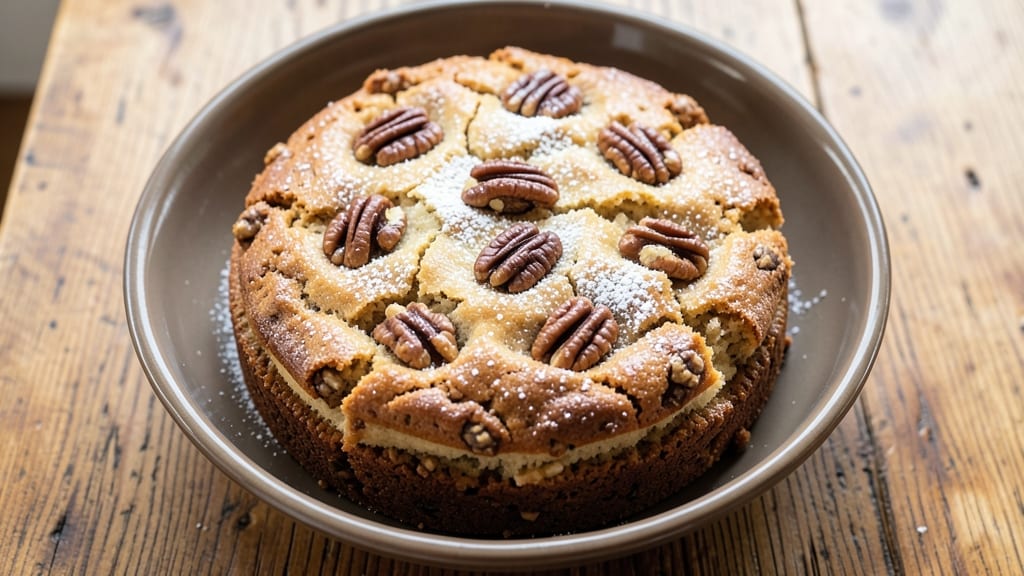
This copycat Great American Cookie Cake delivers the same legendary vanilla swirls and crunchy oat topping that made it a bakery sensation. After years of perfecting the texture—cookie-like layers with tender crumb and crispy edges—I’ve cracked the code for home bakers.
The secret lies in precise layering and a foolproof oat topping that stays perfectly crisp even after baking.
The recipe begins with a rich vanilla cake batter that’s spread in thin layers, allowing the signature swirls to shine through. Between each layer, a luscious vanilla buttercream is piped in elegant ribbons, creating that iconic marbled effect.
Once baked to golden perfection, the cake gets topped with a crunchy oat mixture that adds texture and depth to every bite.
What makes this copycat version truly special is how closely it mimics the original’s texture—moist yet sturdy layers with a tender crumb, all topped with that addictive oat crunch. The frosting is light enough to spread easily but rich enough to hold its shape, ensuring clean slices every time.
This is the kind of dessert that disappears faster than you can say "cookie cake."
The beauty of this recipe is its versatility—serve it as a showstopper for birthdays, holidays, or even a cozy weeknight treat. With optional gluten-free adaptations, it’s also perfect for accommodating dietary needs without sacrificing flavor. Let’s get baking!
Ingredients for copycat great american cookie cake
Twelve ingredients transform into the iconic cookie cake with layers of vanilla swirls and crisp oat topping.
| Ingredient | Amount | Notes |
|---|---|---|
| All-Purpose Flour 🌾 | 3 ½ cups | Sifted for light texture |
| Granulated Sugar 🍚 | 2 ½ cups | Superfine preferred for smooth batter |
| Unsalted Butter 🧈 | 2 cups | Room temperature, full-fat |
| Large Eggs 🥚 | 6 whole | Room temperature, separated |
| Vanilla Extract 🌸 | 2 tsp | Pure, high-quality extract |
| Baking Powder 🍞 | 1 ½ tsp | Aluminum-free preferred |
| Salt 🧂 | ½ tsp | Fine sea salt |
| Vanilla Buttercream Frosting 🧁 | 3 cups | Homemade or quality store-bought |
| Old-Fashioned Oats 🌾 | 2 cups | Not quick oats, toasted lightly |
| Brown Sugar 🍚 | ½ cup | Packed, light brown preferred |
| Chopped Walnuts 🥜 | ½ cup | Toasted for enhanced flavor |
| Melted Butter 🧈 | ¼ cup | For oat topping binding |
| Vanilla Bean Paste 🌸 | 1 tsp | Optional for deeper flavor |
The flour is the foundation—King Arthur or Gold Medal brands work best for that tender crumb. If you're gluten-free, Bob's Red Mill 1:1 blend delivers similar texture. Keep your butter room temperature—it should dent but not melt when pressed. For the vanilla, Nielsen-Massey extract is my go-to, but any pure extract works. The baking powder must be fresh—old powder loses its lift. Toast your oats and walnuts in a dry pan for 3-4 minutes until fragrant; this enhances their flavor significantly.
No vanilla bean paste? Double the extract—it won’t be identical, but you’ll still get that warm vanilla note. Substituting the buttercream? Homemade Swiss meringue buttercream is ideal, but store-bought vanilla buttercream works in a pinch. For the oat topping, pecans or almonds can replace walnuts if preferred. If you’re short on brown sugar, white sugar plus 1 tsp molasses mimics the caramel depth. The frosting should be piped at room temperature for clean swirls—chilled frosting cracks easily. Prefer a lighter texture? Add 1 tbsp heavy cream to the buttercream mixture.
Store the cake layers separated in an airtight container at room temperature for up to 2 days. The oat topping stays crisp for 3 days if kept dry in a sealed container. Assemble the cake 24 hours before serving—this allows flavors to meld perfectly. For make-ahead baking, wrap the assembled cake in plastic and refrigerate for up to 5 days. Freeze the fully assembled cake for up to 3 months, thawing at room temperature before serving. The oat topping can be prepped a week ahead and stored in the freezer.
Why You'll Love This Recipe
- No Mixer Needed: I swear by this—just cream butter and sugar until fluffy, crack in eggs, fold in vanilla. No electric appliances, no fuss, and the texture comes out perfectly tender every time.
- Butter-Sugar Magic: That rich, creamy butter-sugar combo? It’s the secret. The cake layers stay moist for days, and the frosting—oh, the frosting—is so thick and sweet, it’s basically dessert in every bite.
- Party in a Box: Slice it for a crowd, pack it for potlucks, or freeze slices for last-minute treats. Honestly, I’ve used it for birthdays, office celebrations, and even as a "I’m sorry I’m late" gift. Works every time.
- Budget Buster: Flour, sugar, butter—these are pantry staples. No specialty ingredients, no markup. My kids ask for it weekly, and I’ve made it for years without breaking the bank. Pure win.
Step-by-step instructions for copycat great american cookie cake
This method delivers the signature swirls and crunchy topping that make this cake legendary.
Prepare the Oat Topping
In a medium bowl, combine the 2 cups old-fashioned oats, 0.5 cup brown sugar, 0.5 cup chopped walnuts, and 1 tsp vanilla bean paste. Mix well to evenly distribute the ingredients. Set aside while you prepare the cake batter.
In a small saucepan, melt the 0.25 cup melted butter over low heat. Once fully melted, remove from heat and stir it into the oat mixture until everything is thoroughly coated. This topping should look moist but not wet—it will crisp beautifully during baking. Spread this mixture evenly over the baked cake layers before frosting.
Cream Butter and Sugar Together
In a stand mixer fitted with the paddle attachment, beat the 2 cups unsalted butter and 2.5 cups granulated sugar on medium speed for 3-4 minutes. The mixture should become light and fluffy, nearly doubling in volume. This step is critical for creating that signature tender crumb.
I like to press down on the butter-sugar mixture with a spatula every so often to ensure it's fully incorporated. You'll know it's ready when the mixture is pale and airy—this means you've incorporated enough air for that classic cookie cake texture.
Add Eggs and Vanilla Extract
Add the 6 whole large eggs, one at a time, mixing well after each addition. The mixture will look slightly curdled at first, but keep mixing until it becomes smooth. Add the 2 tsp vanilla extract and mix for an additional 30 seconds.
This is where the cake's signature vanilla flavor develops. If you're using vanilla bean paste, you'll notice a deeper, more complex vanilla taste compared to regular extract. The eggs help bind everything together while adding moisture and structure to the cake.
Combine Dry Ingredients
In a separate bowl, sift together the 3.5 cups all-purpose flour, 1.5 tsp baking powder, and 0.5 tsp salt. This ensures your flour is light and aerated, which prevents a dense cake. Gradually add the dry ingredients to the butter mixture, mixing on low speed until just combined.
Be careful not to overmix at this stage—you should still see some flour streaks. Overmixing develops gluten, which can make the cake tough. Mix until the batter is smooth but not completely homogenous. This batter will be thick and slightly sticky, which is perfect for creating those signature swirls.
Bake the Cake Layers
Preheat your oven to 350°F. Grease and flour two 9-inch round cake pans. Divide the batter evenly between the pans. For the signature swirls, use an offset spatula to create a well in the center of each layer, then spoon some batter into the well and swirl it around the edges.
Bake for 25-30 minutes, or until a toothpick inserted into the center comes out clean. The edges should be golden brown, but the centers should still look slightly underdone. Let the cakes cool in the pans for 10 minutes before transferring to a wire rack to cool completely.
Assemble the Cookie Cake
Once the cake layers are completely cool, spread 1.5 cups of the vanilla buttercream frosting evenly over the first layer. Place the oat topping mixture on top of the frosting, pressing down gently to ensure it sticks. Add the second layer and spread the remaining 1.5 cups frosting evenly over the top and sides.
For a professional finish, use a spatula to create a smooth frosting surface. The oat topping should be evenly distributed, creating a beautiful crunchy contrast to the tender cake layers. Chill the assembled cake in the refrigerator for at least 1 hour before serving to allow the frosting to set properly.
Final Decoration (Optional)
Before serving, you can add additional decorative touches if desired. Sprinkle extra chopped walnuts or a dusting of powdered sugar over the top for added visual appeal. The cake tastes just as good without decoration, but these finishing touches make it look like it came straight from a bakery.
Slice the cake into 12 equal pieces and serve immediately. Each bite should deliver the perfect balance of tender cake, sweet buttercream, and crunchy oat topping—a true copycat of the Great American Cookie Cake experience.
Pro Tips For Making Copycat Great American Cookie Cake
- Cream Butter First: Dump the cold butter straight into the flour mixture? Skip it. Melt the butter first, then cool it to room temperature—around 70°F (21°C)—before mixing. I used to rush this, and the cake turned dense. The fat needs to distribute evenly in the flour, and warm butter emulsifies better with the eggs.
- Whisk Eggs Separately: Don’t just crack eggs into the batter—whisk them in a separate bowl first until the yolks and whites are fully combined. The Great American Cookie Cake relies on a tender crumb, and unwhisked eggs can create pockets of uneven texture. Take 30 seconds now to save yourself from a gummy center later.
- Don’t Overmix the Batter: Stop mixing the moment the flour disappears. Overworking the dough develops gluten, which turns the cake tough instead of light and fluffy. My first batch was a brick—now I count to 20 after the flour is incorporated and call it done.
- Bake Until 205°F: Pull the cake out when the internal temperature hits 205°F (96°C), not when the top looks "done." The Great American Cookie Cake is designed to stay moist, and baking it longer dries it out. A toothpick test is fine, but trust the thermometer—it’s the only way to nail that perfect pull-apart texture.
Common mistakes when making perfect results
Overmixing the Batter
This is the #1 mistake that turns your cookie cake into a dense brick. Once you add the dry ingredients, mix just until combined—you should still see small flour streaks. Overmixing develops gluten, which creates a tough, chewy texture instead of the tender crumb you want.
I’ve ruined many cakes by mixing too long, so I set a timer for 30 seconds after the flour disappears. 💫
Skipping the Swirl Technique
The signature marbled swirls aren’t just for looks—they create that iconic cookie-like texture throughout each layer. Create a well in the center of your batter, then spoon some batter into it and swirl it outward with an offset spatula.
If you spread the batter evenly, you’ll miss that signature texture that makes this cake special.
Incorrect Oven Temperature
Baking at 350°F is critical—any hotter and your cake will brown too quickly, any cooler and it won’t rise properly. I’ve seen home bakers use 375°F thinking it’ll cook faster, but this leads to dry, cracked layers.
Invest in an oven thermometer to ensure accuracy, especially if your oven runs hot or cold.
Not Cooling Layers Properly
Rushing to frost your cake layers too soon is a big mistake. Let them cool completely in the pans for 10 minutes, then transfer to a wire rack to cool for at least 1 hour before assembling.
Warm layers will melt the buttercream, causing a soggy mess. Patience here makes all the difference in texture.
Uneven Frosting Distribution
Using too much frosting between layers makes the cake too heavy and can cause it to collapse. Spread 1.5 cups of buttercream evenly over the first layer—about ¼ inch thick.
If you use more, the cake will feel dense rather than light and airy. For the sides, use a spatula to create clean, straight edges for a bakery-style finish.
Oat Topping Too Wet
The oat topping should be moist but not wet—it needs to crisp during baking, not steam. If your mixture looks soupy, you’ve added too much melted butter.
The perfect consistency is like damp sand that holds together when pressed. This ensures that beautiful crunchy texture that’s the cake’s signature feature. 🌾
Nutrition facts
Frequently asked questions
Can I make this cookie cake in a different pan size?
Yes, but you'll need to adjust the baking time. For a 10-inch pan, bake for 20-25 minutes instead of 25-30 minutes—the thinner layers cook faster. If using a 8-inch pan, increase baking time to 30-35 minutes. Always check with a toothpick for doneness. The key is maintaining a 1-inch layer thickness for that signature cookie texture.
How do I get the oat topping to stay crisp?
The secret is baking the cake layers first, then adding the oat topping after they've cooled completely. Spread it evenly over the frosting and press gently so it adheres. For extra crispiness, bake the assembled cake at 300°F for 10-12 minutes after frosting—this lightly toasts the oats without overcooking the cake. Store the cake in an airtight container to maintain that crunch.
Can I substitute the walnuts in the oat topping?
Swap walnuts for 0.5 cup toasted pecans, almonds, or even 0.25 cup chopped hazelnuts for a different flavor profile. If you're nut-free, omit them entirely or use 0.25 cup extra brown sugar and 0.25 cup shredded coconut for texture. Just toast your substitute nuts first to enhance their flavor—this step makes all the difference.
Why did my cake layers crack on top?
Cracking usually happens from one of two issues: overbaking or rapid cooling. Check your oven temperature with a thermometer—350°F is critical. If your oven runs hot, reduce to 325°F. Also, avoid opening the oven door during baking. For cooling, let the cakes sit in their pans for 10 minutes before transferring to a rack. If cracks appear, they won't affect flavor but can be disguised with extra frosting.
How far in advance can I prepare this cake?
You can assemble the cake 24 hours ahead and store it at room temperature in an airtight container. For longer storage, wrap the fully assembled cake in plastic and refrigerate for up to 5 days. The oat topping stays crisp for 3 days if kept dry. For freezing, wrap the assembled cake tightly and freeze for up to 3 months. Thaw overnight in the fridge before serving.