
Desserts
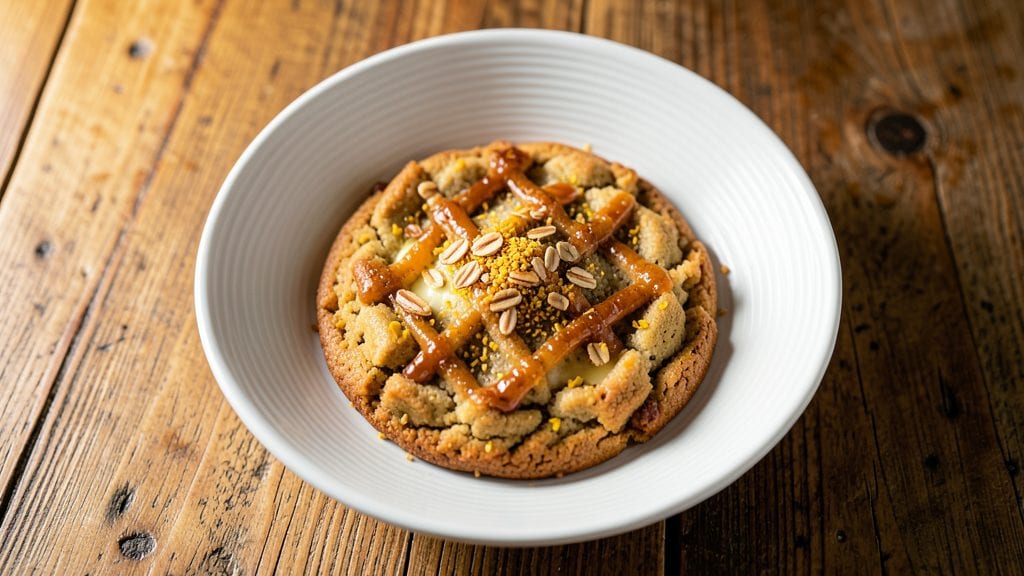
This copycat Crumbl cornbread cookie recipe delivers the same oat-crusted perfection and vanilla swirls that made the brand famous.
After testing multiple batches to nail the texture and flavor, I've recreated their signature combination of sweet cornmeal, buttery oats, and creamy vanilla dough—just like the ones that disappear from bakery shelves in minutes.
The secret lies in the precise balance of cornmeal and oat crust, which gives these cookies their signature crunch while keeping the centers soft and tender.
The recipe begins with a simple dough that's rolled out, swirled with vanilla buttercream, then cut into classic cookie shapes. Baking at the right temperature ensures the edges stay crisp while the centers remain pillowy, just like the original.
For that extra festive touch, I've included a simple glaze option that mimics the subtle sweetness Crumbl uses to elevate their cookies.
What makes this recipe truly special is how closely it replicates the brand's signature taste—sweet, buttery, and just slightly crunchy on the outside. The oat crust adds a satisfying texture that pairs perfectly with the creamy vanilla swirls inside. Once you try these, you'll never buy store-bought again.
Perfect for holidays, gift-giving, or satisfying a sweet tooth, this recipe makes about two dozen cookies that bake in batches. The dough can be prepped ahead, so you can focus on enjoying the process. Let's get baking!
Ingredients for copycat crumbl cornbread cookie
Sweet cornmeal, buttery oats, and vanilla swirls—these 13 ingredients nail Crumbl’s magic.
| Ingredient | Amount | Notes |
|---|---|---|
| All-Purpose Flour 🌾 | 2 ½ cups | Sifted for light texture |
| Fine Yellow Cornmeal 🌽 | 1 cup | Not coarse, for smooth texture |
| Old-Fashioned Rolled Oats 🥣 | 1 cup | Blended into fine crumbs |
| Unsalted Butter 🧈 | 1 cup | Cold, cubed for dough |
| Granulated Sugar 🍚 | ¾ cup | White or light brown |
| Light Brown Sugar 🍚 | ¼ cup | Packed firmly |
| Large Eggs 🥚 | 2 whole | Room temperature |
| Vanilla Extract 🌸 | 2 tsp | Pure, not imitation |
| Baking Powder 🧂 | 1 tsp | Aluminum-free preferred |
| Salt 🧂 | ½ tsp | Fine sea salt |
| Powdered Sugar 🍚 | 1 cup | For glaze, sifted |
| Heavy Whipping Cream 🥛 | ¼ cup | Cold for buttercream |
| Milk 🥛 | 1 tbsp | For dough flexibility |
The oats are non-negotiable for that signature crunch. Bob’s Red Mill or Quaker Old-Fashioned work best—anything pre-blended into instant oats won’t give the same texture. Cornmeal? Bob’s Red Mill Fine Yellow is the gold standard, but the store brand at Target or Walmart is fine too. I blend my oats in a food processor until they’re like fine sand—this is what creates that perfect crust. Butter should be cold but not rock-hard; let it sit at room temp for 30 minutes before mixing. The vanilla extract? Nielsen-Massey or McCormick Pure are my go-tos, but any pure vanilla will do.
No cornmeal? Fine corn flour works in a pinch, but the texture won’t be identical. Short on oats? Crushed graham crackers or granola can substitute, but reduce by 1/4 cup to avoid heaviness. The glaze needs powdered sugar—Domino or C&H are reliable. For the buttercream, if you’re avoiding dairy, coconut cream whipped with powdered sugar mimics the richness (though it’ll taste different). The milk is just for dough flexibility—skip it if your dough feels too dry, but don’t overdo it or the cookies spread too much. Pro tip: Chill the dough for 30 minutes before rolling—this keeps the swirls from bleeding into the crust.
Dough keeps for 3 days in the fridge, wrapped tightly in plastic. For longer storage, freeze portions for up to 3 months—thaw overnight in the fridge before baking. The glaze sets quickly, so make it fresh or store it in an airtight container for 2 days. These cookies reheat beautifully—30 seconds at 350°F brings back that bakery-fresh crunch. I like to bake half, then freeze the remaining dough balls for later—just add 1-2 minutes to baking time when using frozen.
Why You'll Love This Recipe
- I’ll be real: this recipe uses stuff I already have. Flour, sugar, butter—check. Cornmeal and oats? Always in my cabinet. And the best part? A batch lasts me a week if I’m smart, or two days if my kids are involved. Either way, it’s a win for my wallet and my sanity.
- No Mixer Needed: I swear by this recipe because it’s actually just 10 minutes of mixing—no stand mixer, no food processor, just a big bowl and a wooden spoon. The oats and cornmeal clump together perfectly without overworking, and honestly? That’s half the battle won right there.
- Buttery Crunch Core: That first bite where the crispy oat edge gives way to a soft, buttery center? It’s the kind of texture that makes you pause mid-chew. The butter gets worked into the cornmeal until it’s almost like a crumbly shortbread, but with that sweet, toasty depth from the sugar caramelizing just enough.
- Packable Snack Hero: Between us, these are my go-to for lunchboxes, road trips, or when I need something to tide me over between meals. They don’t get soggy in a bag like some cookies do—just sturdy enough to handle a backpack or a picnic blanket. (Yes, even on a Tuesday night when I’m too tired to think.)
Step-by-step instructions for copycat Crumbl cornbread cookie recipe
Here's how to nail the perfect oat-crusted vanilla swirls with that signature Crumbl texture and flavor.
Blend Oats and Mix Dry Ingredients
First, pulse the 1 cup of old-fashioned rolled oats in a food processor until they turn into fine crumbs. This creates that signature Crumbl crunch. Transfer the oat crumbs to a large mixing bowl.
Add the 2.5 cups of all-purpose flour, 1 cup of fine yellow cornmeal, 1 teaspoon of baking powder, and ½ teaspoon of salt to the bowl. Whisk everything together until completely combined. This dry mix is the foundation of our cookie dough, so make sure there are no lumps.
Cream Butter and Sugars
In a separate large bowl, combine the 1 cup of cold, cubed unsalted butter, ¾ cup of granulated sugar, and ¼ cup of packed light brown sugar. Beat with a mixer on medium speed for 3-4 minutes until the mixture is light and fluffy. You're looking for a pale, airy texture that nearly doubles in volume.
This creaming step is crucial—it incorporates air that will make your cookies tender and give them that signature Crumbl rise. If your butter isn't cold, the texture will turn greasy instead of fluffy.
Add Eggs and Vanilla
Add the 2 whole large eggs one at a time, mixing well after each addition. Then stir in the 2 teaspoons of vanilla extract and 1 tablespoon of milk. The milk helps bind everything together and adds just enough moisture to prevent dry cookies.
Now gradually add the dry ingredients to the wet mixture, mixing on low speed until just combined. Be careful not to overmix—stop as soon as you see no more flour streaks. Overmixing develops gluten and makes cookies tough.
Make the Vanilla Swirl Dough
Divide the dough in half. For one half, add ½ cup of powdered sugar and mix until evenly distributed. This will create our vanilla swirl filling. Roll both dough portions into separate balls, wrap in plastic, and chill for at least 1 hour (or up to 24 hours).
Chilling is non-negotiable—it prevents the cookies from spreading too much in the oven and helps develop those beautiful swirl patterns. The dough should be firm but still pliable when you're ready to bake.
Assemble and Bake the Cookies
Preheat your oven to 350°F and line two baking sheets with parchment paper. Roll out the plain dough on a lightly floured surface to about ¼-inch thickness. Cut out circles using a 3-inch round cutter and place them on the prepared baking sheets.
Roll out the vanilla-sugar dough to about ⅛-inch thickness and cut 2-inch circles. Place one vanilla circle on top of each plain dough circle. Press gently to create a seal, then use a fork to swirl the top dough in a circular motion, creating that signature Crumbl pattern.
Bake to Golden Perfection
Bake the cookies for 12-14 minutes until the edges are golden brown and the centers look just slightly underdone. They'll continue cooking on the hot pan after you remove them from the oven. Let them cool on the baking sheet for 5 minutes before transferring to a wire rack.
For that extra Crumbl touch, whip the ¼ cup of cold heavy whipping cream until soft peaks form, then mix in the remaining ½ cup of powdered sugar. Drizzle this glaze over the cooled cookies. The glaze should be thick enough to hold its shape but still flow slightly when drizzled.
Pro Tips For Making Copycat Crumbl Cornbread Cookie
- Pulse the Oats: Toss those rolled oats in the food processor for just 3-4 seconds—long enough to break them down into tiny bits, but not so long they turn into flour. I learned this the hard way when my cookies came out too dense; the texture difference is night and day.
- Chill the Dough: Wrap the dough in plastic and let it rest in the fridge for at least 30 minutes before baking. This isn’t just waiting—it lets the butter firm up slightly, so your cookies don’t spread into sad, flat discs. (Yes, even if you’re impatient like me.)
- Skip the Overmixing: Once the wet ingredients hit the dry, mix just until combined—no more. Overworking the dough develops gluten, and these cookies are supposed to be crumbly, not chewy. I used to beat it like I was kneading bread, and my cookies turned out tough.
- Use Cold Butter: Cut that unsalted butter straight from the fridge into cubes—no softening needed. Cold butter creates pockets of fat that melt into buttery pools during baking, while warm butter just makes everything greasy. (And trust me, you’ll notice the difference.)
Flavor customization for these flavors
Sweet Vanilla Variations
For an extra-creamy center, replace the powdered sugar in the vanilla dough with ½ cup of softened buttercream—whip ¼ cup softened butter with ½ cup powdered sugar and 1 tsp vanilla until smooth.
This creates a luscious filling that mimics Crumbl’s signature richness. For a citrus twist, add 1 tsp lemon or orange zest to the vanilla dough for a bright, zesty contrast. 🌸
Spiced Cornmeal Twist
Add warmth by mixing ½ tsp cinnamon and ¼ tsp nutmeg into the dry ingredients. For a smoky depth, swap ¼ cup of the cornmeal for fine-ground cornbread mix (found in the baking aisle).
This adds a subtle savory note that balances the sweetness. I love using Bob’s Red Mill Cornbread Mix for this.
Nutty Crunch Additions
Fold ½ cup chopped pecans or walnuts into the plain dough before rolling it out for extra texture. Toast the nuts at 350°F for 5 minutes first to enhance their flavor.
For a chocolate twist, press mini chocolate chips into the oat crust before baking—just sprinkle them on the dough circles before adding the vanilla swirl.
Glaze Alternatives
Swap the cream glaze for a white chocolate drizzle—melt ½ cup white chocolate chips with 1 tbsp cream and drizzle over cooled cookies. For a caramel finish, warm ½ cup caramel sauce with 1 tbsp heavy cream until smooth.
A salted caramel version adds flaky sea salt on top for contrast.
Seasonal Flavor Boosters
In fall, add ½ tsp pumpkin pie spice to the dry mix. For winter, fold ¼ cup crushed candy cane pieces into the vanilla dough. Spring calls for 1 tsp lemon extract in the glaze, while summer can use ½ tsp coconut extract for a tropical vibe.
Each seasonal tweak keeps these cookies exciting year-round. 🌟
Nutrition facts
Frequently asked questions
Why does the dough need to chill before baking?
Chilling the dough for at least 1 hour prevents excessive spreading and helps the swirls hold their shape. The cold temperature firms up the butter, which creates that signature Crumbl texture with crisp edges and soft centers. Skipping this step often results in flat, cake-like cookies instead of the perfect round shape.
Can I make these cookies without a food processor?
Yes! Pulse the 1 cup of oats in a blender or even crush them by hand in a ziplock bag with a rolling pin. For the finest texture, use a coffee grinder in short bursts. The key is to get the oats as fine as possible—this creates that signature Crumbl crunch. While not identical, it still works beautifully.
How do I fix cookies that spread too much?
If your cookies spread excessively, the dough was likely too warm. Next time, chill the dough for 24 hours instead of just 1 hour. Also, reduce your oven temperature by 25°F (to 325°F) and use a 3-inch cutter for the base layer—smaller circles spread less. For already baked cookies, try reheating them at 300°F for 2-3 minutes to restore some structure.
What's the best way to store these cookies?
Store cookies in an airtight container at room temperature for up to 5 days. For longer storage, freeze the baked cookies (without glaze) for up to 3 months. To reheat, warm at 350°F for 1-2 minutes to restore crispness. The glaze can be made fresh or stored separately for 2 days—just add it before serving.
Can I use a different sweetener in the glaze?
Yes! Swap powdered sugar for confectioners' sugar substitute (like erythritol blend) for a lower-sugar option. For a caramel glaze, mix ½ cup melted butter with ½ cup brown sugar and 2 tbsp cream, then simmer until thickened. Just adjust ratios to maintain the same consistency as the original glaze.