Breakfast & Brunch
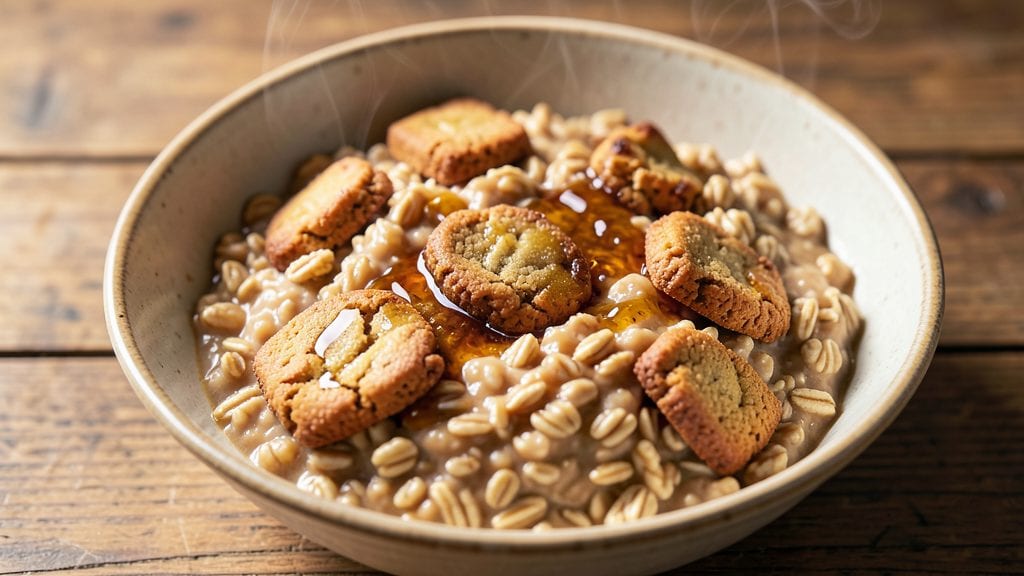
This boiled oatmeal cookies recipe transforms a classic comfort food into something unexpectedly sophisticated—chewy oatmeal centers wrapped in crispy cookie swirls, all infused with warm cinnamon and nutmeg.
The technique combines the best of both worlds: the tender, hearty texture of oatmeal and the buttery crunch of baked cookies, creating a dessert that feels both nostalgic and refined.
I developed this after realizing how often we skip breakfast for something sweet, and it’s become a staple in my morning rotation.
The magic happens in the layers: oatmeal simmers into a thick, spiced base while cookie dough swirls on top, baking until golden and caramelized. This isn’t just a cookie or oatmeal—it’s a hybrid that delivers rich, cinnamon-kissed flavors with every bite, perfect for a cozy breakfast or a midday treat.
The recipe uses simple pantry staples, but the result is anything but basic.
What sets these apart is the textural contrast: the soft, warm oatmeal core contrasts beautifully with the crispy, slightly chewy cookie exterior, creating a balance that keeps each bite interesting. The spices—cinnamon, nutmeg, and a hint of vanilla—tie everything together, making it taste like a hug in dessert form.
Ready in under 30 minutes, this recipe proves you can have gourmet-quality breakfast without spending all morning in the kitchen.
Pair with a dollop of whipped cream or a drizzle of honey for extra indulgence, or enjoy it plain to let the flavors shine. Whether you’re feeding a family or treating yourself, these warm spiced swirls deliver comfort and sophistication in every bite.
Ingredients for boiled cookies oatmeal
Simple pantry staples blend into chewy oatmeal centers with crispy cookie swirls—warm cinnamon and nutmeg make every bite feel like comfort.
| Ingredient | Amount | Notes |
|---|---|---|
| Old-Fashioned Rolled Oats 🌾 | 1 ½ cups | Not quick oats, steel-cut preferred |
| Unsalted Butter 🧈 | ¾ cup | Cold, cubed for even baking |
| Granulated Sugar 🍚 | ¾ cup | Light brown sugar for depth |
| Packed Light Brown Sugar 🍚 | ½ cup | For cookie dough sweetness |
| Large Eggs 🥚 | 2 whole | Room temperature for blending |
| Pure Vanilla Extract 🍯 | 1 tbsp | High-quality, not imitation |
| Ground Cinnamon 🌿 | 2 tsp | Freshly ground for warmth |
| Ground Nutmeg 🌿 | ½ tsp | Freshly grated nutmeg preferred |
| Fine Sea Salt 🧂 | ½ tsp | Diamond Crystal preferred |
| All-Purpose Flour 🌾 | 1 ½ cups | Sifted for light texture |
| Whole Milk 🥛 | ½ cup | Warmed for smoother dough |
| Light Corn Syrup 🍯 | ¼ cup | For oatmeal simmering |
| Heavy Cream 🥛 | ¼ cup | Full-fat for richness |
| Pecans 🌰 | ½ cup | Chopped, toasted for crunch |
The oats make or break this recipe—old-fashioned rolled oats give that perfect chewy texture, while quick oats turn gummy. Grab the steel-cut or old-fashioned variety from the bulk bins at Whole Foods or the organic section of Kroger. The butter should be cold and cubed, not melted, so it creates those beautiful cookie swirls. For the spices, freshly ground cinnamon and nutmeg (pre-ground loses potency fast) elevate the flavor. I always double-check my spice jars—if they smell stale, toss them. The pecans? Trader Joe’s has the best pre-chopped, toasted variety—no need to toast yourself unless you're feeling ambitious.
No corn syrup? Honey or maple syrup at half the amount works in a pinch, though it’ll change the texture slightly. Running low on pecans? Walnuts or almonds give a similar crunch, but toast them first. The cookie dough needs to be soft but not sticky—if it’s too dry, add a splash of milk; if too wet, chill it for 10 minutes. The vanilla extract is where you shouldn’t skimp. Nielsen-Massey or McCormick are reliable brands, but if you’ve got a good-quality imitation, it’s fine. For the oatmeal base, simmer until it’s thick but still pourable—like a thick pancake batter. If it gets too stiff, add a splash of milk to loosen it up.
These keep beautifully for 5-6 days in an airtight container at room temperature, though they’re best fresh. The oatmeal center stays soft for about 3 days, after which the texture starts to dry out. For longer storage, freeze the baked cookies in a single layer for up to 3 months—reheat in the oven for 5 minutes at 300°F to revive the crispiness. I like to portion them into individual servings before freezing so I can grab one straight from the freezer for a quick breakfast. Pair with a dollop of whipped cream or a drizzle of honey for extra indulgence.
Why You'll Love This Recipe
- No-Fuss Boil: This recipe takes less effort than making coffee. Just toss oats, butter, and sugars in a pot, bring to a boil, then stir in eggs—no fancy steps, no waiting for the oven. Honestly, I’ve made it while scrolling through my phone.
- Chewy Cookie Magic: The brown sugar caramelizes into those little crispy pockets, while the butter keeps it rich and tender. It’s like biting into a soft cookie, but with the hearty texture of oatmeal—my kids call it "breakfast dessert."
- Breakfast or Snack: Serve it warm with a drizzle of honey for a cozy morning, or let it cool into a grab-and-go bar. I’ve packed it in lunchboxes for school runs and even used it as a base for overnight oats—just add milk and let it sit.
- Pantry Staple Power: Uses ingredients you already have (check your cabinet—oats, sugar, butter, eggs?). A single batch stretches for three days, and the cost? Less than half of what you’d spend on store-bought granola bars. Budget-friendly doesn’t get much better than this.
Step-by-step instructions for boiled oatmeal cookies
Here's how to transform simple pantry staples into tender, chewy cookies with a satisfying crunchy top.
Cook the Oatmeal Mixture to Perfect Texture
In a medium saucepan, combine 1.5 cups old-fashioned rolled oats, 0.5 cup whole milk, 0.25 cup light corn syrup, and 0.25 cup heavy cream. Bring to a gentle boil over medium-high heat, then immediately reduce to medium-low and simmer uncovered for 8-10 minutes, stirring occasionally. You're looking for a thick, porridge-like consistency that coats the back of a spoon—this ensures your cookies will have that signature chewy texture.
The oats should absorb all the liquid and become tender but not mushy. If it gets too thick before reaching 8 minutes, add 1 tablespoon water to prevent burning. Once done, remove from heat and let cool completely to room temperature. This cooling step is crucial—it prevents the butter from melting too quickly when you mix everything together later.
Cream Butter and Sugars for Maximum Fluffiness
While the oatmeal mixture cools, place 0.75 cup unsalted butter and both 0.75 cup granulated sugar and 0.5 cup packed light brown sugar in a stand mixer fitted with the paddle attachment. Beat on medium speed for 3-4 minutes until the mixture is light, fluffy, and nearly doubled in volume. You'll notice the color lighten slightly—this indicates proper aeration, which creates those beautiful crackly tops.
Here's the thing—don't rush this step. Under-creaming leads to dense cookies, while over-creaming develops gluten. The mixture should be smooth but still hold its shape when you lift the paddle. Add 1 tbsp pure vanilla extract and mix for 10 seconds to distribute the flavor evenly. The warm oatmeal will blend in beautifully once it's cooled.
Combine Wet Ingredients and Add Dry Components
Once the oatmeal mixture has cooled completely, add it to the butter-sugar mixture in the stand mixer. Mix on low speed for 30 seconds to combine. In a separate bowl, whisk together 1.5 cups all-purpose flour, 2 tsp ground cinnamon, 0.5 tsp ground nutmeg, and 0.5 tsp fine sea salt. Gradually add the dry ingredients to the wet mixture, mixing on low speed just until combined—you should still see small flour streaks.
This is where the magic happens. The spices should be evenly distributed throughout the dough, giving each bite that warm, comforting flavor. Fold in 0.5 cup chopped pecans by hand using a silicone spatula to ensure even distribution. The pecans will add a delightful crunch that contrasts perfectly with the chewy cookie texture. If the dough seems too sticky, chill it for 15 minutes before proceeding.
Shape and Boil the Cookies
Preheat a large pot of water to a gentle simmer—you want 180-190°F, just below a full rolling boil. Using a 2-tablespoon scoop, shape the dough into balls and gently flatten them slightly with your palm. Drop 4-5 cookies at a time into the simmering water, being careful not to overcrowd. Cook for 2-3 minutes per side until they're golden brown and the edges begin to set.
Use a slotted spoon to carefully transfer the cooked cookies to a wire rack lined with parchment paper. The key here is patience—they'll continue cooking slightly as they cool. Let them rest for 5 minutes before serving. The contrast of warm, spiced cookie with that crispy top is what makes these boiled oatmeal cookies so special. Serve warm with a glass of milk for the ultimate comfort food experience.
Pro Tips For Making Boiled Cookies Oatmeal
- Boil the Oatmeal Hard: This isn’t porridge—push the oatmeal to a thick, gluey consistency before adding eggs and butter. I used to pull it too soon, and the cookies never formed properly. Let it simmer uncovered for 8-10 minutes, stirring often, until it’s so dense it clings to the pot like syrup.
- Whisk Eggs Like Ice Cream: Beat the eggs until they’re pale, thick, and ribbon-like before folding them into the oatmeal. Cold butter? Toss it in whole—it’ll melt faster and create those signature cookie pockets. (Yes, even if you’re impatient like me.)
- Skip the Overmixing: Once you fold in the egg mixture, stop stirring after 2-3 turns. Overworking the batter makes the cookies dense and chewy. Let the residual heat do the work—your future self will thank you for the crispy edges.
- Use a Heavy Pot: Thin aluminum or nonstick? Not ideal. The oatmeal needs even heat distribution to thicken properly. A stainless steel or enameled Dutch oven keeps temps stable and prevents scorching. (I learned this the hard way with a sad, uneven batch.)
Troubleshooting perfect results
Oatmeal Too Thin
If your oatmeal mixture is too thin after simmering, it’ll result in flat, dense cookies instead of chewy, tender centers. The ideal consistency is thick enough to coat the back of a spoon—like a thick pancake batter.
If it’s still runny after 10 minutes, remove from heat and stir in 1 tablespoon all-purpose flour or 1 teaspoon cornstarch to thicken. For extra insurance, simmer for another 1-2 minutes while stirring constantly. 💡
Dough Too Sticky
Sticky dough is usually caused by overmixing or too much liquid in the oatmeal base. If your dough clings to your hands or the mixer bowl, chill it for 15-20 minutes to firm up. If it’s still too wet, add 1 tablespoon more flour and mix gently.
Pro tip: Use a Kitchenaid stand mixer with the dough hook attachment on low speed for 1 minute to help distribute the flour evenly without overworking the dough.
Cookies Not Setting
If your boiled cookies stay soft and don’t develop a crispy exterior, your water temperature might be too low. Aim for a gentle simmer between 180-190°F—not a full rolling boil. Use a candy thermometer to monitor the temperature.
Also, ensure your dough isn’t too warm when shaping—cool it slightly in the fridge for 5 minutes before boiling. This helps the edges set properly. 🔥
Uneven Browning
Uneven browning often happens when the water temperature fluctuates or when cookies are overcrowded in the pot. Cook 4-5 cookies at a time and space them out so they don’t stick together. If one side browns faster, gently flip it with a slotted spoon to ensure even cooking.
For extra color, add ½ teaspoon cinnamon to the boiling water—it’ll infuse the cookies with warmth and enhance browning.
Pecans Not Toasted
If your pecans taste raw or bland, they weren’t toasted properly. Toast them in a dry skillet over medium heat for 3-4 minutes, stirring constantly, until fragrant and lightly golden.
Let them cool completely before folding into the dough. For extra crunch, pulse them in a food processor for 10 seconds before toasting—this ensures even browning. 🌰
Cookies Too Dry
Dry cookies usually mean the oatmeal mixture was overcooked or the dough was overmixed. To fix this, reduce simmering time to 8 minutes and keep a close eye on the oatmeal texture. If the dough feels dry, add 1 teaspoon milk or heavy cream to restore moisture.
For serving, brush the tops with 1 tablespoon melted butter right after boiling to add back some richness.
Nutrition facts
Frequently asked questions
Why do these cookies need to be boiled?
The boiling step creates that signature crispy exterior while keeping the oatmeal center tender and chewy. When dropped into simmering water, the outer cookie dough sets quickly while the warm oatmeal inside stays soft and gooey—a perfect texture contrast. This method also helps develop a delicate caramelized flavor that baking alone can't achieve.
Can I make these cookies without pecans?
Swap pecans for walnuts, almonds, or even chocolate chips if you prefer. For nut-free options, try toasted coconut flakes or omit them entirely—they're not essential to the recipe. Just remember to toast any nuts for maximum flavor and crunch.
How do I store these oatmeal cookies?
Keep them in an airtight container at room temperature for 5-6 days, though they're best enjoyed fresh. For longer storage, freeze the baked cookies for up to 3 months. Reheat in a 300°F oven for 5 minutes to restore crispiness. The oatmeal center stays soft for about 3 days before drying out.
Can I make these gluten-free?
Yes! Replace the all-purpose flour with a 1:1 gluten-free baking flour blend and ensure your oats are certified gluten-free. The texture will be slightly different but still delicious. For extra binding, add 1 teaspoon xanthan gum to the dry ingredients. The rest of the recipe remains the same.
What's the best way to reheat these?
For crispy tops, warm in a 300°F oven for 3-5 minutes on parchment paper. For microwave reheating, cover with a damp paper towel and heat for 10-15 seconds. The key is to restore the contrast between the crispy exterior and soft oatmeal center—never overheat or they'll turn rubbery.