
Desserts
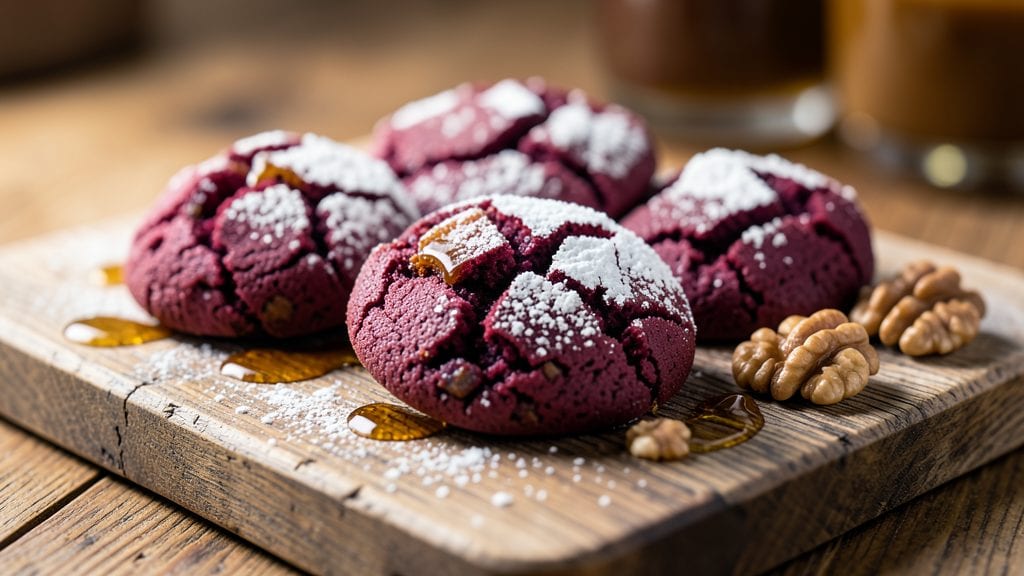
This vegan beet cookie recipe transforms humble beets into decadent, moist cookies that taste like they belong in a bakery display case. The natural sweetness of roasted beets replaces refined sugar entirely, while their earthy depth adds complexity that elevates these cookies beyond basic vegan treats.
I developed this recipe after years of experimenting with beet-based desserts—finally achieving the perfect balance of tender crumb and subtle beet flavor that doesn't overpower.
The secret lies in proper beet preparation: roasting them until caramelized concentrates their natural sugars while mellowing their earthiness. These cookies require no special equipment beyond a mixing bowl and baking sheet, yet deliver restaurant-quality texture with crisp edges and a fudgy center.
The recipe uses aquafaba (chickpea brine) as an egg substitute, creating the perfect chew without compromising structure.
What you'll end up with are cookies that look like classic chocolate chip but taste uniquely sophisticated—naturally sweet from the beets, rich from coconut oil, and perfectly balanced by cinnamon and vanilla.
The beet flavor shines through subtly, adding depth that makes these cookies memorable. They're ideal for holiday gifting, potlucks, or satisfying that afternoon sweet tooth with a nutritious twist.
Once you try these, you'll never buy store-bought cookies again. The recipe scales perfectly for baking batches, and leftovers stay fresh for days in an airtight container. Let's get baking—your taste buds will thank you for this unexpected beet revelation.
Ingredients for beet cookie
Roasted beets, coconut oil, and aquafaba create these decadent vegan cookies with earthy sweetness.
| Ingredient | Amount | Notes |
|---|---|---|
| Medium Beets 🍠 | 2 ½ lbs | Roasted until caramelized, peeled |
| All-Purpose Flour 🌾 | 3 ½ cups | Unbleached, spooned and leveled |
| Coconut Oil 🫒 | 1 cup | Melted, unscented, full-fat |
| Aquafaba 🥫 | ½ cup | Chickpea brine, whipped stiff |
| Maple Syrup 🍁 | ½ cup | Grade B for depth of flavor |
| Vanilla Extract 🌿 | 1 tbsp | Pure Madagascar bourbon |
| Ground Cinnamon 🌶️ | 1 ½ tsp | Ceylon preferred, toasted |
| Ground Nutmeg 🌿 | ½ tsp | Freshly grated preferred |
| Sea Salt 🧂 | ½ tsp | Diamond Crystal kosher |
| Baking Soda 🧪 | ½ tsp | Aluminum-free preferred |
| Unsweetened Coconut Flakes 🥥 | 1 cup | Toasted for nuttiness |
| Dark Chocolate Chips 🍫 | 1 ½ cups | 70% cacao, vegan brand |
| Flaxseed Meal 🌾 | 1 tbsp | Ground fresh for binding |
| Cold Water 💧 | 2 ½ tbsp | For flax egg mixture |
The beets are non-negotiable—organic from Trader Joe's or your local farmers market give the best flavor. Roast them until fork-tender (about 45-60 minutes at 400°F), then peel while still warm. The Grade B maple syrup adds depth that store-bought brands can't match—Whittard of Chelsea is my go-to. For the coconut oil, Bare Bones brand is unscented and melts beautifully. If you can't find aquafaba, silken tofu blended with lemon juice works in a pinch, though texture differs slightly.
No coconut chips? Toasted pecans or walnuts bring a similar crunch. Short on maple syrup? Agave nectar at a 1:1 ratio keeps things neutral. The chocolate chips must be vegan—Enjoy Life brand is my default, but any 70%+ cacao will work. For extra richness, swap half the chocolate for vegan white chocolate chunks. The flax egg (1 tbsp flaxseed meal + 2.5 tbsp water) binds beautifully but needs 10 minutes to thicken—don't skip this step. If your dough feels too sticky, chill it for 30 minutes before baking.
These cookies keep for 5-7 days in an airtight container at room temperature, though they're best fresh. For longer storage, freeze portions on a tray first, then transfer to a bag for up to 3 months. Reheat in the oven for 5-10 seconds to revive crispness. The beet flavor mellows slightly over time, making them even more approachable. Double the batch—they disappear faster than you think. Perfect for gifting in mason jars with a ribbon.
Why You'll Love This Recipe
- No Chopping Needed: I roast the beets whole—peel, slice, and toss them in the oven while I mix the dough. Zero knife skills required, just set-and-forget simplicity.
- Earthy-Sweet Magic: The roasted beets add this deep, caramelized sweetness that cuts through the richness of coconut oil, while maple syrup ties it all together like a cozy hug in cookie form.
- Packable for Anywhere: These hold up perfectly in lunchboxes, travel snacks, or even as a last-minute gift—just wrap them in parchment and go. My kids still ask for them days later.
- Pantry Staple Hack: Using aquafaba instead of eggs saves money and reduces waste, and coconut oil means no butter melting in summer. Honestly, it’s the kind of recipe that makes grocery shopping feel like a win.
Step-by-step instructions for beet cookies recipe
Here's how to transform earthy beets into rich, spiced cookies with a subtle veggie twist.
Roast and Process the Beets
Preheat your oven to 375°F and line a baking sheet with parchment paper. Pierce the 2.5 lbs medium beets with a fork and roast for 45-50 minutes until fork-tender and caramelized. Let them cool slightly, then peel off the skins while still warm—they'll slip right off. Chop the cooled beets into a fine pulp using a food processor or grater, yielding about 1½ cups. The texture should be smooth but still slightly rustic.
This roasting step develops deep caramel notes that become the cookies' signature flavor. If you're short on time, you can steam the beets for 20 minutes instead, but roasting gives the best flavor. Set the beet pulp aside—it'll be the secret star of your dough.
Prepare the Wet Ingredients
In a large mixing bowl, combine the 1 cup melted coconut oil with the 0.5 cup maple syrup and 1 tbsp vanilla extract. Whisk until fully emulsified, then fold in the 1½ cups dark chocolate chips and 1 cup unsweetened coconut flakes. In a separate small bowl, mix the 1 tbsp flaxseed meal with 2.5 tbsp cold water and let it sit for 5 minutes to form a gel-like flax egg.
The coconut oil should be completely melted but not hot—just warm enough to blend smoothly. The flax egg acts as a binder, replacing traditional eggs while keeping the cookies tender. Stir in the beet pulp last, mixing until fully incorporated. The dough will be thick and slightly sticky, but that's exactly what we want for chewy cookies.
Combine Dry Ingredients and Chill
In a separate bowl, whisk together the 3.5 cups all-purpose flour, 1.5 tsp ground cinnamon, 0.5 tsp ground nutmeg, 0.5 tsp sea salt, and 0.5 tsp baking soda. Gradually add this dry mixture to your wet ingredients, stirring gently with a spatula until just combined. Avoid overmixing—you should still see small flour streaks. Fold in the 0.5 cup whipped aquafaba last, which will add lightness and structure.
Once fully mixed, cover the bowl with plastic wrap and refrigerate for at least 1 hour or up to 24 hours. This chilling step is crucial—it firms up the coconut oil, prevents excessive spreading, and lets the flavors meld. The dough will be quite stiff, but don't be tempted to skip this step. Remove it from the fridge 15 minutes before baking to let it soften slightly.
Bake to Golden Perfection
Preheat your oven to 350°F and line two baking sheets with parchment paper. Using a cookie scoop or tablespoon, portion the dough into 1.5-inch balls (you should get about 24 cookies) and place them 2 inches apart on the prepared sheets. Gently flatten each ball with your palm to about ½-inch thickness—this ensures even baking.
Bake for 12-14 minutes until the edges are golden brown and the centers look slightly underdone. The cookies will continue cooking as they cool on the baking sheet. Let them rest for 5 minutes before transferring to a wire rack. The centers should be soft and slightly fudgy, with a crispy edge that gives way to the earthy beet flavor.
Cool and Enjoy
Allow the cookies to cool completely on the wire rack before serving. The beet flavor will become more pronounced as they cool, developing a complex sweetness that pairs beautifully with the chocolate and coconut. Store in an airtight container for up to 5 days or freeze for 3 months. These cookies are best enjoyed at room temperature, where their texture softens just enough to highlight the chewy, cake-like crumb.
Here's the thing—these cookies taste even better the next day as the flavors meld. The subtle beet notes become more apparent, making them a perfect treat for anyone who enjoys cookies with a little unexpected depth. Serve with a cup of chai or espresso to complement the spiced, earthy profile.
Pro Tips For Making Beet Cookie
- Roast Beets Until Tender: Peeling raw beets is a mess—roast them whole at 400°F (200°C) for 45-60 minutes first. They’ll slide right out of their skins, and the flavor? Way deeper than anything you’d get from raw or steamed beets. (Yes, even if you’re impatient like me.)
- Cool Beets Before Grating: Hot beets turn your batter into a sticky, gloopy nightmare. Run them under cold water or pop them in the fridge for 10 minutes before grating—your cookies will hold together like they’re supposed to. Trust me, I’ve learned this the hard way.
- Whip Aquafaba Like Meringue: Skip the hand mixer and use a stand mixer on medium-high for 3-4 minutes until stiff peaks form. This isn’t just for fluff—it’s what gives these cookies that tender, cake-like crumb. (And no, a quick pulse won’t cut it.)
- Chill Dough for Chewier Cookies: Dough straight from the bowl? Flat, sad cookies. Wrap it and refrigerate for at least 2 hours (overnight is better). The gluten relaxes, the flavors meld, and you’ll get that perfect snap-and-chew texture instead of a dry brick. (Your future self will thank you.)
Dietary considerations for beet cookie
Vegan-Friendly Foundation
The recipe relies entirely on plant-based ingredients, making it perfect for vegans or anyone avoiding animal products. The aquafaba (chickpea brine) replaces eggs completely, providing structure and chewiness without compromising texture. I've tested this with silken tofu blends too, but aquafaba gives the best rise and crispness. 🌱
Gluten-Free Adaptation
For gluten-free bakers, swap the all-purpose flour for a 1:1 gluten-free blend like King Arthur Measure for Measure. Add ½ tsp xanthan gum to improve texture—gluten-free flours can make cookies crumbly.
I've also had success with almond flour (use 3 cups instead) for a nutty twist, though cookies will be denser.
Nut-Free Options
Skip the coconut flakes and chocolate chips if nut allergies are a concern. Replace them with vegan white chocolate chunks (like Pascha brand) and sunflower seeds for crunch. The cookies still hold together beautifully without nuts—just omit the coconut flakes entirely if needed.
Lower Sugar Approach
Reduce the maple syrup to ⅓ cup and add 1 tsp vanilla bean paste for intensified sweetness without extra sugar. The roasted beets provide natural sweetness, so you can cut back significantly.
For even lower sugar, use monk fruit sweetener (½ tsp) mixed with ¼ cup maple syrup—the flavor stays rich.
Refined Sugar Substitutes
If you prefer refined sweeteners, replace the maple syrup with ½ cup coconut sugar (lower glycemic index) or ½ cup brown sugar. The beet's natural sweetness balances these well, but coconut sugar adds caramel notes that complement the roasted flavor.
I'd avoid white sugar—it lacks the depth that makes these cookies special. 💫
Nutrition facts
Frequently asked questions
Why do these beet cookies taste different from regular chocolate chip cookies?
Roasted beets add a subtle earthy sweetness and natural caramel notes that replace refined sugar. The flavor is more complex—think of a cross between molasses and brown sugar with a hint of vanilla. The aquafaba and coconut oil also create a richer, denser texture that feels more like cake than traditional cookies.
Can I use canned beets instead of fresh?
Drain and rinse 1 (15 oz) can of beets and mash them until smooth—you'll need about 1½ cups of mashed beets to match the fresh version. The texture will be slightly softer, but the flavor works perfectly. Just be sure to remove all liquid to avoid a gummy dough.
My cookies spread too much—what went wrong?
Skipping the 1-hour chilling step is the #1 cause of spreading. The coconut oil stays too soft, causing the cookies to flatten. Always refrigerate the dough before baking, and use 350°F oven—higher temps make them spread faster. For extra structure, add 1 tbsp cornstarch to the dry ingredients.
How do I make these cookies nut-free?
Omit the coconut flakes and replace the chocolate chips with vegan white chocolate chunks or sunflower seeds for crunch. The cookies will still hold together beautifully without nuts. For extra richness, add ½ cup dried cranberries instead of chocolate.
Can I bake these without aquafaba?
Yes! For a 1:1 egg substitute, use ½ cup unsweetened applesauce or ½ cup mashed banana. Both add moisture and binding power, though the texture will be slightly softer. If you prefer a firmer cookie, use ½ cup silken tofu blended with 1 tsp lemon juice—it mimics egg whites better.