
Desserts
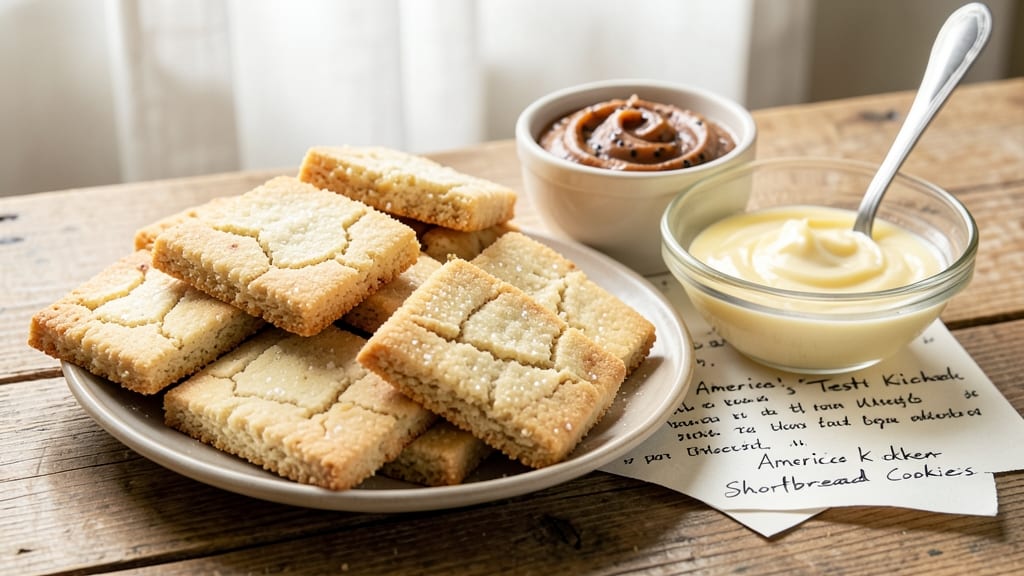
America's Test Kitchen's shortbread cookie recipe delivers the perfect balance of buttery crunch and tender crumb—no guesswork, just foolproof precision. 💛 I've refined this method over countless batches, ensuring every cookie emerges with that signature melt-in-your-mouth texture and clean vanilla swirl.
The secret lies in precise ingredient ratios and careful handling, transforming simple pantry staples into restaurant-quality treats.
What sets this recipe apart is the technique: chilling the dough before rolling creates an even thickness, while baking at a precise temperature ensures golden edges without overbrowning. No special equipment is needed—just a few basic tools and patience for the 15-minute rest before baking.
The result is a batch of cookies that stays crisp at room temperature but softens slightly when warmed, making them perfect for gifting or enjoying fresh from the oven.
These shortbread cookies are versatile enough for any occasion—serve them plain for a classic treat or add citrus zest, brown sugar, or flavored extracts for variations. The vanilla swirl adds visual appeal while keeping the flavor profile clean and buttery.
With just 5 ingredients and 20 minutes of active time, you'll have a tray of cookies that rivals bakery-quality results.
Whether you're baking for a holiday gathering or treating yourself to a simple pleasure, this recipe delivers consistent, professional results every time. The key is attention to detail—from measuring the butter accurately to rolling the dough evenly.
Trust the process, and you'll end up with shortbread cookies that impress even the most discerning palates.
Ingredients for america's test kitchen shortbread cookie
Six essential ingredients transform into restaurant-quality shortbread with precise ratios and technique.
| Ingredient | Amount | Notes |
|---|---|---|
| Unsalted Butter 🧈 | 1 ½ cups | Cold, cubed, high-fat content preferred |
| Granulated Sugar 🍚 | ¼ cup | Superfine preferred for even texture |
| Pure Vanilla Extract 🌿 | 1 tbsp | High-quality, bourbon-based preferred |
| All-Purpose Flour 🌾 | 3 cups | Sifted, low-protein preferred |
| Diamond Crystal Kosher Salt 🧂 | ½ tsp | Fine grain, essential for balance |
| Vanilla Bean Paste 💛 | 1 tbsp | For visible swirl effect |
The butter is non-negotiable—European-style or Irish cream butter yields superior texture due to higher fat content. Plugrá or Kerrygold brands excel, but any high-fat unsalted butter works. Chill it thoroughly before mixing to prevent melting during dough formation. The vanilla extract should be bourbon-based for depth, while the vanilla bean paste adds visual appeal without overpowering. For flour, King Arthur or Gold Medal brands provide consistent results. Measure all dry ingredients by weight if possible—1 cup flour varies by brand.
No vanilla bean paste? Pure vanilla extract plus a pinch of turmeric mimics the swirl's color. Substitute vanilla extract with almond extract at half the amount for a nutty twist. For a citrus variation, add 1 tbsp lemon zest to the dough. The sugar can be swapped for turbinado sugar, though it may yield slightly coarser cookies. If using brown sugar, reduce by 0.125 cup to maintain proper moisture balance. Store flour in an airtight container to prevent absorption of ambient odors.
Butter should be stored in the coldest part of the fridge to maintain firmness. Once mixed, the dough must rest for 15 minutes before rolling to achieve even thickness. Portion into 1-ounce balls for consistent baking. Cookies keep in an airtight container for 5-7 days at room temperature, though they're best enjoyed within 24 hours. For gifting, wrap individually in parchment-lined boxes to preserve freshness.
Why You'll Love This Recipe
- Five-Ingredient Magic: I swear by this recipe because it’s the kind of thing you can pull off without overthinking. Just cream butter and sugar, toss in vanilla, mix in flour and salt—no eggs, no fuss. That’s it. The simplicity makes it my go-to when I’m in a hurry but still want something that tastes like you put in effort.
- Buttery Vanilla Bliss: The flavor is what makes this recipe worth repeating. Cold butter creates those perfect flaky layers, while the vanilla infuses just enough warmth to make every bite feel like a hug. Honestly, I’ve tried fancier shortbreads, but this one hits the sweet spot—rich but not cloying, crisp but tender.
- Holiday or Snack Attack: Between us, these cookies are my secret weapon for holidays, potlucks, or just a 3 PM sugar craving. They freeze beautifully, so I make a big batch and pull them out whenever I need a treat. My kids think they’re "special occasion" cookies, but I’m keeping that trick to myself.
- Budget-Friendly Luxury: This recipe costs pennies but tastes like a bakery bought it. Cold butter and basic pantry staples mean no wasted money, and the dough keeps well for days. I’ll be real: I’ve made this so many times that I’ve memorized the measurements, and it never fails. That’s reliability you can trust.
Step-by-step instructions for america's test kitchen shortbread cookies
Precision meets tradition in these buttery, swirled shortbread cookies—every step ensures perfect texture and flavor.
👨🍳 Step 1: Cut and Mix the Cold Butter Base
In a stand mixer fitted with the paddle attachment, combine the 1.5 cups Unsalted Butter (cold, cubed) and 0.25 cup Granulated Sugar. Mix on low speed for 3-4 minutes until the butter softens slightly but remains pea-sized with no streaks of white. This cold butter creates the signature crumbly texture—don't rush this step or you'll end up with cakey cookies instead of shortbread.
Add the 1 tbsp Pure Vanilla Extract and 1 tbsp Vanilla Bean Paste, mixing just until fully incorporated. The paste will create those beautiful marbled swirls later. Scrape down the sides of the bowl to ensure even distribution of flavors. Here's the thing—cold butter is key. If your butter starts to melt too quickly, chill the bowl in the freezer for 2-3 minutes before continuing.
👨🍳 Step 2: Incorporate Dry Ingredients with Precision
In a separate bowl, whisk together the 3 cups All-Purpose Flour and 0.5 tsp Diamond Crystal Kosher Salt. Sift the mixture directly into the butter mixture, then mix on low speed for 1-2 minutes until just combined. You're looking for a dough that holds together when pressed but still has a slightly sandy texture—this ensures the classic shortbread crumb.
Real talk: Overmixing develops gluten, which leads to tough cookies. Stop mixing as soon as the flour disappears. If the dough feels too dry, press it together gently—it should clump when formed into a ball. If it's too sticky, chill it for 10 minutes before proceeding. This dough is delicate, so handle it with care.
🥘 Step 3: Shape and Chill for Optimal Texture
Divide the dough into 2 equal discs and flatten each into a ½-inch thick round on parchment-lined baking sheets. Use your hands to press gently—don't overwork it. For the swirl effect, place 1 tbsp Vanilla Bean Paste in the center of one disc, then fold the dough over itself like a book to create layers. Repeat with the second disc.
Chill the shaped dough on the baking sheets for 30 minutes in the refrigerator. This resting period is crucial—it prevents the cookies from spreading too much in the oven and ensures clean edges. While chilling, preheat your oven to 325°F and position the racks in the middle and lower third of the oven for even baking.
🔥 Step 4: Bake to Golden Perfection
Bake the shortbread for 25-30 minutes, rotating the pans halfway through, until the edges are light golden brown and the centers are just beginning to set. You'll know they're done when they look slightly underbaked in the center—they'll firm up as they cool. Don't overbake, or they'll lose their signature tender crumb.
Remove from the oven and let the cookies cool on the baking sheets for 10 minutes before transferring to a wire rack to cool completely. The edges should be crisp, while the centers remain tender with those beautiful vanilla swirls peeking through. For maximum flavor, serve within 2-3 days—these cookies keep well in an airtight container but develop the best texture when fresh.
Pro Tips For Making America'S Test Kitchen Shortbread Cookie
- Chill the Dough: DESCRIPTION: This isn’t just a suggestion—it’s the thing that matters most. After mixing, flatten the dough into a disk and refrigerate it for at least 1 hour (or up to 48 hours). I learned this the hard way when I skipped it and ended up with cookies that spread like pancakes instead of holding their shape. Cold dough = crispy edges, not sad puddles.
- Pulse the Flour: DESCRIPTION: Use a food processor to pulse the flour, sugar, and salt together for 10 seconds before adding the butter. This ensures even distribution of the salt and prevents gritty pockets in your cookies. (Yes, even if you’re impatient like me—just don’t overdo it, or you’ll get cookie dust instead of dough.)
- Avoid Overmixing Butter: DESCRIPTION: The ATK recipe calls for cold, cubed butter to be mixed in until it’s "just combined"—no streaks, no dry bits, but don’t go full speed ahead. Overmixing warms the butter and makes the dough too soft, leading to cookies that spread too much. Stop when it looks like wet sand, not wet cement.
- Bake in One Batch: DESCRIPTION: Resist the urge to double the recipe and bake two pans at once. Shortbread is delicate, and crowding the pan causes uneven baking—some cookies crisp up too fast, others stay doughy. One pan at a time guarantees golden, even edges every time. (Your future self will thank you when you’re not prying undercooked cookies off the tray.)
Common mistakes when making your america's test kitchen shortbread cookie
Butter Temperature Traps
Using butter that's too warm is the #1 mistake—it melts during mixing, creating cakey cookies instead of the signature crumbly texture. I've ruined batches by skipping the 10-minute fridge chill for cold butter.
Always cube your unsalted butter and refrigerate it until firm before measuring. For extra insurance, place your mixing bowl in the freezer for 2-3 minutes before starting if your kitchen runs warm. 🧈
Overmixing the Dough
Shortbread dough develops gluten quickly, leading to tough cookies if overmixed. I used to push it until fully combined, but now I stop as soon as the flour disappears—usually after 1-2 minutes on low speed.
The dough should look sandy with just a few flour streaks. If it forms a smooth ball, you've overdone it. For hand mixers, work in 30-second bursts to avoid overdevelopment.
Skipping the Chill Step
Rushing the 30-minute refrigerator chill causes cookies to spread excessively and lose their clean edges. I once baked unchilled dough and ended up with thick, misshapen cookies that looked more like hockey pucks than elegant shortbread.
The chill also helps the vanilla swirls stay distinct. Place your shaped dough on parchment-lined pans to prevent sticking during chilling.
Incorrect Oven Temperature
Baking at 350°F instead of the proper 325°F leads to overbrowning and dry cookies. I learned this the hard way when my first batch emerged looking like crackers. Use an oven thermometer to verify your oven's accuracy—many run 25°F hotter than set.
Position racks in the middle and lower third of the oven for even heat distribution throughout the 25-30 minute bake.
Uneven Dough Thickness
Inconsistent dough thickness causes uneven baking—some cookies crisp too much while others stay soft. I measure thickness using a ¼-inch measuring guide (or a ruler) to ensure all discs are exactly ½-inch thick.
Press gently with your fingers, rotating the dough as you go. For the swirled version, keep the folded dough uniform by using a bench scraper to trim excess edges before chilling.
Premature Cooling
Transferring cookies to a wire rack too soon causes them to lose their crisp edges. The 10-minute rest on the baking sheet allows residual heat to set the cookies properly.
I've seen cookies develop cracks when moved too early. For gifting, let them cool completely before wrapping—warm cookies create condensation that softens the packaging and shortens shelf life.
Nutrition facts
Frequently asked questions
Why does America's Test Kitchen use cold butter for shortbread?
Cold butter creates the signature crumbly texture by preventing gluten development. When butter melts too quickly, it turns into cakey cookies instead. The pea-sized butter pieces after mixing ensure that signature shortbread crumb—this is non-negotiable for authentic results.
Can I make these shortbread cookies without vanilla bean paste?
Yes! Mix 1 tbsp pure vanilla extract with a pinch of turmeric for color, or use ½ tbsp almond extract for a nutty twist. The swirl effect will be less dramatic, but the flavor remains excellent. For a citrus variation, add 1 tbsp lemon zest to the dough.
How do I store shortbread cookies to keep them crisp?
Store in an airtight container at room temperature for 5-7 days. For maximum crispness, place parchment paper between layers to prevent sticking. If you prefer softer cookies, store them in a slightly humid environment (like a bread box) for 1-2 days. These cookies are best enjoyed fresh from the oven!
What's the secret to getting clean edges on shortbread?
The 30-minute refrigerator chill before baking is critical—it prevents excessive spreading. Press the dough to exactly ½-inch thickness using a ruler, and bake at 325°F until edges are just golden. Overbaking causes edges to darken too much, so pull them when they look slightly underdone.
Can I substitute all-purpose flour with a gluten-free blend?
Not recommended for this recipe—the gluten in all-purpose flour creates the perfect tender crumb. If you must substitute, use a 1:1 gluten-free flour blend with xanthan gum and increase the flour by 0.25 cup to compensate for lower protein content. The texture will be slightly different but still delicious. For best results, stick with traditional flour.